Delta has unveiled an array of innovative solutions aimed at enhancing the energy efficiency of artificial intelligence (AI) and high-performance computing (HPC) data centres at the OCP Global Summit 2024. The summit serves as a platform where the tech giant is highlighting its latest advancements in power systems and cooling technologies that aim to meet the growing demands of the data-driven world.
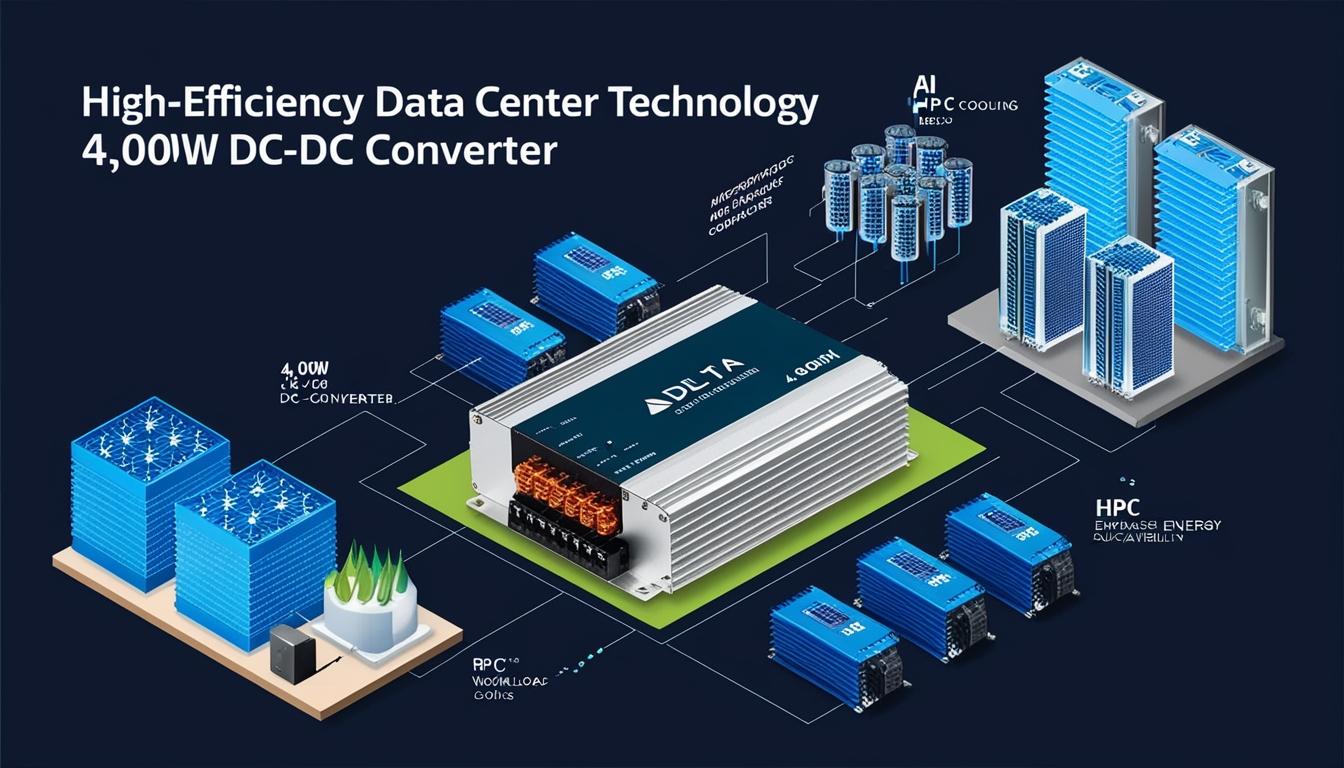
Key developments showcased include the High Power Rack (HPR) ORV3 power systems, which boast an efficiency of up to 97.5%. These systems incorporate lithium-ion capacitors offering a hold-up time of up to 15 seconds under a 20kW load. This makes them suitable for handling power disruptions efficiently. Further innovations include a liquid-to-liquid cooling solution capable of up to 1.5 MW capacity, specifically designed to manage the heat challenges posed by AI-driven workloads and high-density data centre operations. Notably, Delta has also introduced the world's first 4,000W DC-DC converter tailored for GPU-based servers within AI and HPC environments, signalling a significant stride in power conversion efficiency.
Austin Tseng, President of Delta Electronics (Americas), reflected on Delta's longstanding commitment to energy efficiency. He highlighted that from 2010 to 2023, the company’s high-efficiency products and solutions have saved over 45.5 billion kWh of electricity. This is equivalent to powering the state of California for nearly two months. According to Tseng, Delta aims to empower data centres to adapt to AI advancements while simultaneously reducing energy consumption through the integration of high-efficiency power systems and cooling technologies.
Delta’s ORV3 portfolio is designed to optimise power delivery and cooling efficiency, essential for scaling AI workloads and ensuring data centre sustainability. A standout innovation is the 1RU/1OU Power Capacitance Shelf (PCS), which mitigates disruptions in the AC grid caused by AI server operation transitions. The PCS leverages the advantages of lithium-ion capacitors to provide a stable power supply, thereby enhancing system reliability.
In addition to power systems, Delta introduced the 1RU/1OU 33kW power shelf with integrated power management controllers incorporating Power over Ethernet (PoE) capabilities. This innovation allows for smart power management, which is crucial for efficient AI data centre operations. The battery backup systems further enhance reliability with a UL9540A-certified design, providing significant operational and carbon efficiency savings.
Networking capabilities have also been addressed with Delta's introduction of comprehensive 800G Data Centre Switches, featuring the Broadcom 51.2T Tomahawk5 Ethernet Switch. This switch is noted for its low power consumption per gigabit, supporting efficient AI and machine learning applications.
Delta's cooling solutions include Air Assisted Liquid Cooling (AALC) and Cold Plates, designed to meet the intense cooling demands of modern AI systems. The Air Assisted Liquid Cooling system offers capacities from 40 to 144kW and can seamlessly transition from existing air-cooled systems due to its adaptable closed-loop design. Meanwhile, the liquid-to-liquid cooling solutions provide up to 1.5 MW of cooling capacity, making them suitable for high-density AI workloads.
The focus on GPU efficiency is underscored by Delta’s advanced power conversion solutions such as high-density power chokes and Regulated Bus Converters (RBC) Series, which provide groundbreaking efficiency levels and power output for GPU-accelerated servers. Their high-efficiency cooling solutions for GPUs, such as the 3D Vapor Chambers and cold plate designs, ensure effective thermal management for both air-cooled and liquid-cooled solutions.
These innovations mark Delta’s commitment to advancing power and cooling technologies, ensuring that AI and data centres can operate at peak efficiency with reduced environmental impact. Located at the forefront of data centre energy solutions, Delta continues to drive forward-thinking approaches in addressing the challenges posed by expanding AI and computational needs.
Source: Noah Wire Services