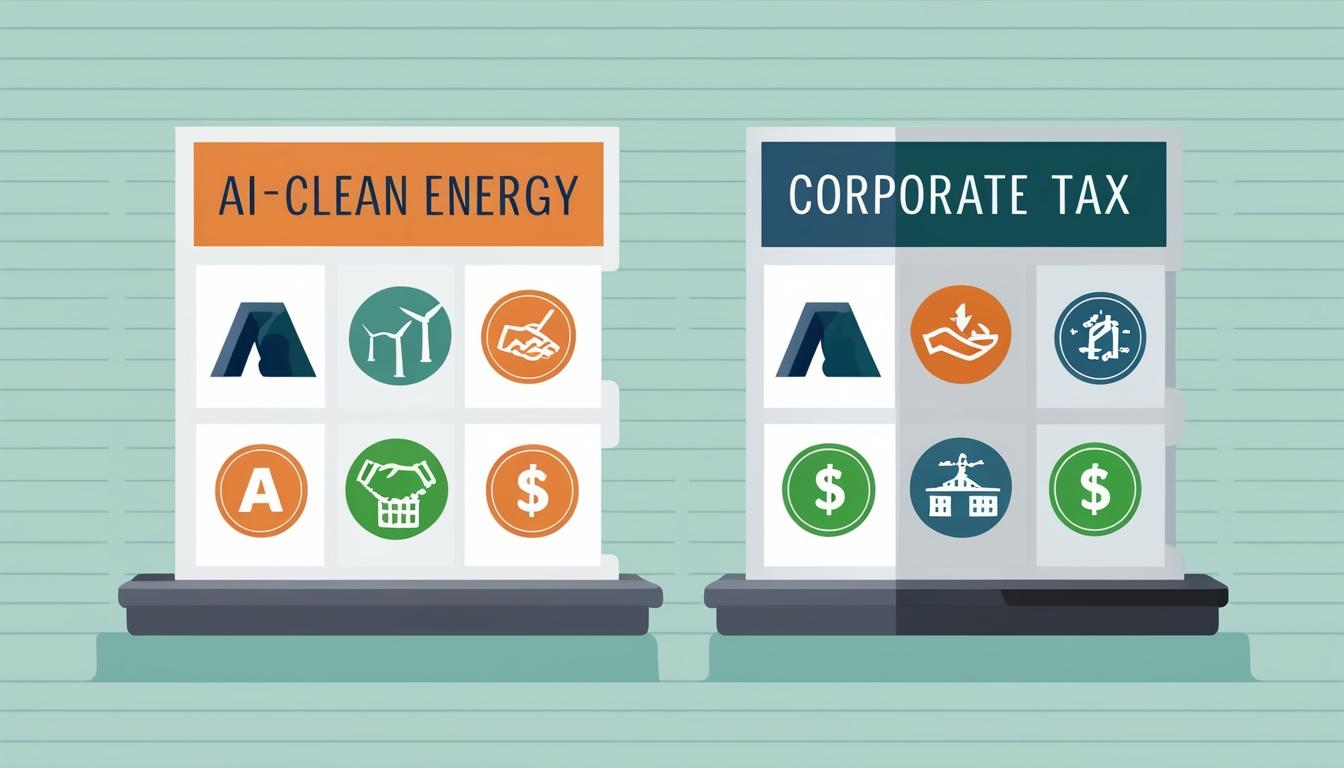
Economic Transformation and Election Dynamics: The Futures of AI, Decarbonization, and Tax Policies
As the United States approaches a pivotal election, the economic future stands at a potential turning point with significant implications for artificial intelligence (AI) investment, fiscal policies, and global competition. The election could see either former President Donald Trump or Vice President Kamala Harris take the helm, each with distinct visions for steering the nation's economic trajectory.
According to Bain & Co., investment in AI technology and services is anticipated to escalate to $1 trillion by 2027, which would represent 3% of the projected Gross Domestic Product (GDP) and 23% of non-residential investments in infrastructure and technology. Renowned economists from institutions such as J.P. Morgan and Goldman Sachs are optimistic that these investments could significantly enhance labour productivity by about one percentage point annually.
AI, along with the decarbonization of energy systems, transportation, and buildings, is expected to instigate both job disruption and the creation of new employment opportunities, positioning the United States more competitively on the global stage. Reflecting on historical precedents such as the industrial revolution and the introduction of the internet, these technological advancements could foster growth and lead to the emergence of new job sectors.
The election campaigns, particularly in key states like Michigan, have highlighted the different strategies that the candidates propose to manage these economic transformations. Vice President Kamala Harris is advocating for increased federal investment in emerging industries such as AI, electric vehicles, and renewable energy. She intends to extend President Biden’s industrial policies, proposing an additional $100 billion investment in critical sectors like semiconductors, clean energy, and defence-related materials. Her approach includes enhancing social support for lower-income communities through expanded childcare support, child tax credits, and apprenticeships tailored to the non-college-bound populace. Harris aims to offset these expenditures by allowing the benefits of the 2017 Tax Cut and Jobs Act to lapse for high earners and imposing a minimum 15% corporate tax, with plans to raise the nominal corporate tax rate to 28%.
In contrast, Donald Trump champions a market-driven approach, emphasizing lower corporate tax rates—specifically reducing the general corporate tax to 20% and to 15% for domestic manufacturers to stimulate job creation within the U.S. His plan involves financing these cuts through tariffs, proposing rates of 10% to 20%, with higher levies on companies relocating abroad and on Chinese imports. Trump’s strategy also includes individual tax cuts targeting overtime, tips, and social security contributions.
Both candidates grapple with the challenge of sourcing new revenue streams to fund their proposed initiatives, with expectations pointing towards an increase in the federal deficit, potentially more pronounced under Trump’s proposals. Historical data from their respective administrations reveals a congressional hesitance to identify new revenue means, a factor contributing to the rising deficit from 3.1% of GDP in 2016 to project 7.0% by 2024.
The economic rivalry with China remains a pivotal issue for both candidates, albeit with Trump expected to adopt a more aggressive stance. While both industrial policy and reduced business taxes can shape similar economic landscapes, the approach towards market intervention versus laissez-faire remains a significant differentiator between the two candidates.
Manufacturing employment, which has been bolstered by subsidies and tax incentives during the Obama, Trump, and Biden years, embodies the ongoing dialogue between free enterprise and government intervention.
The election outcome bears potentially profound impacts on various sectors. A Harris administration might bolster companies like Tesla and Rivian in the electric vehicle space, while a Trump presidency could support traditional automakers and the oil and gas industries.
Despite concerns about potential inflation pressures due to the substantial planned investments, a robust market environment is anticipated, with equities expected to thrive regardless of the political victor. The broader question remains on how each candidate’s policies will steer economic growth and address the evolving challenges posed by technological advancements globally.
Source: Noah Wire Services