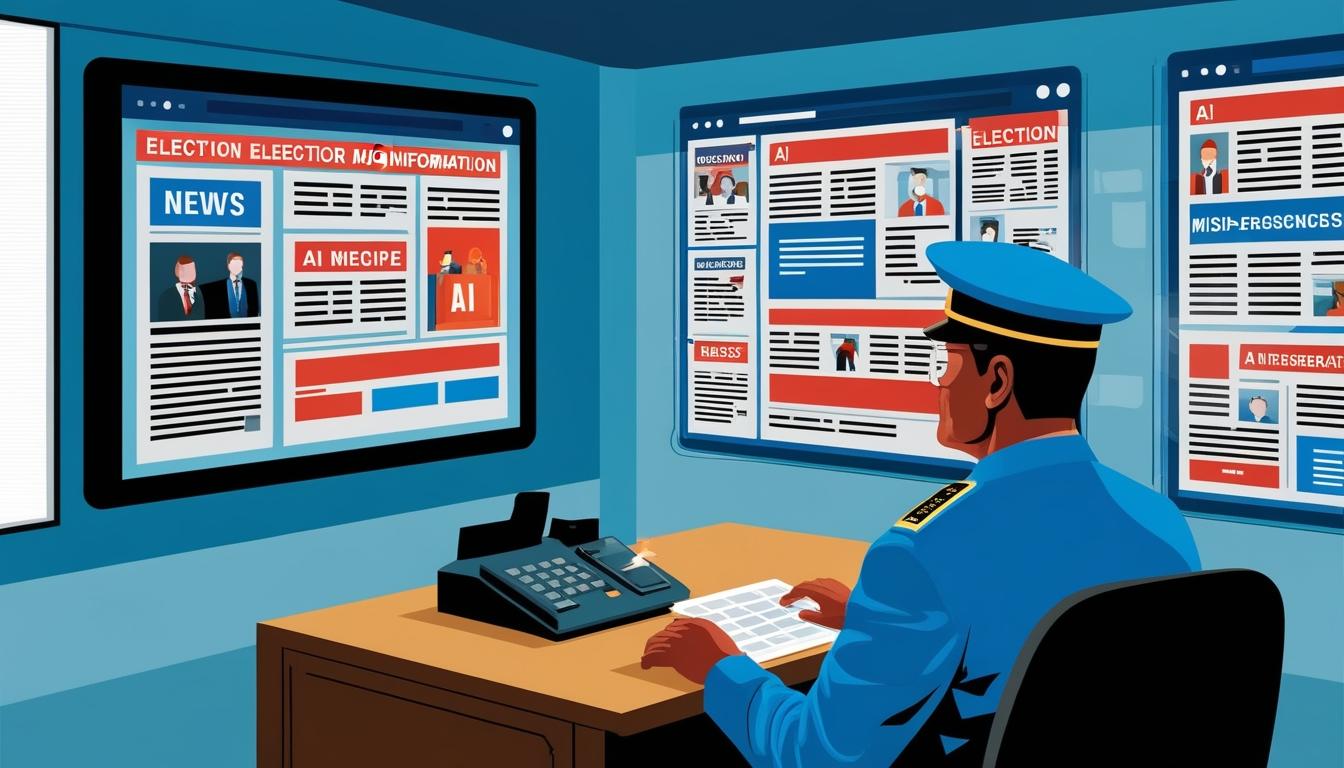
In anticipation of the upcoming high-tension election season, election officials in pivotal swing states, including Arizona, are on high alert for the potential disruptions posed by advancements in artificial intelligence (AI). These concerns have risen after AI has demonstrated capabilities for creating misleading content, potentially confusing voters and poll workers on Election Day.
Adrian Fontes, the Secretary of State of Arizona and a Democrat, has emphasized the unforeseen challenges AI may bring. "The number one concern we have on Election Day are some of the challenges that we have yet to face," Fontes stated. He indicated that AI, especially generative forms that can produce realistic audio and video content, is already being utilised by some campaigns in the state, necessitating election administrators to become adept at distinguishing fact from AI-generated fictions.
To prepare for the possibilities, Fontes's office, along with other state officials, has been organising comprehensive training for election personnel. Over the past six months, Arizona election officials have been engaging in tabletop exercises to envisage and strategise responses to hypothetical AI-driven disruptions slated for November 5, 2024. These exercises probed scenarios such as deepfake videos or voice-cloning technologies that could be deployed on social media to dissuade voters, disrupt polling places, or create chaos among poll workers.
An illustrative exercise involved an AI-generated fake news headline suggesting shootings at polling stations, falsely reporting that the elections were postponed. Gina Roberts, who serves as the voter education director for the nonpartisan Arizona Citizens Clean Elections Commission, was among the participants and highlighted the importance of being prepared for even the worst-case scenarios. "They walk us through those worst-case scenarios so that we can be critically thinking, thinking on our toes," she remarked.
Real-world incidents have already provided a glimpse into the potential threats AI can pose. For instance, an AI-generated robocall mimicking President Joe Biden's voice was used to mislead voters during the primary in New Hampshire, leading to a significant fine from the Federal Communications Commission. Celebrity involvement also came into play when Taylor Swift opposed an AI-created deepfake that incorrectly showed her endorsing Donald Trump, emphasizing the need for vigilance against such fabrications.
Further complicating matters, foreign entities have begun leveraging AI to interfere in elections. OpenAI, the company responsible for ChatGPT, recently shut down an Iranian initiative aiming to use its tools to manipulate voter opinion. The U.S. Justice Department has stated that Russia is actively employing AI to disseminate political disinformation on social media platforms.
Lucas Hanson, co-founder of CivAI, a nonprofit focused on monitoring AI's role in politics, underscored the potential for AI to target swing voters, particularly in battleground states like Arizona. He noted that influencing voter turnout might be easier than changing voter opinions directly. "An even bigger [threat] potentially is trying to manipulate voter turnout," Hanson noted.
Federal authorities have acknowledged these challenges. Deputy Attorney General Lisa Monaco categorised AI-boosted threats as particularly disruptive, posing significant risks to U.S. elections through accelerated speed and increased sophistication at minimal costs. A bulletin from the Department of Homeland Security warned that AI could craft fraudulent election records, impersonate election officials to access sensitive data, generate overwhelming voter calls, and proliferate fake information online.
While strategies are being devised, Hanson advocates for individual awareness in discerning AI-crafted deceptions. He advises that although some AI-generated content may have identifiable flaws – like incorrect appendages in images or robotic tones in audio – recognising less obvious manipulations requires intuition, particularly when encountering implausible content that provokes strong emotional responses.
With anticipated high-stakes and close margins, especially in swing states, election officials continue to brace themselves against these emergent threats. Fontes encapsulated the gravity of the situation with a touch of humour, acknowledging the unpredictability of potential AI interference: "We are doing our best preparing for everything except Godzilla. We're preparing for about everything because if Godzilla shows up, all bets are off."
Source: Noah Wire Services