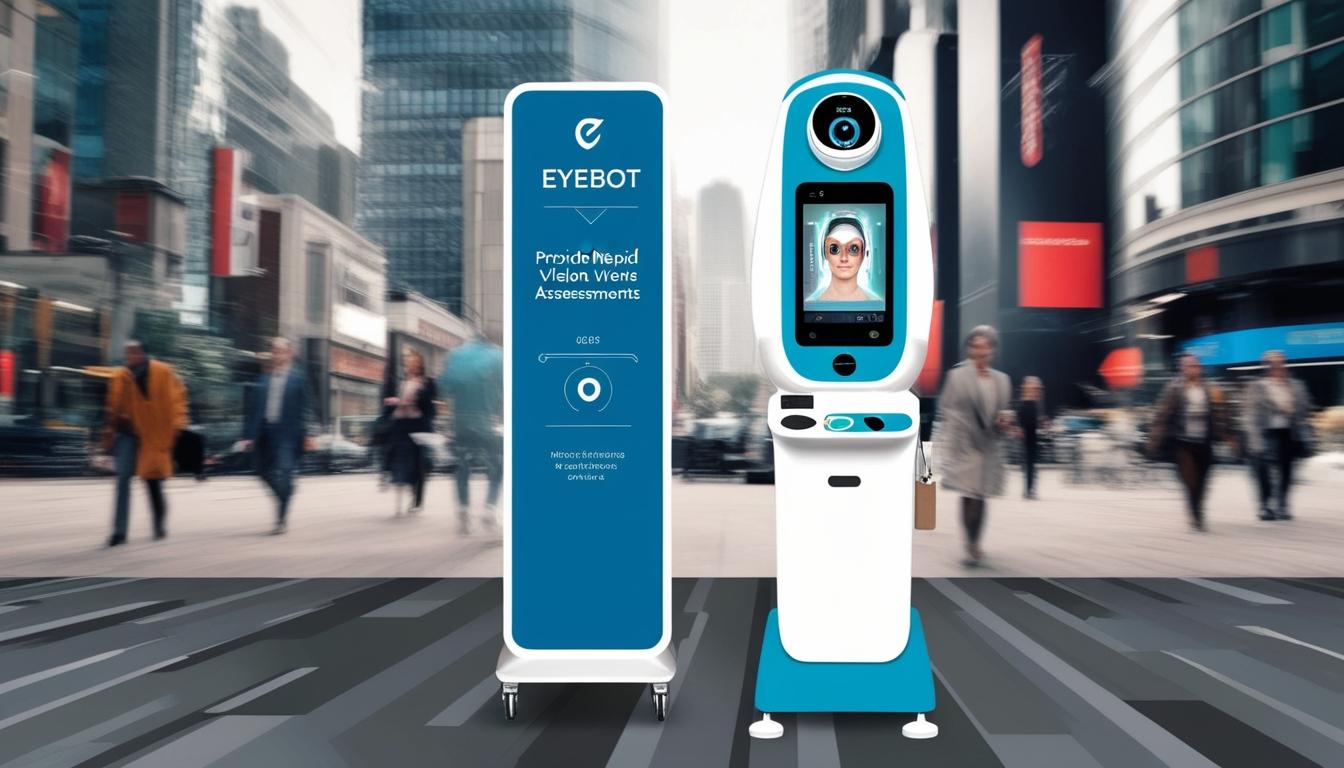
A new technological innovation in vision care promises to make eye health assessments more accessible and affordable. The Eyebot, a kiosk-style machine, has been launched in the Boston area to provide rapid vision prescriptions and general eye health information. This development aims to address barriers such as costly eye exams and logistical challenges of visiting an eye care professional.
The Eyebot offers a 90-second assessment where users receive an AI-generated, non-diagnostic report. It provides insights into conditions like myopia and presbyopia and compares an individual's eyesight against average standards for their age. For those requiring vision correction, the machine offers a prescription for glasses or contact lenses, subject to a remote doctor's review, which costs approximately $20 to $30. The prescription is emailed to the user within a day.
Currently tailored for adults up to 65 years old, the Eyebot excludes individuals with severe myopia or specific eye diseases. Initially, it issues glasses prescriptions, but by December, it is expected to include contact lens renewal as well. The device operates much like the familiar experience of a pharmacy blood pressure kiosk, emphasizing convenience and speed.
The development of the Eyebot represents a collaboration with eyeglass retailers, notably Zenni Optical, who are facilitating the placement of the machines. Incentives, such as waived prescription fees, are offered for purchasing glasses from these partnered retailers, though prescriptions can be used universally.
The Eyebot marks a departure from traditional eye exam techniques, eschewing the familiar “one or two” discretion test. Instead, it utilizes safe infrared technology to examine the eyes, with capabilities to detect over 20 eye diseases and disorders, potentially identifying issues such as cataracts and eye trauma. These diagnostic possibilities are currently undergoing clinical trials to enhance the machine's functionality.
Matthias Hofmann, Co-founder and CEO of Eyebot, has highlighted the challenges faced in achieving mass adoption of smartphone-based eye assessments, which he explored initially over a decade ago. The Eyebot, built from scratch, aims to meet the demand for a dependable and comprehensive vision test.
The current rollout focuses on Boston and New England, with the aspiration to extend to two locations in California shortly. It is anticipated that 25 units will be operational by the end of the first quarter of 2025, enhancing widespread access to essential vision care.
This advancement reflects a significant step in increasing accessibility to essential eye health services, matching convenience with advanced technology in an era where healthcare accessibility remains a crucial concern.
Source: Noah Wire Services