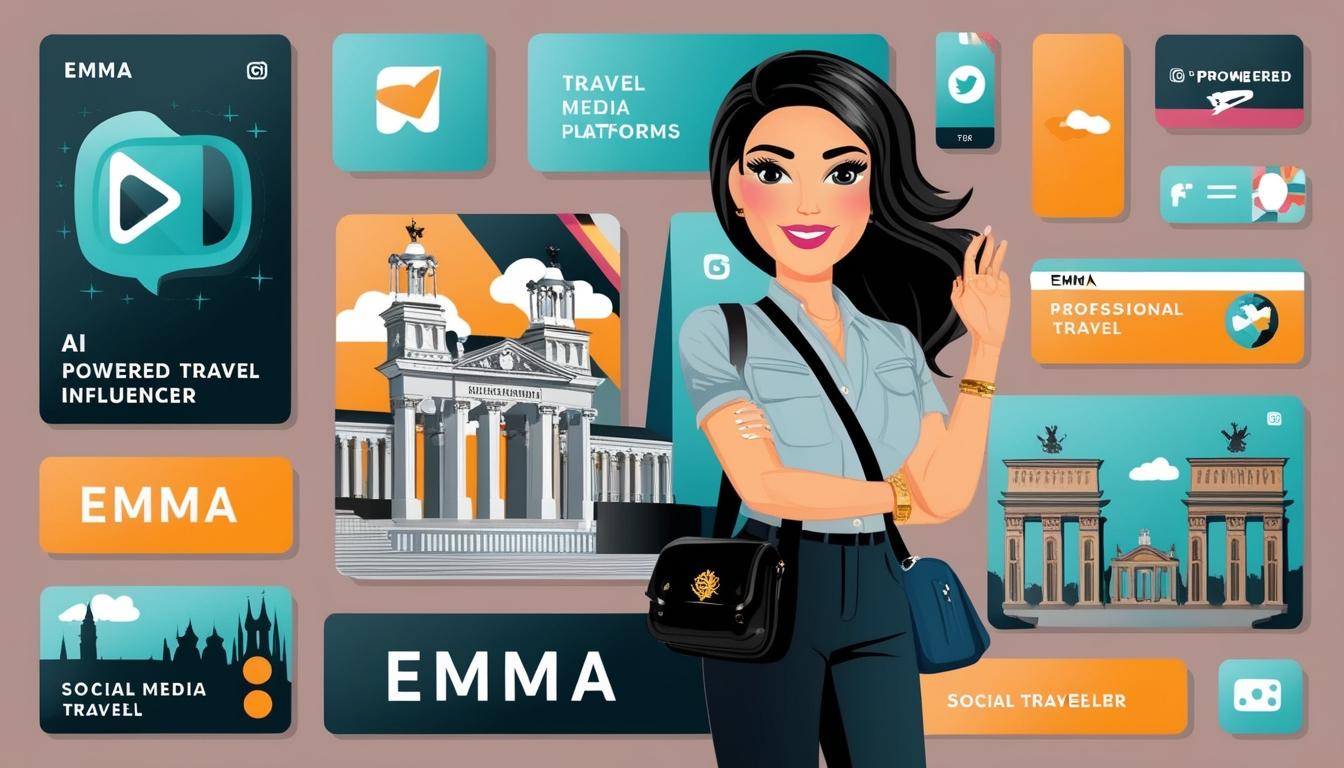
Germany has embraced cutting-edge technology to enhance its tourism marketing efforts with the introduction of an AI-powered travel influencer, Emma. This pioneering move was revealed by the German National Tourist Board, marking a significant step in the country's digital strategy to utilise artificial intelligence in destination marketing. Emma is crafted to engage with potential travellers on social media platforms by sharing travel tips, itineraries, and insights about Germany, thus acting as a digital ambassador for the nation.
Emma, who represents a blend of modernity with subtle German cultural elements, resides in Berlin and is depicted as a blonde woman in her 30s. Her creators have thoughtfully designed her appearance to foster a sense of authenticity and trustworthiness. A spokesperson from the German National Tourist Board highlighted that Emma embodies a cosmopolitan style interwoven with motifs inspired by iconic German architecture and design.
Engaging with people in over 20 languages, Emma is available around the clock, powered by sophisticated deep learning technologies and large language models. These capabilities enable her to interact with users by sharing travel advice through platforms like Instagram, where she operates under the handle @EmmaTravelsGermany, and the tourism board’s official website. Emma's initial responses to inquiries have been simple, but the Board assures that as her artificial intelligence capabilities evolve, she will provide more nuanced and emotionally responsive interactions.
The initiative aligns with a broader trend in the tourism sector to integrate artificial intelligence to create more personalised and engaging travel experiences. Petra Hedorfer, CEO of the German National Tourist Board, stated that Emma aims to bridge the gap between potential tourists and authentic experiences in Germany, serving as an innovative tool from the inspiration phase of travel planning.
Developed in collaboration with the agency Startup Creator, Emma is poised to become a central figure in representing Germany internationally. The tourism board envisions partnerships with airlines, hotel chains, and travel agencies, where Emma could offer exclusive travel deals and unique experiences, further solidifying her role as a facilitator of global travel engagement.
Despite the promising potential, Emma's debut has not been without criticism. Some social media users argue that real-life influencers should remain at the forefront, as they can establish genuine connections and offer first-hand insights which AI lacks. The German National Tourist Board has clarified that Emma is not intended to replace human influencers but to supplement and enrich the visitor experience by working alongside them. Last year, the board’s influencer network generated an impressive 148 million impressions online, underscoring the value of human influencers in reaching a broad audience.
Globally, destinations are increasingly investing in generative AI to enhance consumer experiences in tourism. Echoing this trend, Brand USA recently appointed Janette Roush as its first chief AI officer, focusing on integrating AI innovations into promotional strategies for American tourism. Similarly, Dublin City Council has embarked on a collaborative project with OpenAI to create AI-driven itineraries.
As AI continues to advance, the landscape of destination marketing is poised for transformation, shifting from generic lists and guides to more tailored and engaging travel recommendations, facilitated by digital entities like Emma.
Source: Noah Wire Services