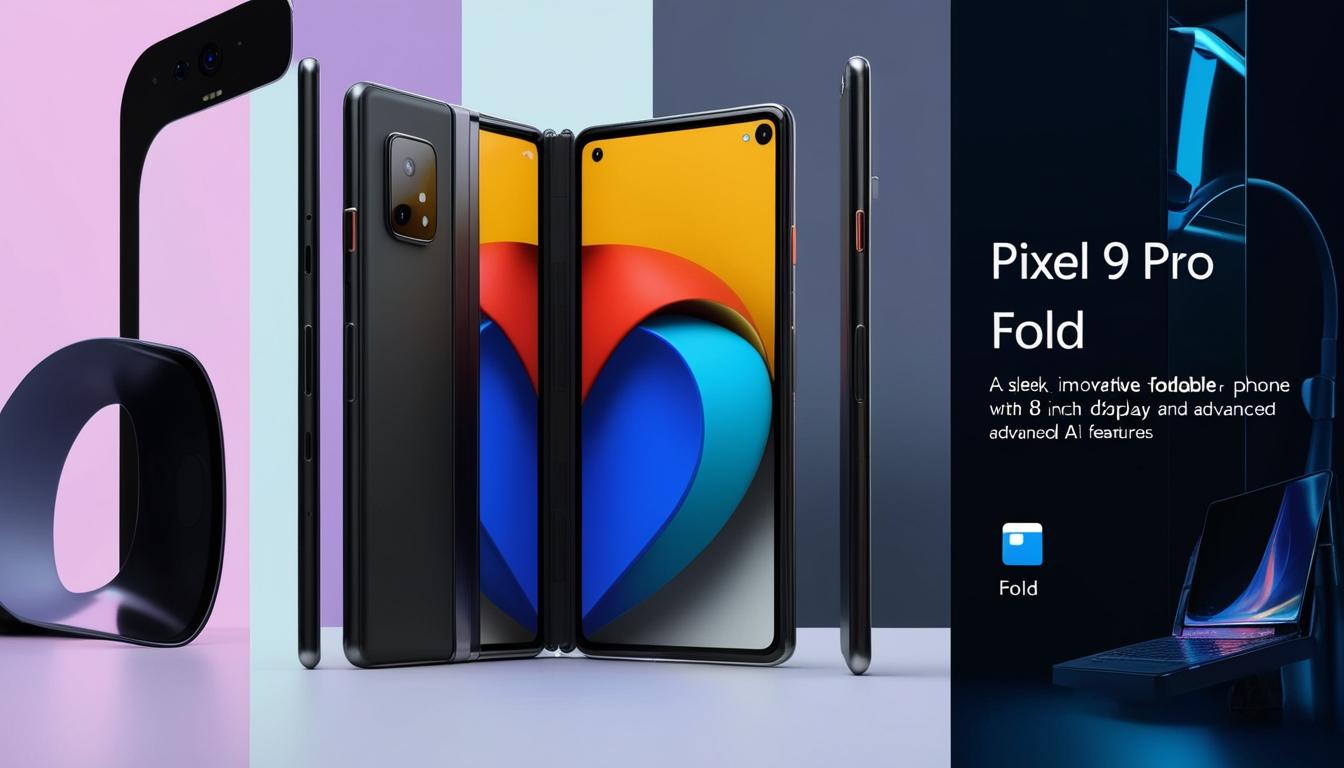
Google has introduced the Pixel 9 Pro Fold, an ambitious follow-up to its initial foray into foldable phones with last year's Pixel Fold. The redesigned Pixel 9 Pro Fold brings several enhancements over its predecessor, boasting a sleeker, taller design and a large eight-inch internal display paired with the capable Tensor G4 chip. Launched at a premium price of $1,799, the device aims to compete with other high-end foldables in the market, with varying degrees of success.
The most striking change in the Pixel 9 Pro Fold is its physical design, which is slimmer and longer than its predecessor. The eight-inch unfolded display offers users a near tablet-like experience, enhancing activities like video streaming, gaming, and multitasking. However, its square-ish form factor does introduce significant letterboxing when viewing content in a 21:9 aspect ratio, such as most films. The device's hinge allows it to lay completely flat, minimizing the visibility of the screen crease, a common issue in foldables.
Performance-wise, the Pixel 9 Pro Fold is powered by Google's Tensor G4 chip, joined by 16GB of RAM, promising robust AI-driven features and improved user experience. The display's brightness has significantly increased to 2,700 nits, enhancing visibility under direct sunlight, especially compared to the 1,450 nits of its predecessor. The refresh rate maintains a steady 120Hz, even under load, ensuring smooth operation during multitasking.
While Google has made substantial improvements in design and display, the camera system remains surprisingly similar to last year's model. The Pixel 9 Pro Fold retains the 48MP main lens and multiple 10MP sensors for ultrawide and selfie shots. Despite similar hardware, Google's software upgrades, including features like Made You Look and Add Me, attempt to breathe new life into the camera system. Notably, the Made You Look feature uses animations on the outer screen to grab attention from subjects being photographed, although this can lead to subjects looking slight askew due to rear camera placement.
In terms of software, Google has heavily integrated AI functionalities with its new Pixel 9 series, amplified by the Gemini AI model. Enhancements like the Magic Editor facilitate effortless photo edits, allowing users to remove or resize subjects seamlessly. However, Google is taking a conservative approach to multitasking on the Pixel 9 Pro Fold, capping at two simultaneous apps, whereas competitors like Samsung and OnePlus offer more advanced multi-window implementations.
Battery life is another area where the Pixel 9 Pro Fold sees improvement. The 4,650mAh battery is capable of sustaining daily use with around 18% to 20% remaining by day's end, avoiding the necessity of midday recharges experienced with the prior Pixel Fold.
The Pixel 9 Pro Fold's release coincides with the opening of Google's product lineup to a broader discussion about hardware built around AI, with features such as the Gemini AI model underpinning much of the software experience. Despite these innovations, the consensus among testers shows a potential gap between the high-end cost of the device and the expectation for more advanced hardware capabilities, particularly concerning camera features.
For consumers deeply embedded in the Pixel ecosystem and for those who appreciate advanced AI features and a seamless Android experience, the Pixel 9 Pro Fold presents a compelling option, albeit with some competitive pressure from rival brands offering perhaps greater charging capabilities and multitasking features. As Google continues to refine its foldable technology and integrate AI more deeply into its devices, the trajectory suggests a stronger future position in the foldable smartphone market.
Source: Noah Wire Services