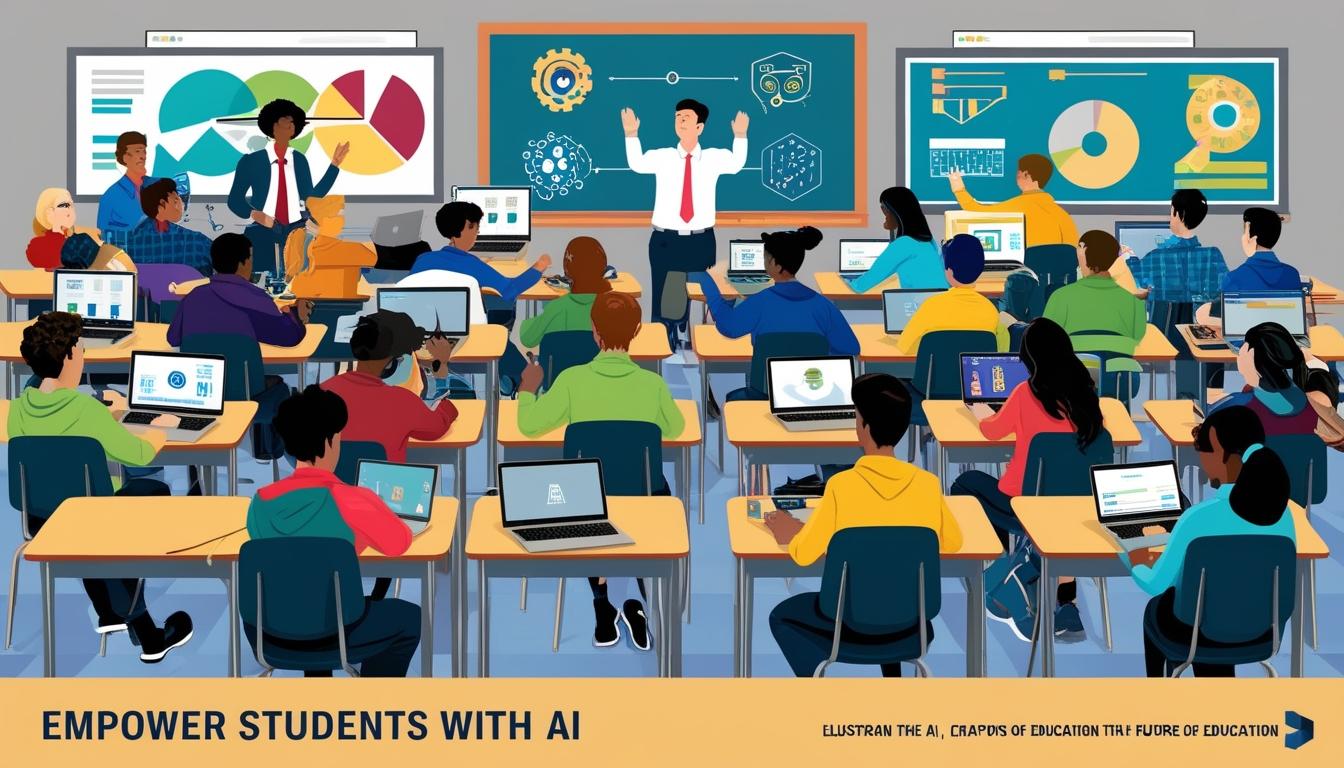
Houston, Texas, is setting the stage for a significant shift in education as the Houston Independent School District (HISD) prepares to introduce a new course focusing on the fundamentals of artificial intelligence (AI). Beginning in the 2024-2025 school year, the course will be rolled out to high school juniors and seniors across 41 locations, impacting over 3,700 students. This elective class will cover crucial topics such as data literacy, generative AI, and responsible applications of AI both in business and educational settings.
The initiative marks a considerable step towards ensuring that students are equipped with the necessary skills and knowledge to navigate a future that is increasingly reliant on AI technology. HISD has been proactive in its approach, organising summer training sessions for teachers at Waltrip High School. These sessions are designed to help educators integrate AI into their teaching strategies, embracing tools such as adaptive learning platforms and AI-powered tutoring systems to enhance student instruction and support.
Allen Antoine, M.Ed., who is the Director of Computer Science Education Strategy at the Texas Advanced Computing Center (TACC) at the University of Texas at Austin, is an advocate for this educational shift. Antoine stresses the importance of bringing AI into the classroom to prepare students for the evolving workforce. He highlights that not every school or student currently has access to the technology needed to fully benefit from AI, emphasising the need for equitable access regardless of socio-economic status.
Antoine also underscores the critical need to introduce generative AI tools to students of colour, particularly Black students, who could face marginalisation if not adequately prepared for technological advancements. In his writing, he outlines various reasons for this focus, including the potential for AI to provide career opportunities, promote social justice, and increase representation in AI fields to address technological biases. He argues that learning AI can empower Black youth with essential skills such as problem-solving and critical thinking.
Adding to the discourse, Bulent Dogan, Ed.D., a Clinical Associate Professor at the University of Houston, points to AI's potential to personalise education. AI tools can cater to individual students' learning preferences and strengths, dramatically reshaping the learning experience by providing customised guidance and challenges tailored to each student's needs. However, Dogan warns against an overreliance on AI, asserting that human judgement remains irreplaceable and emphasising the continued importance of educators' understanding of their students.
In response to the growing importance of AI, Governor Greg Abbott signed House Bill 2060 last year, establishing an AI advisory council in Texas. This council will oversee the development and use of AI within state agencies, including in educational contexts, ensuring that AI's integration is beneficial and responsible.
As Houston ISD gears up for this transformation, the efforts represent a broader movement within education to align curriculums with the needs of a dynamic and technologically-driven economy. The implementation of AI in education, while promising, requires cautious and inclusive practices to ensure maximum benefit and minimal disruption. The steps being taken in Texas serve as a pivotal example of how educational institutions across the United States might prepare future generations for a world where AI plays a central role.
Source: Noah Wire Services