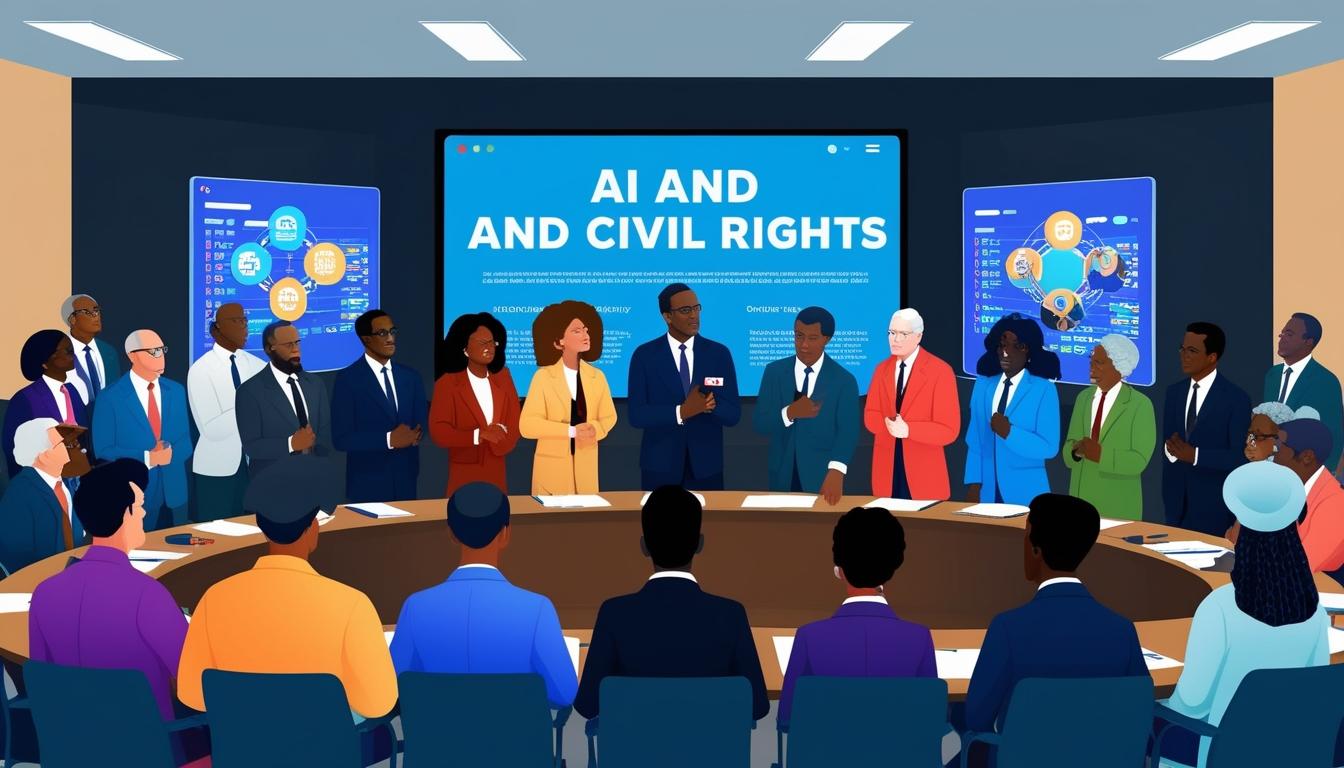
On 9 October, the United States Department of Justice's (DOJ) Civil Rights Division organised a significant meeting in Washington, D.C., assembling the leaders of various federal agency civil rights offices. This meeting aimed to promote coordinated efforts in addressing and preventing the potential harms associated with the use of artificial intelligence (AI), specifically focusing on unlawful discrimination.
This unprecedented gathering coincided with the introduction of Dr. Laura Edelson as the division’s new Chief Technologist. Her appointment highlights the department's commitment to bolstering its ability to manage and mitigate the impacts of AI on civil liberties. Dr. Edelson is tasked with expanding the division’s AI enforcement capabilities and enhancing operational efficiency through technological advancements.
Dr. Edelson also recently addressed these issues at the DOJ's Symposium on AI held on 2 October. In her speech, she emphasised the importance of keeping enforcement strategies up-to-date amidst the growing influence of AI across various sectors of American life. She identified three key strategies to address the concerns posed by AI advancements: public involvement, independent research, and collaboration among law enforcement entities. Dr. Edelson highlighted the public's role in reporting AI-related discrimination and called on whistleblowers to disclose any discriminatory practices hidden within AI models. She also stressed the necessity of independent research to validate the non-discriminatory nature of AI systems, and highlighted the importance of collaborative efforts among law enforcement agencies as AI becomes more pervasive.
Auditing was another focal point of the discussions, with agency leaders recognising its role in preventing, investigating, monitoring, and remedying algorithmic bias. Auditing helps ensure algorithms produce accurate results without perpetuating historical biases against protected classes.
The convening also highlighted recent initiatives undertaken by various agencies to safeguard civil rights within the AI ecosystem. For instance, the Federal Trade Commission (FTC) recently published a report detailing privacy risks associated with AI practices by large social media companies. The report criticised these platforms for their heavy reliance on AI, which often leads to "mass surveillance" and raises privacy and civil rights concerns. The FTC recommended comprehensive privacy legislation to address these issues.
Meanwhile, the Equal Employment Opportunity Commission (EEOC) released a report titled “High Tech, Low Inclusion: Diversity in the High Tech Workforce and Sector, 2014 – 2022.” This report revealed ongoing underrepresentation of female, Black, and Hispanic workers in the high-tech industry, even as the sector experienced rapid occupational growth. The findings underscore the necessity for targeted efforts to overcome discriminatory barriers in the workforce.
The Department of Labor (DOL) has also been active, sponsoring the Partnership on Employment and Accessible Technology’s (PEAT) AI and Inclusive Hiring framework. This resource aims to help companies make AI-enabled hiring tools more inclusive, particularly for disabled job seekers, by addressing procurement, advertising, recruiting inclusively, and incorporating human oversight into AI hiring processes.
Moreover, the Department of Education released a guide for developers utilising AI in educational technologies. This guide contains best practices to ensure AI advances equity and inclusion while safeguarding against risks such as algorithmic discrimination and civil rights violations.
The convening concluded with a resolute commitment from the agency leaders to continue collaborating on efforts to protect the American public from AI-related civil rights violations. They also agreed on the necessity of working with external stakeholders to further their collective aims of promoting equity and civil rights within the rapidly evolving AI landscape.
Source: Noah Wire Services