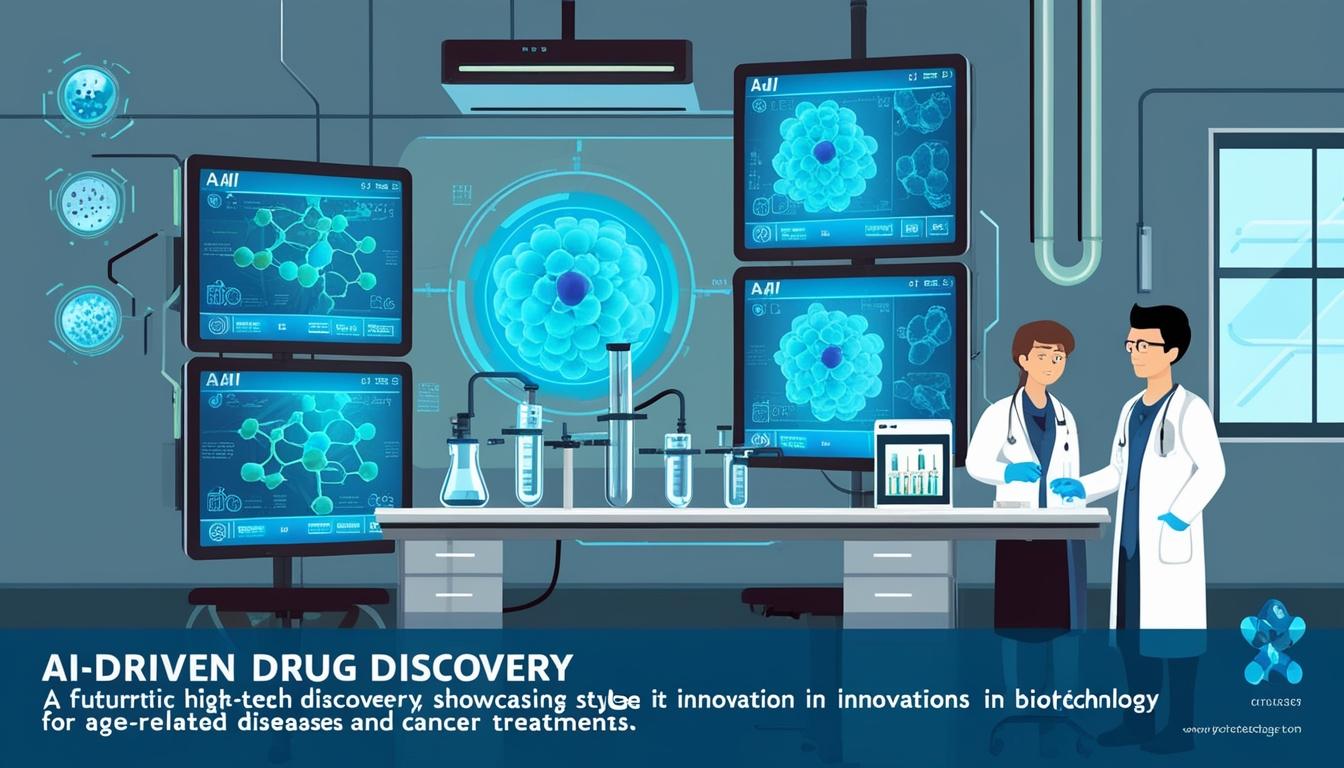
Investment Surge in AI-Powered Drug Discovery Paves New Frontiers in Biotechnology
The landscape of drug discovery is experiencing a transformative shift with the integration of artificial intelligence (AI), as exhibited by a series of substantial financial investments into several biotechnological ventures. The recent surge of capital is fuelling innovative research targeting age-related illnesses, GPCR-targeting antibodies, DUB-modulating compounds, and the development of novel fusion proteins.
In a bid to explore therapeutics for age-related diseases, Cambridge-based biotech company, Shift Bioscience, has successfully amassed $16 million (£12.5 million) in seed funding. The financial injection, spearheaded by BGF with contributions from F-Prime Capital, Kindred Capital, and Jonathan Milner, aims to propel Shift's AI-driven cell simulation platform. The platform is designed to pinpoint genes capable of safely rejuvenating cells, thereby addressing ailments associated with ageing. Dr Daniel Ives, CEO of Shift Bioscience, emphasised the potential for cellular reprogramming, likening it to the emerging field of therapeutic targets through cell rejuvenation.
Antiverse, another major player in the biotech sector, has secured an additional £3.5 million ($4.6 million) in seed funding, bringing their total raised equity to £7.2 million ($10.1 million). Antiverse's mission centres around the development of its AI-enabled antibody design platform aimed at GPCRs and ion channels—significant targets in pharmaceutical research. Recent contributions were led by i&i Biotech Fund I (i&i Bio) and Kadmos Capital, with the funds earmarked for expanding the firm’s laboratory and machine learning capacities. With a third of FDA-approved drugs targeting GPCRs, Antiverse’s CEO, Murat Tunaboylu, underscores the imperative of advancing antibody-based therapeutics.
Meanwhile, a strategic partnership between Alleo Labs and Ubiquigent is set to bolster research on deubiquitinase (DUB)-focused drug discovery. The alliance will see Ubiquigent gaining privileged access to Alleo's AI software, RubDUB, which will hasten the identification of novel DUB-modulating compounds. This collaboration seeks to unlock therapeutic avenues for conditions such as Parkinson’s and Alzheimer’s, leveraging Alleo's lead initiatives in DUB-targeted treatments. Both companies anticipate that their combined capabilities will significantly expedite the development pipeline for DUB-focused therapies.
Furthermore, Basecamp Research has concluded a $60 million Series B funding round and is now engaging in a multi-year partnership with the Broad Institute of MIT and Harvard, spearheaded by Dr David Liu. This collaboration aims to push the boundaries of programmable genetic medicines, using AI to fill critical gaps in biological data and enhance the development of fusion proteins. Esteemed investors like Singular, S32, and André Hoffmann have contributed to this funding round, demonstrating the broad industry support for the potential of genetic and biotechnological advancements.
Lastly, an agreement between Optic, a digital biology company, and Vindur Tx has been established. This partnership, backed by a $17.5 million deal, focuses on applying Optic's AI platform to craft selective kinase inhibitors for cancer treatment. The collaboration underscores a significant stride in addressing previously challenging cancer targets and illustrates the cost-saving advantages AI technology offers to the biopharmaceutical sector—potentially reducing costs by up to 70%, as suggested by Carnegie Mellon University's recent findings.
These developments highlight a burgeoning confidence in AI’s capability to innovate therapeutic methods across various domains of medicine, offering promising prospects for future clinical applications. As biotechnological firms continue to draw substantial investment and forge strategic collaborations, the potential for AI-driven advancements in drug discovery remains vast and varied.
Source: Noah Wire Services