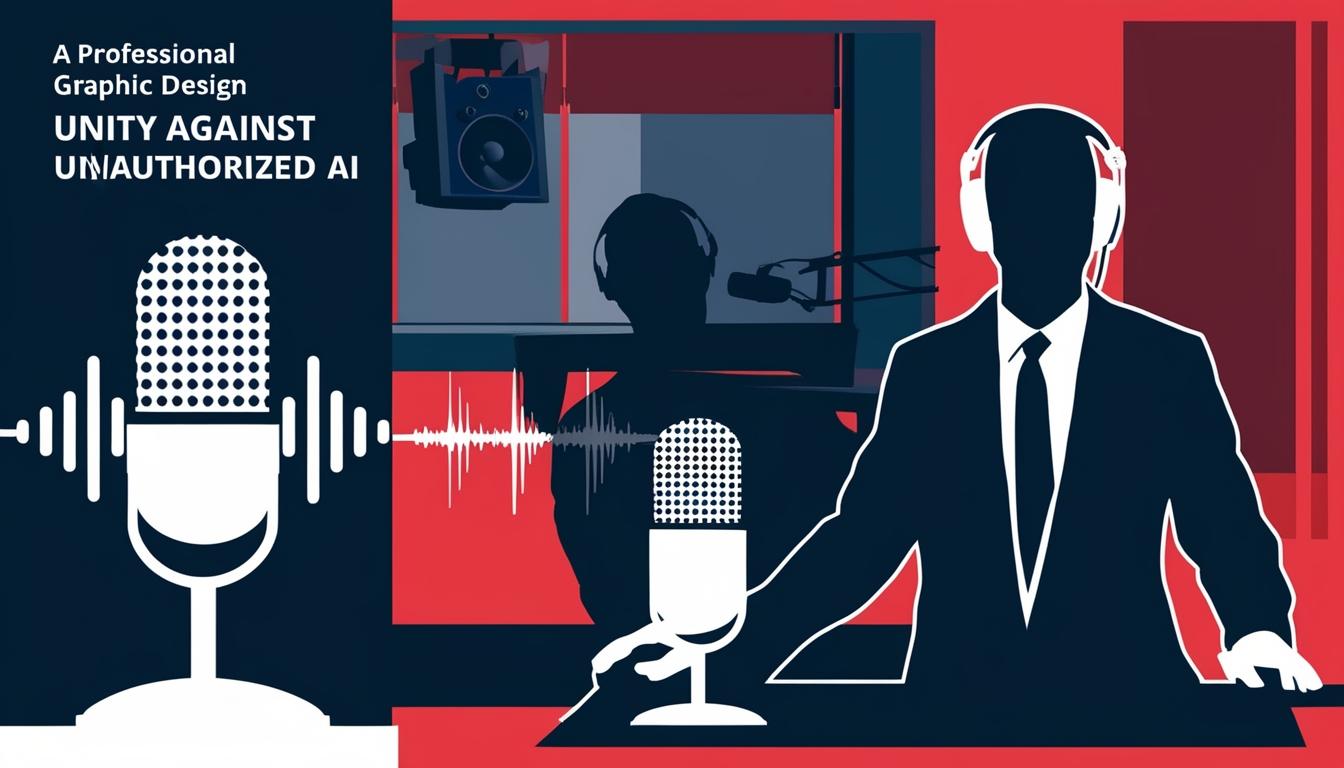
Japanese Voice Actors Unite Against Unauthorized AI Use of Their Voices
In a significant move reflecting concerns within the entertainment industry about artificial intelligence (AI), a group of prominent Japanese voice actors has formed a coalition known as “No More Mudan Seisei AI,” which translates to “No More Unauthorized Generative AI.” This newly established group aims to combat the unauthorised use of AI to replicate and distribute their voices.
The initiative was launched with a compelling video led by veteran voice actor Ryūsei Nakao, known for his roles as Freeza in "Dragon Ball Z" and Mayuri Kurotsuchi in "Bleach." Nakao expressed his shock upon discovering that AI tools were utilising his voice without his consent. Emphasising the importance of his voice as his primary means of livelihood, Nakao urged the audience to take heed of what voice actors have to say regarding this pressing issue.
Joining Nakao in this cause are 25 other esteemed voice actors, including Romi Park (Hange in "Attack on Titan"), Kōichi Yamadera (Ryoga in "Ranma ½"), Daisuke Namikawa (Haganezuka in "Demon Slayer"), Yuki Kaji (Eren in "Attack on Titan"), and Jun Fukuyama (Koro-sensei in "Assassination Classroom"). Together, these actors deliver a strong message of resistance against the unlicensed use of AI-generated voices in their video statement with a unified declaration, "No More Mudan Seisei AI."
The emergence of this group reflects a broader concern among voice actors, not only in Japan but also internationally, about the potential ramifications of generative AI on their careers. While some actors, such as Masako Nozawa and Banjō Ginga, have consented to the deliberate use of AI to replicate their voices for specific applications, others, such as Yuki Kaji, have allowed for such usage only under the condition of prior permission.
This movement coincides with similar actions in the United States, where organisations like SAG-AFTRA have been actively addressing the challenges posed by generative AI to actors' rights and job security.
In another related development, the Japan Association of Translators has voiced its opposition to the use of AI by the company Orange for translating an ambitious 50,000 manga works into English over the next five years. The translators argue that AI, in its current capacity, lacks the finesse to accurately convey the intricate nuances, cultural subtleties, and character traits essential to fictional works. They caution that the rapid, machine-driven translation efforts could compromise the artistic value of these pieces.
The collective action by voice actors and concerns from translation professionals highlight the growing dialogue around the ethical and practical implications of AI in creative industries. This is a pivotal moment for stakeholders as they navigate the intersection of technology and artistic integrity, and the outcomes of these discussions could shape the future of how AI is integrated into the arts sector.
Source: Noah Wire Services