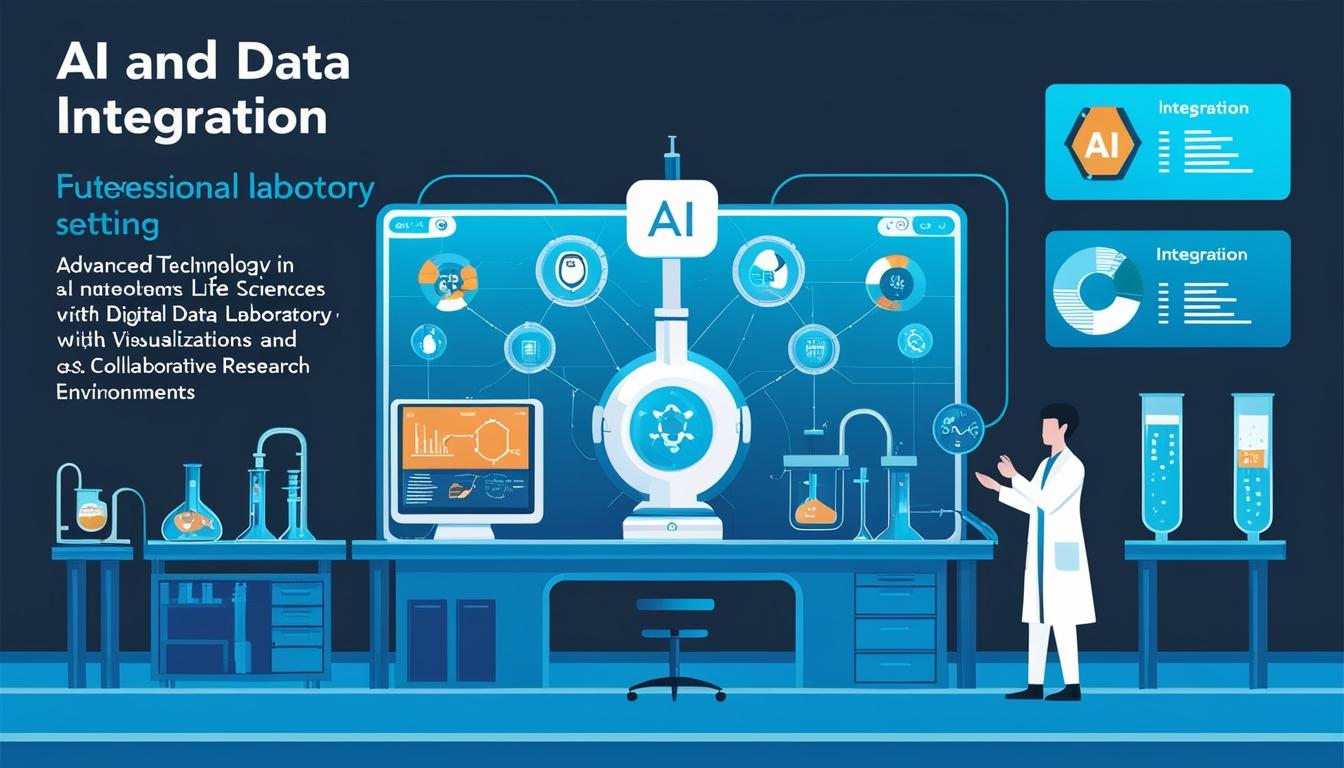
Lab of the Future Survey Unveils Growing Role of AI in Life Sciences
In a recent revelation, the Lab of the Future survey, conducted by the Pistoia Alliance in collaboration with Open Pharma Research, has highlighted a progressive shift towards the use of artificial intelligence (AI) and machine learning (ML) in various scientific fields. The findings were unveiled during the Lab of the Future Congress held in Amsterdam on 1-2 October 2024, attended by experts from Europe, the Americas, and the Asia-Pacific region.
The survey, which gathered insights from 200 industry professionals, indicates a significant increase in the deployment of AI and ML technologies. Currently, 68% of respondents reported integrating these technologies into their work, compared to 54% in the previous year. AI and ML are earmarked as pivotal areas for technological investment in the upcoming two years, with 62% of respondents planning to enhance focus in these areas. This shift marks a departure from previous investment priorities such as cloud platforms, electronic lab notebooks (ELNs), and laboratory information management systems (LIMS).
However, the integration of AI does not come without obstacles. The most notable challenges have shifted from behavioural to content-related issues, as 59% of participants cited difficulties in accessing data and 54% pointed to the challenges posed by unstructured data. Additionally, a lack of metadata standardisation was flagged by 48% of respondents as another significant barrier. This marks a departure from 2023, when cultural barriers and resistance to data sharing were more prominent concerns.
Quality of data remains a central issue in AI adoption, with low-quality datasets highlighted by 52% of respondents as the main challenge. Furthermore, data that fails to meet FAIR (Findable, Accessible, Interoperable, Reusable) principles was a concern for 38%, while privacy and security concerns were noted by 41%, an increase from 34% in 2023. Additionally, the perception of AI as potentially untrustworthy or unreliable was noted by 28% of respondents.
Dr Becky Upton, President of the Pistoia Alliance, commented on the findings, noting that although cultural barriers are declining and organisations are recognising the benefits of AI, it is critical to address data-related issues and privacy concerns. She suggested that ambiguities in legislation, such as the forthcoming EU AI Act, might be contributing to these concerns.
Financial constraints were also reported, with an increase from 14% to 20% of respondents citing financial barriers to the adoption of AI and ML. Despite this, the intention to invest in these technologies remains strong, suggesting a widespread belief in their potential to drive research and development.
The survey also revealed a growing interest in improving data governance to tackle content-related challenges. Nearly half of the respondents expressed a need for more data governance frameworks, standardisation templates, and best-practice guidelines. The importance of training was underscored, with increasing interest in ontology management and FAIR data education.
Christian Baber, Chief Portfolio Officer for the Pistoia Alliance, noted that while the use of AI is on the rise, consistent metadata standards for FAIR data remain a significant challenge. He observed that, although cross-laboratory collaboration has become less hindered by a lack of incentives, establishing company standards for data sharing remains an area needing attention.
The Pistoia Alliance emphasised its commitment to addressing these challenges through various projects, including ontology training and FAIR data governance initiatives. As noted by Zahid Tharia, a consultant with the Pistoia Alliance and Director of Open Pharma Research, collaboration within the life sciences ecosystem is essential for maximising the benefits of AI and ML technologies.
The findings from the Lab of the Future survey underscore the ongoing evolution of scientific research methodologies, highlighting an industry poised to leverage AI and ML for future innovations while navigating new challenges in data management and standardisation.
Source: Noah Wire Services