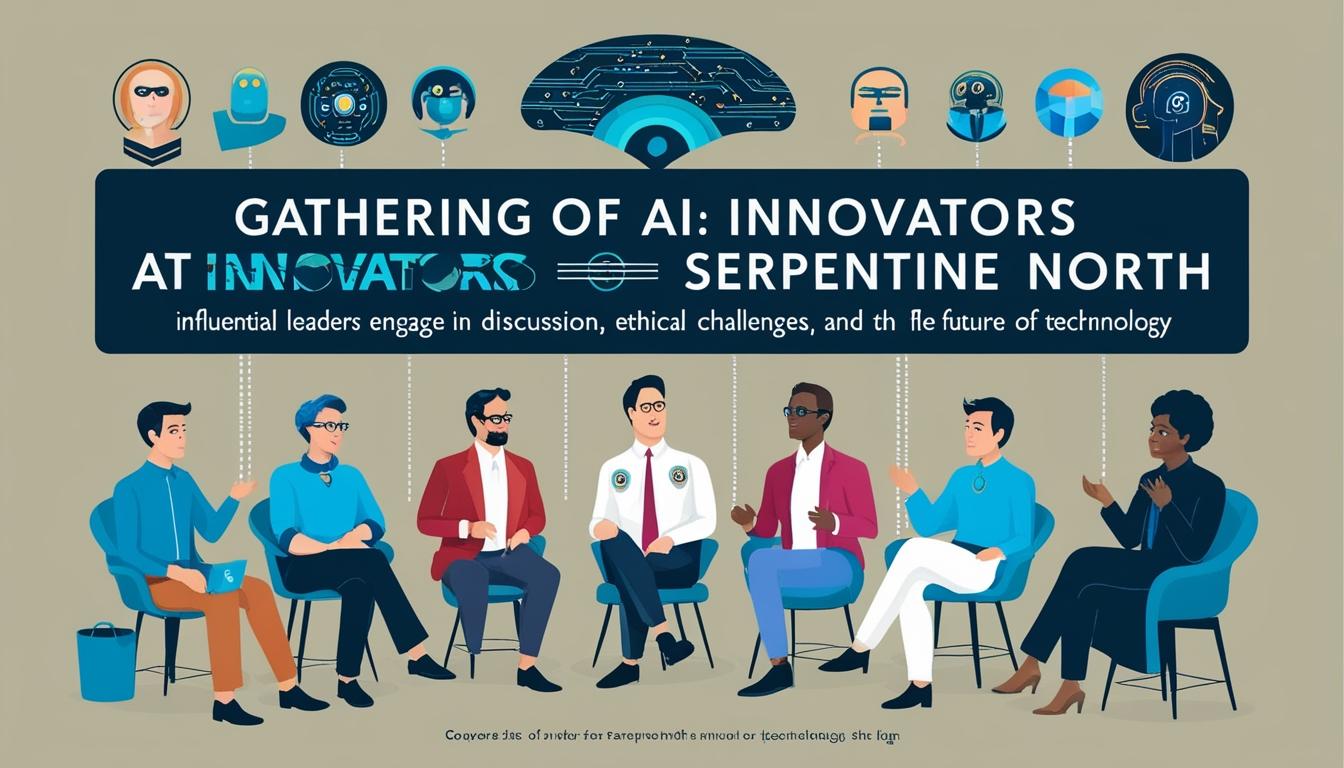
On Wednesday, notable figures in artificial intelligence gathered at Serpentine North, a historic former gunpowder store now serving as an exhibition space, to attend the inaugural TIME100 Impact Dinner in London. This event came on the heels of a similar gathering in San Francisco the previous month and was aimed at bringing together influential leaders and experts who are pivotal in steering the future of AI.
The dinner attracted honorees from TIME's 2023 and 2024 lists of the 100 Most Influential People in AI, showcasing individuals who are actively shaping advancements in the technology. The evening began with a discussion led by TIME CEO Jessica Sibley alongside Rosanne Kincaid-Smith from Northern Data Group and Nvidia’s Jaap Zuiderveld. As attendees enjoyed the main course, the focus shifted to an insightful panel discussion.
The panel featured TIME 100 AI honorees, including Jade Leung, the Chief Technology Officer at the U.K. AI Safety Institute; Victor Riparbelli, CEO and co-founder of Synthesia; and Abeba Birhane from Trinity College Dublin. Moderated by TIME senior editor Ayesha Javed, the discourse delved into the current landscape of AI, its challenges, and the question of who holds responsibility for the technology's impacts, especially in the burgeoning field of AI-generated video communication.
Jade Leung highlighted the crucial need for empirical data to better comprehend emerging AI risks, including potential cyber, biological, and chemical threats. She stressed the asymmetry between public awareness and the insights available within AI firms, underscoring the rapid evolution of safety practices in the field.
Abeba Birhane expressed scepticism towards the "massive hype" surrounding AI, suggesting that many models do not meet their advertised capabilities. She emphasised the importance of considering the entire AI pipeline, from data sourcing to environmental impacts, and the ethical concerns regarding data-labellers' labour. Birhane called for comprehensive evaluations from both large corporations and startups to ensure a responsible development process.
Victor Riparbelli contributed his perspective on the dual challenges of current societal issues and potential dystopian AI scenarios. He discussed the transformative potential of AI in video creation, suggesting a future where anyone could produce high-quality video content using AI technology, while noting the importance of moderation to prevent misuse, such as creating deepfakes.
Throughout the discussion, there was consensus on the critical need for robust evaluations of AI systems to identify both their capabilities and limitations. The rapid pace of AI development necessitates agile responses to the associated safety and ethical challenges.
The panelists acknowledged the shared responsibility of corporations and governments in managing AI risks. Leung and Riparbelli noted the imperative for companies to innovate continuously within safety protocols, while governments play an essential role in regulation. Birhane highlighted the tension between economic incentives and the broader public interest, advocating for regulation driven by empirical evidence to foster beneficial AI systems for all societal levels.
On the topic of global governance, Leung stressed the importance of clarity in developing international guardrails for AI. She pointed out that coordination across jurisdictions in establishing best practices, standards, and protocols remains a significant challenge but welcomed the involvement of varied international stakeholders, including China, as demonstrated at last year’s AI Safety Summit in the UK.
The event, presented by Northern Data Group and Nvidia Europe, successfully fostered dialogue among key figures influencing AI’s trajectory, reflecting on both the promising innovations and the necessary caution as this powerful technology continues to evolve.
Source: Noah Wire Services