Mistral AI Launches Pioneering Edge-Focused Language Models
Paris-based Mistral AI, a prominent player in the artificial intelligence sector, has unveiled two innovative language models, Ministrel 3B and Ministrel 8B, potentially transforming the landscape for AI deployment in enterprises and among developers. Announced on Wednesday, these models signify a paradigm shift from the prevailing reliance on cloud-based AI solutions to more edge-oriented technologies.
The newly introduced models, collectively known as “les Ministraux,” are engineered to be both compact and highly efficient, offering advanced AI functionalities suitable for deployment on edge devices such as smartphones, laptops, and Internet of Things (IoT) devices. The significance of this innovation lies in its ability to reduce the dependency on cloud-based AI solutions, thus addressing concerns related to connectivity and data privacy.
Ministral 3B, although smaller with three billion parameters, surpasses Mistral’s previous seven billion parameter model in performance benchmarks. Meanwhile, its counterpart, Ministrel 8B, not only provides similar performance to much larger models but also excels in tasks requiring knowledge, commonsense, and multilingual understanding, placing it on par with heavyweight competitors like Google’s Gemma and Meta’s Llama models.
Advancements in Edge AI: Bringing Processing Closer to Users
The introduction of these models is set to revolutionise industries by enabling real-time processing locally on devices, bypassing the latency, potential security risks, and privacy concerns tied to cloud computing. Such capabilities are invaluable across various sectors, including manufacturing, healthcare, and finance, where the privacy of sensitive data and quick decision-making are paramount.
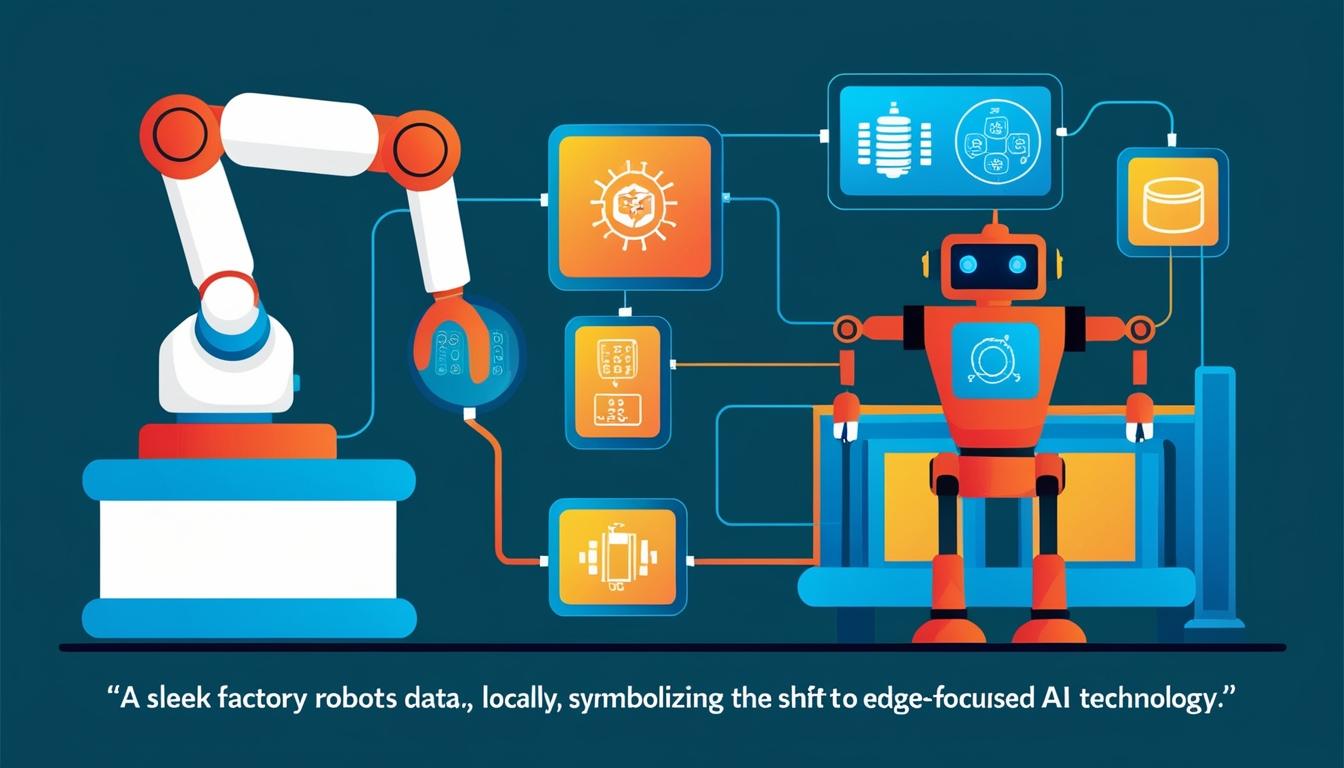
A practical illustration of this includes a factory robot equipped with these models, capable of processing visual data and making instantaneous decisions without the need to connect to a remote server. This method not only preserves data security but also significantly reduces delays.
Sustainability and Efficiency at the Forefront
Amidst growing concerns about the environmental footprint of AI technologies, Mistral AI’s development of efficient and compact models represents a strategic move towards sustainability. Traditional large language models demand substantial computational power, thereby inflating energy consumption. By contrast, Mistral’s alternatives promise reduced energy requirements, aligning with the broader industry trend towards environmentally friendly computing solutions.
Strategic Business Approach and Market Positioning
Mistral AI is deploying a hybrid business model that combines open access for research with commercial cloud platform offerings. This approach fosters a vibrant developer community and generates revenue streams, drawing parallels to successful strategies in the open-source domain as exemplified by firms like Red Hat.
In a competitive AI market, characterised by the formidable presence of big tech companies like Google, Meta, and OpenAI, Mistral's edge-focused strategy aims to carve out a unique space. The company’s potential to integrate AI seamlessly into everyday devices depicts a future where technology is ubiquitously intelligent and centralised cloud reliance is diminished.
Navigating the Complexities of Edge Deployment
Embarking on the transition towards edge AI introduces new complexities related to model management, version control, and security challenges. Organisations will require advanced tools and frameworks to manage and secure a distributed network of edge devices effectively. This shift signals the potential emergence of a dedicated industry akin to the evolution sparked by cloud computing.
Mistral AI anticipates these challenges, positioning its technologies to complement rather than replace cloud systems. Their models enable an architecture where regular tasks are locally processed, while intricate operations are managed by more robust cloud resources. This strategy highlights both the current limitations and the expansive possibilities of edge AI.
The technological prowess behind les Ministraux, particularly Ministrel 8B’s innovative “interleaved sliding-window attention” mechanism, allows for enhanced processing of extended text sequences, proving advantageous in tasks like document analysis and summarisation.
As industries adapt to these cutting-edge solutions, fundamental questions on the impact on existing cloud investments and potential regulatory implications arise. The answers to these questions will likely influence the trajectory of AI development in the years to come.
Mistral AI’s release marks more than just a technological stride—it may be a catalyst for redefining AI's operational dynamics in modern computing infrastructure. This advancement poses critical enquiries into the role of cloud computing in an increasingly decentralised AI environment.
Source: Noah Wire Services