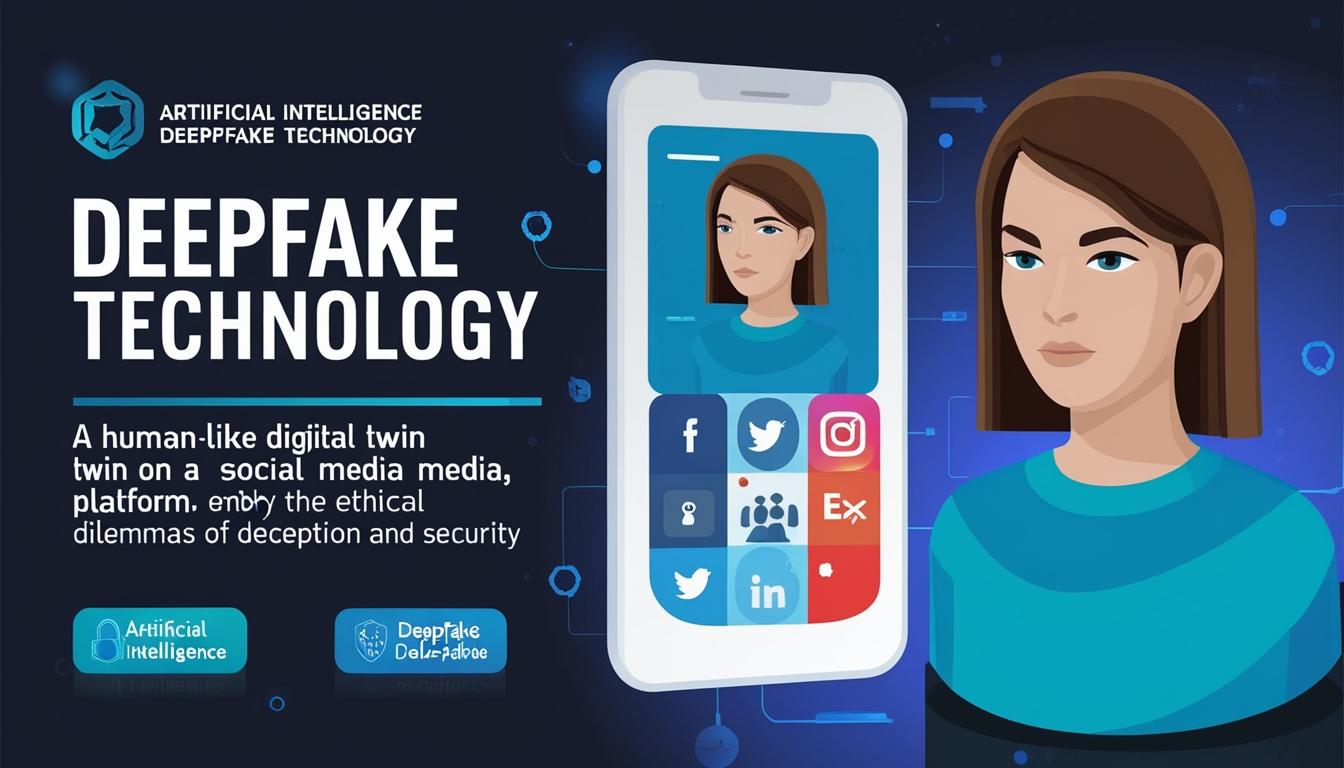
The United States Special Operations Command (USSOCOM) is seeking the development of sophisticated technologies to create artificial internet personas that convincingly mimic real humans. This pursuit is outlined in a recently obtained procurement document that sheds light on the branch's aspirations to harness deepfake capabilities for strategic purposes.
In a specific wishlist from the Joint Special Operations Command, it is detailed that the desired technologies would enable the generation of realistic online profiles. These profiles are expected to blend seamlessly into social media platforms and various online networks without detection by current algorithms or human scrutiny. The document specifies that these artificial personas would require lifelike facial and background imagery, as well as video and audio content to enhance authenticity.
The Pentagon's interests, as outlined, would include crafting profiles that are perceived as unique individuals yet are entirely fictional. The ambition is to create content such as government-identification-quality photos, diverse facial expressions, and even simulated "selfie videos" to accompany these fabricated identities. The technology sought would enable these entities to navigate virtual spaces undetected, effectively enabling collection of information from public online forums and potentially engaging in other operations.
This interest in deepfake technology is not new for the Special Operations Command. As reported previously, there has been an ongoing inclination towards using deepfakes for various strategic functions like influence operations, digital deception, communication disruption, and disinformation campaigns. The underlying software aims to replicate human features by leveraging vast databases, raising concerns about the ethical implications of such technology.
Significant concerns were flagged last year by prominent U.S. agencies, including the Federal Bureau of Investigation, the National Security Agency, and the Cybersecurity and Infrastructure Security Agency. They highlighted synthetic media as a burgeoning threat, identifying the proliferation of deepfakes as a critical risk for modern technology users and communication systems.
Adding to the concern, Daniel Byman, a member of the State Department’s International Security Advisory Board, drew attention to potential repercussions domestically and internationally. He noted the risk of perceived hypocrisy by the U.S., given its own warnings against the very technology it seeks to develop. Byman also pointed to the prospect of eroding trust within the domestic sphere, questioning whether public faith in government-issued information might further decline should these technologies become widely known or misused.
The potential for deepfake technology to impact governmental trust and international perception continues to spur debate among experts and policymakers. As Special Operations Command progresses with its plans, the broader implications of such developments on privacy, security, and ethics remain at the forefront of discussions around digital media and national security.
Source: Noah Wire Services