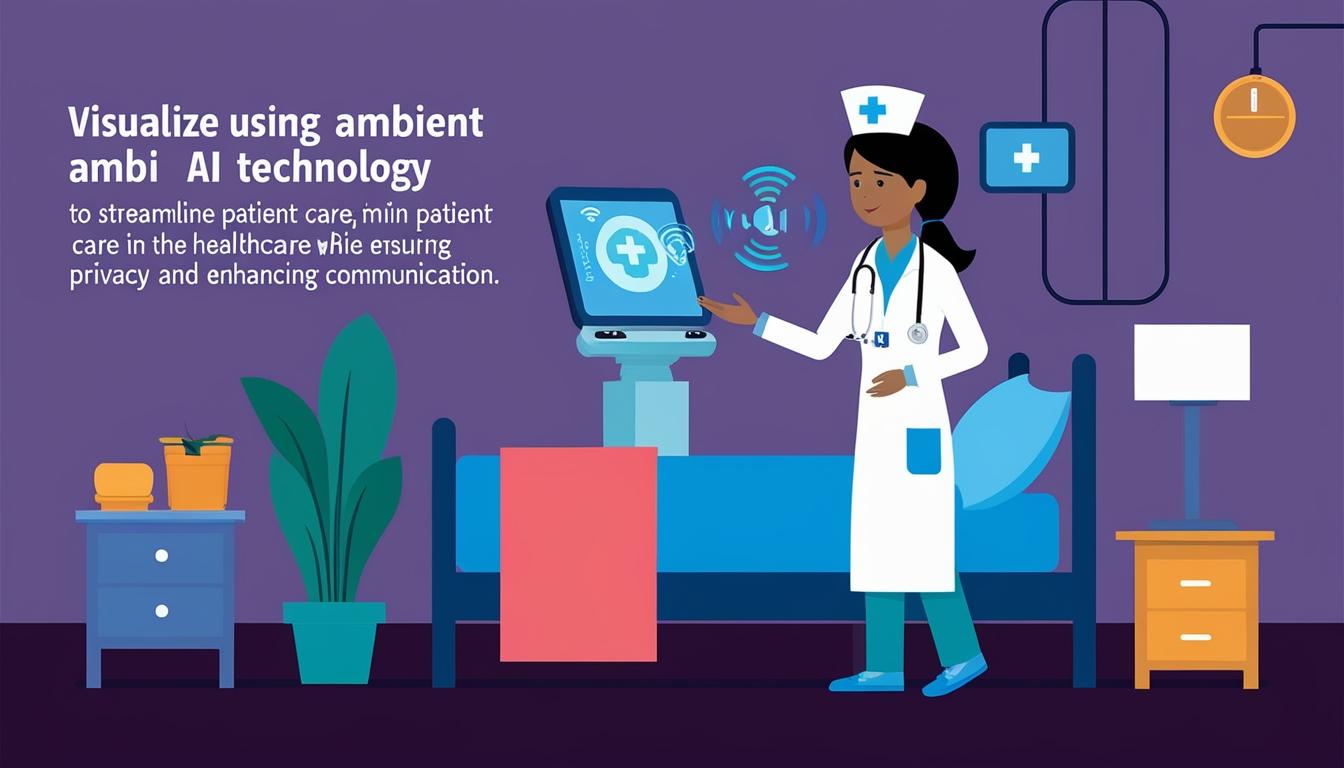
The Advent of Ambient AI in Healthcare: Transforming Patient Care and Administration
As technology continues to evolve at a rapid pace, the healthcare industry is examining how new innovations can be adapted to improve patient experiences. One such innovation, ambient AI, is being hailed as a potential game-changer in healthcare settings across the globe. This cutting-edge technology unobtrusively listens to conversations in real-time, helping to streamline clinician workflows, reduce operational costs, and ultimately enhance patient outcomes.
Microsoft's Leap into Healthcare AI
Microsoft has been at the forefront of integrating ambient AI into healthcare, introducing several updates in Microsoft Cloud for Healthcare that harness its capabilities. By doing so, Microsoft aims to support a broad shift towards a more AI-driven healthcare system. Amit Patel, founder of technology consultancy Mythos Group, highlighted the benefits, stating, "Ambient AI can automate patient check-ins, suggest optimal appointment times, and even provide real-time language translation to ensure seamless communication."
Administrative Relief
The healthcare industry is burdened by extensive paperwork, often depriving clinicians of valuable time with patients. This administrative strain can result in burnout and affect the quality of care. Ambient AI offers significant potential to ease this burden by automating documentation processes. Patel envisions ambient AI revolutionising patient intake and scheduling, allowing verbal inputs to suffice for check-ins, thereby making the experience near-touchless and significantly reducing manual data entry.
The technology not only simplifies administrative tasks but also offers real-time translation services, a blessing in multicultural communities where language barriers sometimes hinder effective communication between patients and healthcare providers.
Enhancing Nursing Efficiency
Nurses form the backbone of patient care, yet their responsibilities often include burdensome documentation tasks. Microsoft has collaborated with Epic Systems to develop an AI-driven workflow solution that aids nurses in documenting patient interactions more efficiently. Terry McDonnell, senior vice president and chief nurse executive of Duke University Health System, expressed optimism, noting that the integration of AI-driven solutions allows nurses to devote more time to patient care rather than administrative obligations.
Economic Benefits and Operational Efficiency
Beyond patient interactions, ambient AI holds potential for improving the medical supply chain. Carolyn Metnick from Sheppard Mullin's Corporate Practice Group highlighted how real-time information can enhance operational efficiency from inventory tracking to shipping strategies. By leveraging technology that can trace an item's lifecycle through attributes like expiration and usage, ambient AI promises to tailor inventory management more effectively.
Addressing Privacy Concerns
Despite its numerous advantages, ambient AI's continual listening feature raises privacy concerns among patients. Questions about data security and potential misuse linger, prompting demands for stringent privacy measures. Joe Petro, corporate vice president for healthcare and life sciences solutions at Microsoft, assures that the company is committed to upholding responsible AI principles, ensuring compliance with privacy regulations such as HIPAA.
As ambient AI becomes integrated into healthcare settings, its potential to transform processes while safeguarding patient privacy remains paramount. The exploration of its capabilities indicates a promising future where technology and patient care enhance each other harmoniously.
Source: Noah Wire Services