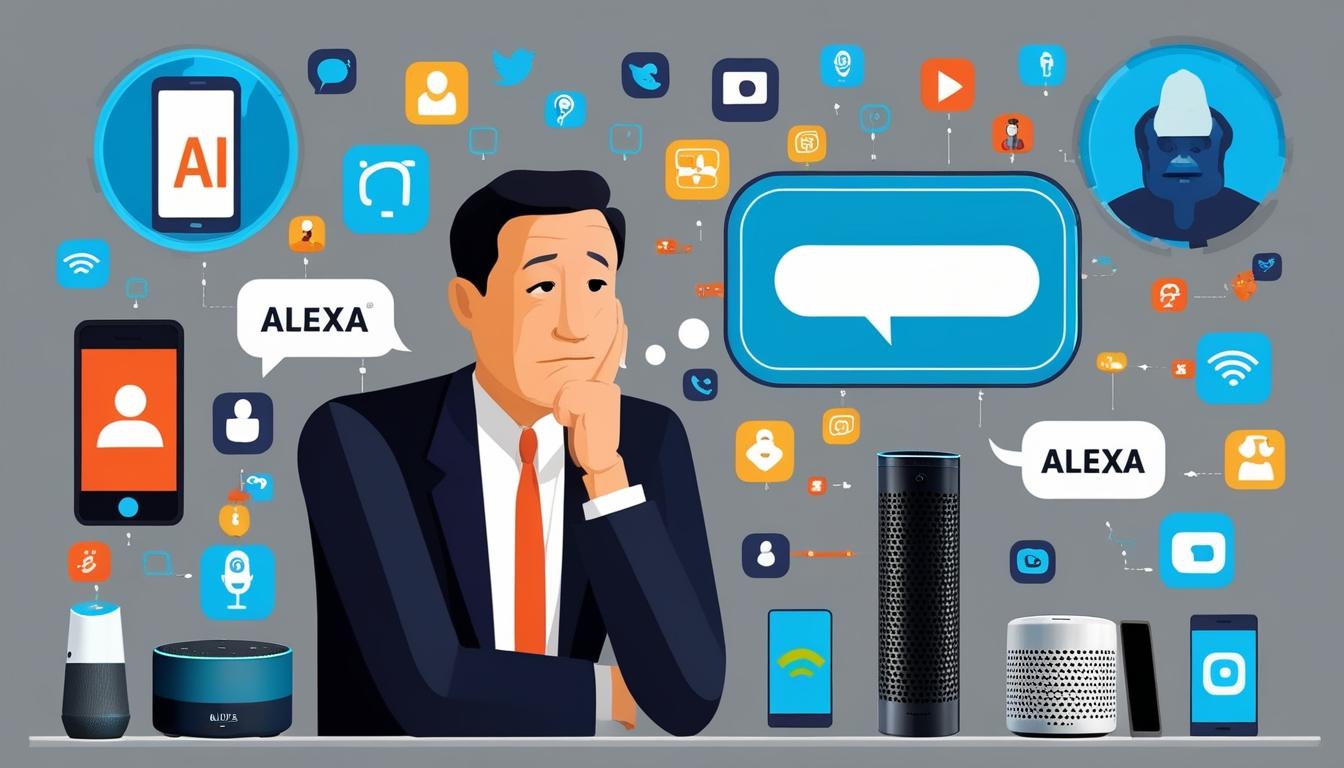
Artificial Intelligence (AI) has become an embedded aspect of contemporary life, affecting various sectors from entertainment and home convenience to business operations and ethics. AI is no longer simply a concept from futuristic films; it is a technology actively shaping daily experiences.
A prime example of AI's penetration into everyday life is social media platforms, where algorithms curate content, generate friend suggestions, and provide a personalized user experience touted by tech entrepreneurs like Mark Zuckerberg and Elon Musk. AI's influence extends to entertainment services such as Netflix, which uses AI algorithms to recommend shows and films tailored to individual viewing habits. With a subscriber base nearing 240 million globally, Netflix illustrates the extent of AI preferences dictating consumer choices.
Moreover, AI features are standard in nearly 7 billion smartphones worldwide, illustrating its pervasive influence in our digital interactions. Devices like Amazon's Alexa serve as household assistants, capable of managing music playlists, shopping lists, home security, and even climate control. Alexa's abilities point to the broader integration of AI-driven virtual assistants into private life, acting as personal digital concierges.
Despite the convenience and efficiency AI offers, its integration is not without controversy. There is a significant divide between AI proponents who appreciate its capacity to enhance productivity by automating mundane tasks and opponents who express concerns over several risks. Among these concerns are job elimination due to automation, ethical implications in healthcare prioritisation, intellectual property theft, and the erosion of the human element in service industries. These apprehensions resonate with recent studies, such as a 2023 Pew Research survey showing that 52% of Americans harbour concerns about AI's encroachment into everyday life.
The labour market impact is particularly concerning, with a Gallup and Bentley University survey indicating that three-quarters of respondents believe AI will exacerbate job market competition. Persistent scepticism regarding the ethical use of AI by companies is notable, with 79% expressing doubt in corporations' responsible deployment of AI technologies.
As AI continues to develop, questions about its potential to replace leadership roles have been debated. There are legitimate considerations regarding whether AI could assume roles traditionally held by humans, given its ability to automate complex planning and data analysis tasks.
While AI excels in processing information rapidly and efficiently, it lacks the nuanced decision-making and empathy integral to leadership roles. Empathy-based leadership remains a distinctly human attribute, crucial for navigating dynamic business environments and adapting to unforeseen changes. Those who have experienced diverse extreme environments, such as strategic advisors who have operated in war zones, emphasize empathy and adaptability as key components in leadership, which AI has yet to replicate.
Incorporating AI within businesses poses ethical considerations and necessitates a culture that fosters innovation and willingness to experiment. While AI can optimize processes, it lacks the capacity for moral judgement and mistakes, which can result in significant business consequences, such as the loss of talent or contracts.
In essence, while AI continues to play a transformative role across industries, human skills such as empathy, strategic thinking, and ethical judgement remain essential in leveraging AI technologies effectively. These factors underscore the ongoing need for human leadership to guide AI's integration into society, balancing technological progress with potential ethical and societal impacts.
Source: Noah Wire Services