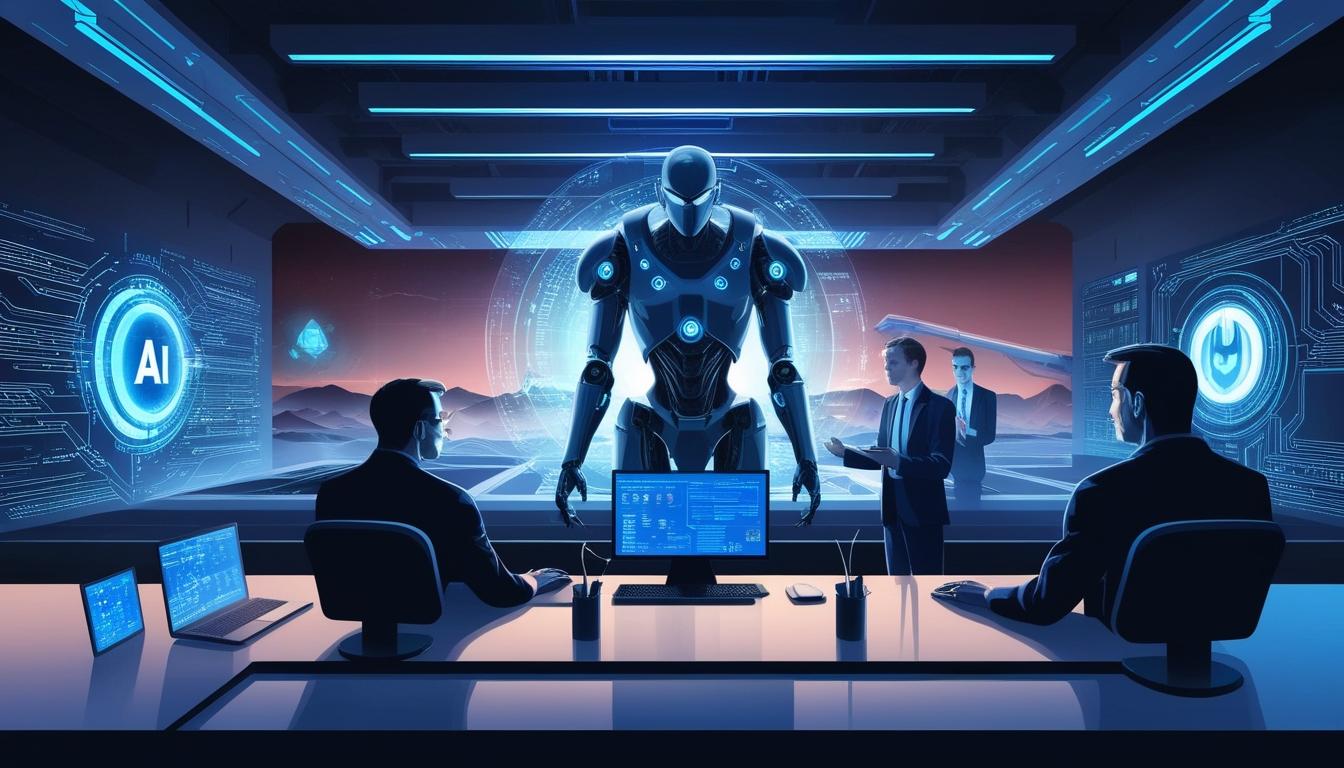
In the contemporary cybersecurity landscape, evolving innovations and emerging threats are reshaping the strategies that organisations employ to protect their data and systems. Recent developments have seen malicious actors leverage advanced technologies, particularly artificial intelligence (AI), to instigate more sophisticated and pernicious cyberattacks. These advances in attack methodology are urging enterprises to enhance their cybersecurity measures, particularly by incorporating AI-driven solutions capable of pre-emptively identifying and mitigating threats.
AI-powered cybersecurity tools have proven instrumental in ushering a new era of digital defence, performing tasks far beyond traditional security systems. From identifying complex patterns within vast arrays of data to automating responses to imminent threats, AI functions as a formidable ally against the rapid and cunning nature of modern-day cyberattacks.
Unveiling AI’s Capabilities in Cybersecurity
AI systems have been particularly adept at enhancing threat detection methods. By continually analysing enormous datasets for irregularities, these systems can highlight even the most covert threats, providing a layer of surveillance far superior to manual examination. As AI systems accumulate and analyse data over time, they improve their threat recognition capabilities, standing as a vigilant sentinel against evolving cyber threats.
The swiftness of AI in responding to threats also marks a considerable leap from previous methods. When a cyber incident is detected, AI tools can immediately execute countermeasures, often mitigating risks before they proliferate. This capability to act swiftly is invaluable, reducing the potential financial and operational damages that organisations might otherwise incur.
AI goes further by implementing predictive analysis, which entails evaluating historical data to uncover potential vulnerabilities before they are exploited. This proactive approach enables organisations to fortify their security measures effectively, maintaining a defensive edge against digital adversaries.
Continuously learning and adapting, AI systems remain on the frontier of cybersecurity, evolving with each new threat they encounter and optimising their models for future use.
The Indispensable Human Element
Despite AI's transformative role, human expertise remains crucial in the cybersecurity landscape, particularly regarding ethical considerations, strategic decision-making, and creative problem-solving. Human intervention is imperative for interpreting the complex data that AI systems produce, ensuring that informed decisions underpin strategic responses to threats.
Humans provide the essential contextual understanding that AI systems lack. Analysts assess not only the immediate threats but also the broader implications, taking into account various factors such as specific company vulnerabilities, industry standards, and geopolitical contexts.
Ethics is another domain where human oversight is paramount. While AI can be extremely efficient, it raises moral questions particularly concerning data privacy and bias, necessitating continuous human scrutiny to ensure ethical deployment.
The creative acumen of human experts also plays an irreplaceable role, driving innovative solutions to unforeseen challenges. The fusion of AI’s computational might with human strategic insights creates a resilient framework capable of countering the most sophisticated cyber threats.
Synergetic Cybersecurity Strategy
The convergence of AI and human collaboration is foundational for robust cybersecurity strategies. By delegating routine tasks to AI, such as data analysis and threat monitoring, cybersecurity professionals can concentrate on more intricate issues demanding human intervention. This balance optimises resource allocation and enhances overall security efficacy.
AI's data-driven insights, when examined through the lens of human intuition and expertise, lead to more robust threat detection and nuanced responses. The interplay between AI’s learning capabilities and human adaptability fuels a comprehensive defence mechanism, equipping organisations with the means to swiftly counter emerging threats and refine protection strategies continually.
Moreover, AI functions as an educational tool, offering cybersecurity teams simulations and training that mimic real-world attacks. This fosters improved readiness and expedites response times, enabling organisations to maintain a fortified stance against cyber adversaries.
Preparing for Tomorrow’s Threats
To navigate the evolving threat landscape, organisations must integrate AI technologies with human skill sets within their cybersecurity frameworks. This entails investing in AI tools that complement existing infrastructure and adopting training programmes that enhance teams’ proficiency in interacting with AI systems.
Creating a workplace culture that values innovation alongside human insight is vital. This ensures that as AI tools automate significant portions of cybersecurity tasks, human intervention remains paramount in steering strategic decision-making processes.
Ultimately, the partnership between AI and human intelligence is critical to devising adaptive and resilient cybersecurity strategies. As cyber threats grow more intricate, leveraging the strengths of both realms will be key to sustaining robust defences in the face of a rapidly shifting digital threat environment.
Source: Noah Wire Services