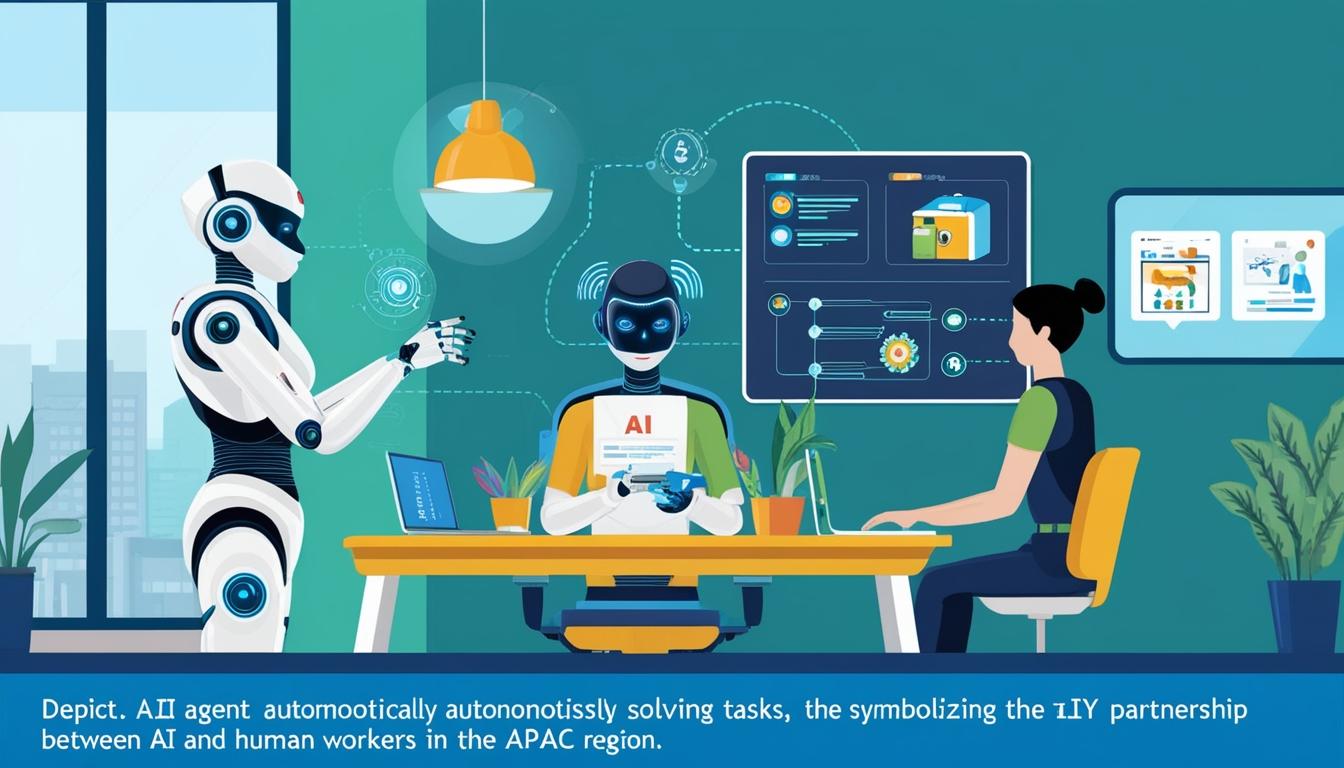
The Rise of AI Agents: Transformative Developments in the APAC Region
The evolution of artificial intelligence (AI) is on the brink of a significant transformation, according to Armand Ruiz, IBM's vice president of product management for its AI platform. Speaking at the SXSW Festival in Australia, Ruiz unveiled the next frontier in AI technology that will see enterprises in the Asia-Pacific (APAC) region adopt highly sophisticated AI agents. These agents are not just predictive models or interactive chatbots; they are designed to autonomously handle complex, multi-step tasks, liberating employees from routine duties.
Transitioning into the 'Agentic Era'
AI technology has historically operated within the confines of predictive analytics and conversational interfaces. However, Ruiz predicts an impending shift towards an 'agentic era', where AI agents will act as collaborative partners with human teams to enhance operational efficiency. These agents are devised to automate demanding tasks, thereby allowing employees to engage in more creatively and strategically driven roles.
“We have a long way to go to get AI to allow us to do all these routine tasks and do it in a way that is reliable, and then do it in a way that you can scale it, and then you can explain it, and you can monitor it,” Ruiz stated. However, he expressed confidence that these achievements are within sight sooner than anticipated.
Understanding AI Agents
An AI agent, as described by Ruiz, is a system capable of independent reasoning to solve intricate problems. They compartmentalise tasks, devise executable plans, and implement these plans utilising a breadth of resources. AI agents are distinguished by their capabilities in planning, memory, usage of tools, and autonomous action.
Planning: AI agents will exhibit advanced planning abilities, including self-reflection and self-criticism. They can break down tasks into smaller, manageable tasks to enhance accuracy and efficiency.
Memory: Enhanced short-term and long-term memories will enable AI agents to operate seamlessly. They retain context during active sessions and utilise past data to improve future performance.
Use of Tools: AI agents will connect to third-party applications required for task completion. With appropriate access, they will employ tools that range from web searches and code-generation platforms to comprehensive enterprise systems.
Autonomous Action: The hallmark of AI agents lies in their autonomy, enabling them to undertake tasks such as streamlining HR workflows or troubleshooting software issues independently.
Implementation in Enterprises
Ruiz predicts that enterprises will harness "millions of AI agents" that will function alongside their human counterparts, systematically executing tasks in cohesion. Two types of agents will exist within organisations: one-step agents focused on single tasks, and multi-step agents employing iterative processes guided by advanced language models.
These agents will perform tasks under the guidance of "Super AI" systems, orchestrators that plan, dissect tasks into components, and delegate tasks to suitable AI agents within the enterprise. Super AIs, as envisioned by Ruiz, will facilitate seamless task allocation and execution based on the agents’ specialised skills, ranging from sales proficiency to programming prowess.
Key Beneficiaries of AI Agents
Ruiz identified three distinct groups poised to benefit from the deployment of AI agents: developers, business users leveraging no-code solutions, and a wide range of end users.
Developers: With access to AI technologies via APIs, developers can more readily create and deploy AI agents using frameworks like CrewAI.
Business Users: No-code platforms will enable business professionals to construct AI agents through intuitive user interfaces, independently of programming skills.
End Users: A vast array of end users will incorporate AI agents into daily operations, employing them across diverse applications.
The Future of Work with AI
Ruiz likened the integration of AI agents to the industrial revolution, where machinery automated physical labour. AI, he argued, will play a similar role in enhancing mental labour by automating mundane tasks, thereby allowing human workers to concentrate on strategic and innovative roles.
Already evident in fields like marketing, AI's expansion into sales and other functional areas is anticipated. The strategic use of AI aims to alleviate employee workloads, promote better work-life balance, and empower workers to focus on tasks requiring human creativity and interaction.
Ruiz asserts that the objective is for AI to augment human efforts, enabling people to engage in meaningful activities and forge deeper human connections, ultimately enhancing productivity and efficiency within the workplace.
Source: Noah Wire Services