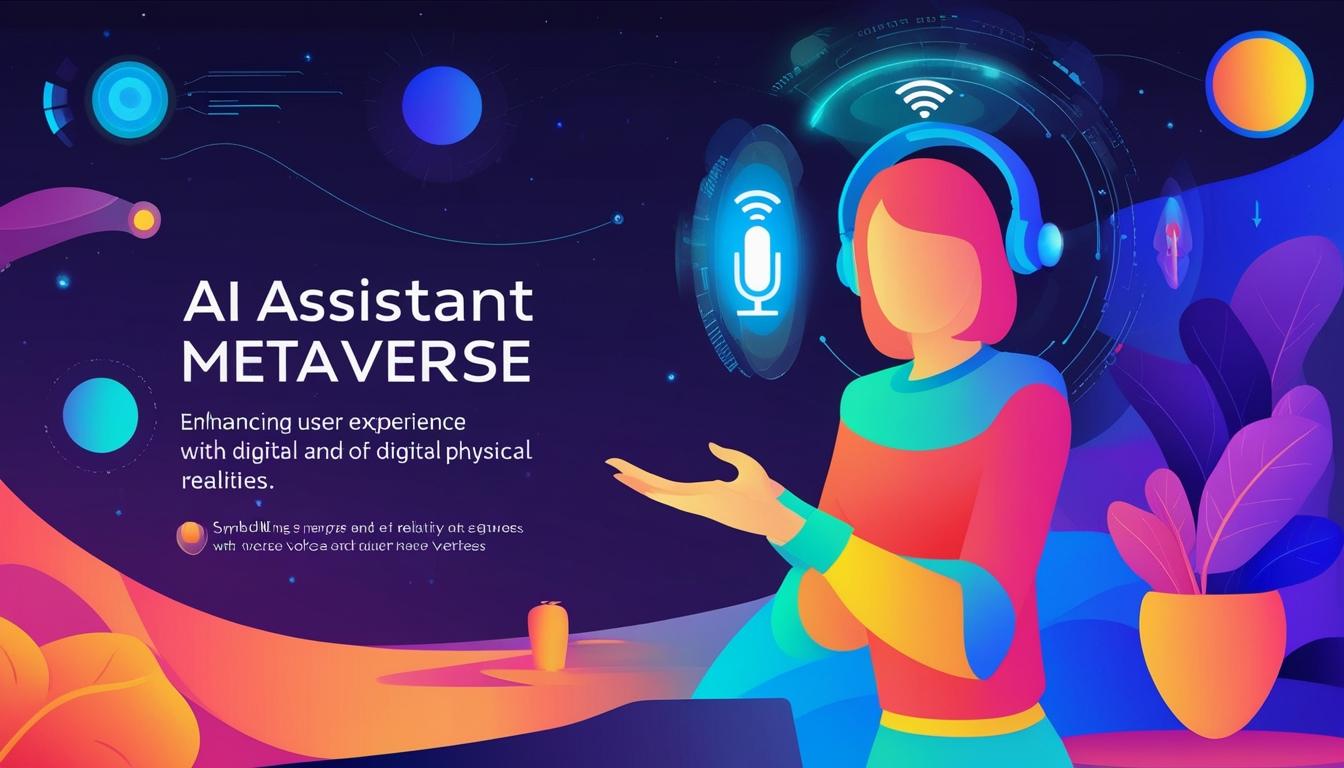
The metaverse, long a staple of futuristic narratives in science fiction, is gradually becoming a significant part of reality, particularly with substantial investments from major tech companies like Meta, which transformed its identity from Facebook to reflect its commitment to this digital frontier. As these companies work tirelessly to blend the physical with the digital, enhancing the user experience within the metaverse is becoming paramount. This is where artificial intelligence (AI) is set to make a significant impact, particularly through AI assistants designed to cater to this emerging virtual space.
As the complexity and immersion level of virtual worlds grow, users will increasingly seek intuitive and personalised assistance for navigation and interaction. Traditional methods of interfacing with technology, such as keyboards and touchscreens, may not suffice in the metaverse’s immersive environment, especially when using devices like virtual reality headsets. In response, AI assistants could offer more seamless, natural interaction methods, utilising voice commands and gestures as primary input forms. These AI assistants, leveraging advanced machine learning, aim to personalise user experiences by adapting to individual preferences, enhancing both navigation and content recommendations.
Benefits of integrating AI into the metaverse are manifold. Firstly, AI assistants can considerably enhance user experience by simplifying complex interactions, guiding users through unfamiliar virtual landscapes, and providing on-the-spot, contextual information. For instance, in a virtual museum visit, an AI assistant could offer detailed historical narratives related to exhibits, enriching the educational experience.
Moreover, AI has the potential to enhance accessibility in the metaverse. By enabling voice and gesture-based controls, AI assistants can make these digital environments more navigable for users with disabilities, thus broadening participation and fostering inclusivity. Additionally, these AI entities can facilitate new monetization avenues by acting as personal shopping consultants, offering product recommendations, and easing virtual transactions. For example, users might engage with an AI assistant while trying on virtual apparel, who might then alert them to relevant discounts or offers that align with their virtual lifestyle.
However, embedding AI into the metaverse is fraught with challenges that need careful consideration. Privacy stands as a major concern, given the extensive data collection required to personalise user experiences. Transparency and clear user control over data are crucial to addressing these worries. Similarly, security issues must be anticipated and mitigated to prevent unauthorised access and exploitation in the metaverse.
Bias presents another challenge; AI algorithms must be meticulously designed to avoid discriminatory practices, ensuring fairness for all users. Developers must prioritise the creation of unbiased systems to prevent a divide in user experiences. Furthermore, the ethical implications of becoming overly reliant on AI assistants cannot be overlooked. A balance must be maintained to ensure that AI augments rather than stifles human skills like critical thinking and independent exploration.
The trajectory for developing AI assistants suited for the metaverse is still evolving. As the technology matures, the focus will likely shift towards addressing these critical challenges while maximising the innovative potential AI holds for enriching virtual manifestations. Industry leaders such as Google and Microsoft are also positioning themselves to explore and develop these AI tools tailored for the metaverse, indicating a robust competitive field burgeoning with possibilities.
In summary, the concept of AI assistants in the metaverse is in its nascent stages but promises revolutionary enhancements in user interaction and personalisation within digital realms. As technology evolves, the interaction between AI and the metaverse will unfold, inviting a wealth of new possibilities and reshaping how humans engage within virtual domains.
Source: Noah Wire Services