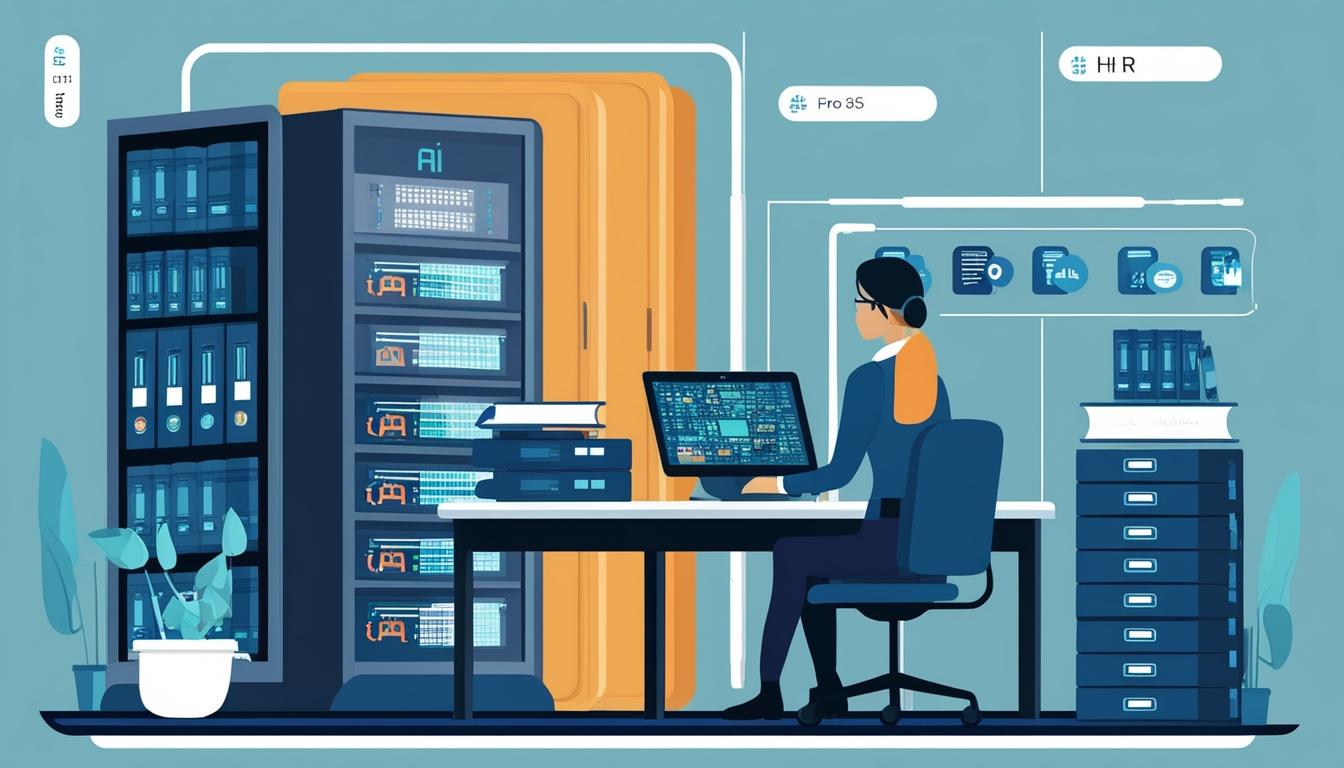
As artificial intelligence (AI) continues to transform various sectors, including human resources (HR), a newly emerging role known as the "AI librarian" is gaining prominence. This role is designed to bridge the gap between human expertise and the capabilities of machine learning, illustrating the evolving nature of technological integration within businesses.
According to a report by Korn Ferry, an organization specializing in executive search and consulting, the AI librarian role has quickly become one of the most in-demand positions, driven by the advancement of generative AI technologies. The report's AI lead described the necessary skills for this role as the "central nervous system of AI," emphasizing the importance of adeptness in collecting, organizing, and analysing data.
Jaycee Schwarz, a talent acquisition specialist at Prizeout, a company specialising in ad tech and fintech, highlighted the evolving technological landscape. She noted that this development is creating roles that combine traditional information management skills with modern data-driven demands. Schwarz pointed out that as AI systems generate increasingly complex data, the necessity to translate these into actionable insights becomes imperative. It underscores a growing industry-wide understanding that data management is as crucial as technological development.
The dearth of skilled AI professionals has compelled hiring managers to seek specialists from less conventional backgrounds. This includes librarians and actuaries who possess a fundamental familiarity with data handling and can be trained in AI-specific tasks. Paul Farnsworth, chief technology officer at Dice, a technology careers marketplace, indicated that as the demand for AI talent surges, more firms may explore hiring from these data-intensive fields.
Dougal Martin, head of knowledge and AI librarian at Deel, a global payroll and HR platform serving 160 countries, exemplifies the skills required for this new position. Martin's career spans diverse fields, including writing, insurance underwriting, and marketing communications. He manages Deel's knowledge base, which contains over 20,000 articles, with monthly additions of around 2,000 new entries. According to Martin, essential skills for an AI librarian include empathy, a passion for information, and the ability to manage complex datasets while understanding end-user needs.
Although the AI librarian role is technologically intensive, Martin stresses the necessity of human oversight to ensure accuracy and reliability. He believes that human input is vital in creating the foundational content and analysis, especially in fields like HR where legal compliance and precision are paramount. The role has become particularly transformative for HR professionals managing global workforces, providing rapid access to current data on issues such as international labour laws and payroll regulations. Martin acknowledges the risk of errors arising from misinformation, noting that HR's sensitive nature demands high standards of accuracy.
Managing a vast repository of information presents its own challenges, particularly in navigating linguistic and cultural differences. Martin emphasizes the potential for misinterpretation when translating between languages, highlighting the need for human oversight. He believes that AI librarians are pivotal in ensuring that AI's potential is rooted in reliable data and insights.
As AI technology continues to evolve, the AI librarian position will likely grow in significance, especially as businesses strive to harness AI's capabilities within a framework of accurate and actionable data. For HR professionals, collaboration with these data experts can lead to more informed decisions, improved compliance, and more strategic talent management.
Source: Noah Wire Services