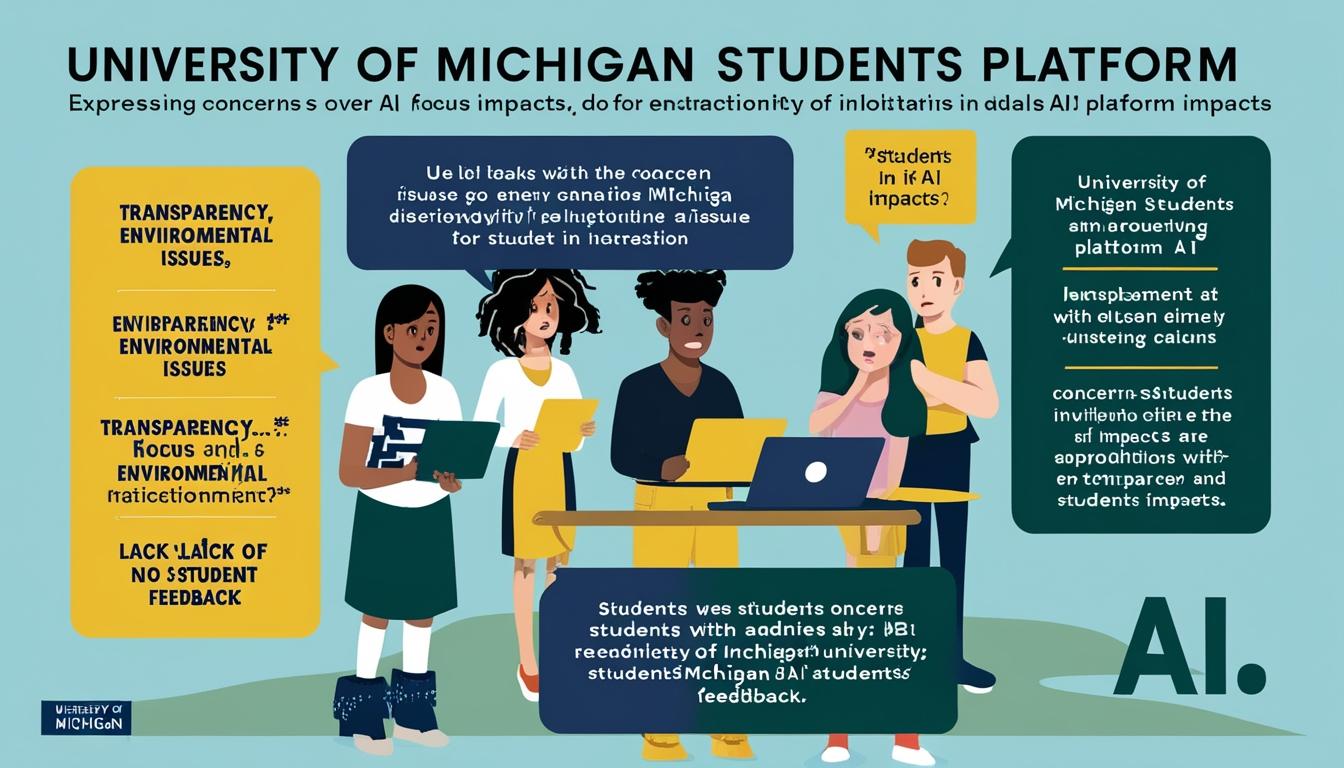
The University of Michigan (UM) has come under scrutiny from its student body following the launch of a proprietary Artificial Intelligence (AI) platform designed to assist students in their academic pursuits. Despite the institution's efforts to modernise educational support, some students have expressed concerns about the lack of transparency regarding the initiative's environmental and financial implications, as well as the absence of student input in the decision-making process.
The AI platform, developed and maintained by a dedicated team of six full-time employees, operates on a "pay-as-you-go" model. This system incurs costs for each query made, suggesting that the platform demands a significant investment. However, UM has not disclosed specific financial details about the venture. The lack of comprehensive information has left some students questioning the platform's necessity and cost-effectiveness.
Rowe, a student who occasionally uses AI for tasks like outlining and research, highlighted a conflict faced by many students. "It's a challenge between, as students, finding the easiest way through your workload, which just gets heavier and heavier, and also grappling with the fact that you're kind of destroying the planet every time you [use AI]," Rowe stated, pointing out a gap in awareness about the environmental impact of AI usage.
Ishana Kalra, a freshman still deciding on her major, expressed a desire for the university to have communicated potential negative implications of integrating AI into the educational framework. Kalra emphasised the lack of student feedback in the process, noting that if the costs and impacts had been clearly laid out, students might have voiced objections. "Because then we could've said, 'Oh, we don't need it if it's costing this much.' There wasn't student feedback on it," Kalra mentioned. She also noted her sparing use of AI tools for tasks like coding, suggesting that existing AI resources elsewhere are sufficient.
Sophomore Hailey Storey, studying ecology and evolutionary biology, raised concerns about prioritised spending. Storey argued that resources might be better allocated towards more research initiatives or language tutors, which are key for students undertaking foreign language requirements at UM.
Meanwhile, Haelee Christmas, a junior majoring in political science, said she has not utilised the Michigan AI tools, noting a preference among her peers for established platforms like ChatGPT. "I felt like Michigan was just trying to have one more thing," Christmas remarked, believing that existing AI tools adequately support student needs.
The announcement and implementation of the AI platform have inadvertently highlighted a lack of awareness among students about the environmental repercussions tied to AI technology usage. Christman commented on her unfamiliarity with this aspect, indicating a broader need for educational institutions to address and inform about such considerations alongside their technical advancements.
As the dialogue around AI's role in academia continues to evolve, UM's experience reflects broader challenges institutions face in balancing innovation, cost management, and environmental responsibility. The situation underscores the complexities involved in integrating emerging technologies into traditional educational environments and the importance of involving all stakeholders in such decisions.
Source: Noah Wire Services