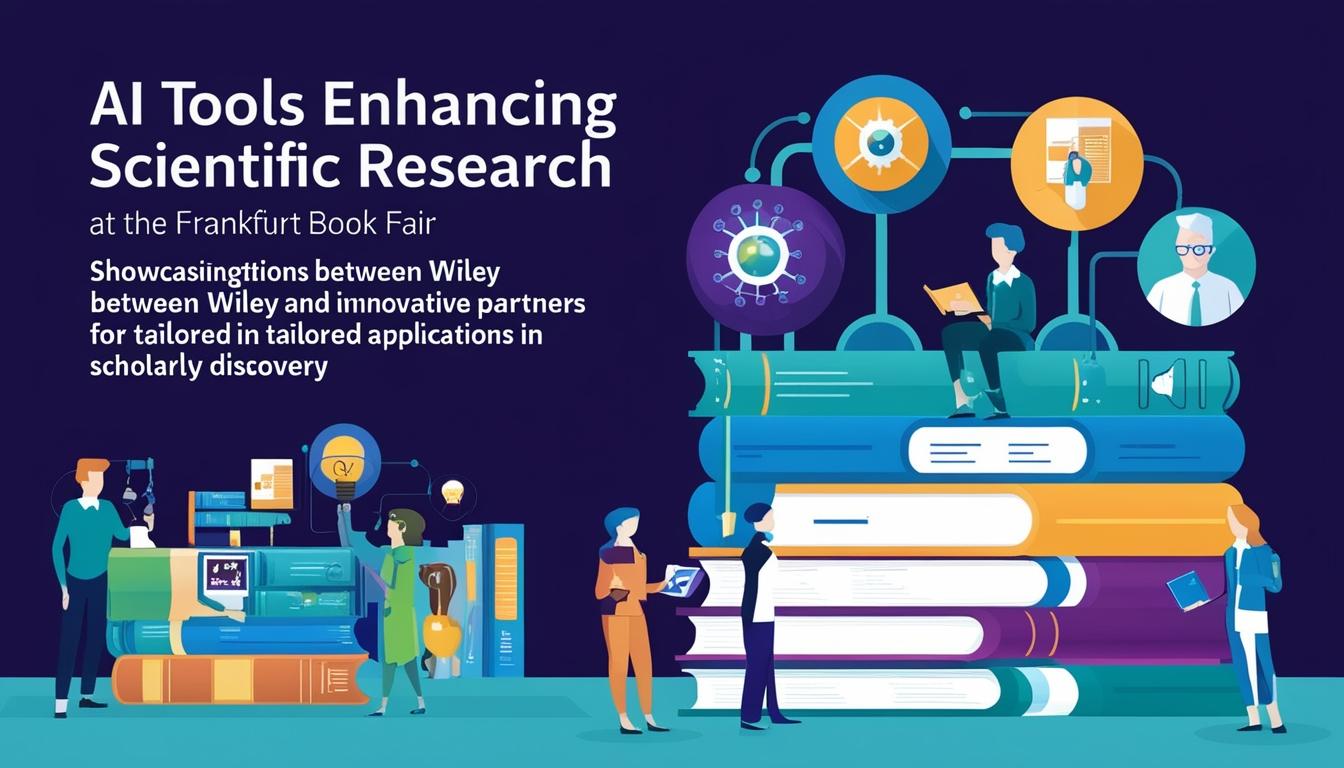
At the Frankfurt Book Fair, a significant development was unveiled by Wiley, a leading player in the academic publishing industry, as it announced the launch of its innovative initiative, Wiley AI Partnerships. This new programme has been conceptualized as a "co-innovation programme," with the ambition to forge pathways for novel AI applications that will fundamentally support and enhance scientific research and discovery.
The initiative is geared towards collaborating with various innovative companies to create targeted AI tools for scientific researchers and practitioners. These tools are expected to improve the pace, efficiency, and accuracy of scientific discovery, emphasizing the need for specialized applications that go beyond generic AI tools. Josh Jarrett, Senior Vice President and General Manager for AI Growth at Wiley, highlighted the necessity for these tailored applications to meet the specific demands of researchers in enhancing their scientific work.
One of the inaugural partnerships under this programme is with Potato, an AI research assistant specifically designed to utilise peer-reviewed literature. This collaboration will see Wiley extending access to some of its substantial content repository to Potato, aiding in the development of specific tools that researchers can employ effectively. Although Jarrett was restrained in discussing the exact terms of the Wiley-Potato agreement, he indicated that each collaboration Wiley partakes in will devise a unique business model tailored to market needs, with revenue sharing being one potential strategy. The overarching goal, according to Jarrett, is to cultivate partnerships that benefit Wiley, its collaborators, and the wider research community simultaneously.
Wiley's focus is currently honed in on its strongest academic disciplines, including life sciences, health science, engineering, chemistry, and materials science, sectors where AI applications could have significant impacts. The publishing giant is proactively seeking discussions with other potential partners, indicating a strong commitment to expanding its AI ventures.
This strategic movement aligns with Wiley's broader business objectives, as the company enhances its involvement in AI technology. Earlier in the year, Wiley made headlines by securing two major content-licensing agreements with technology firms, with a combined value of approximately $44 million. These deals underscore the company's readiness to exploit opportunities in the AI domain. Matthew Kissner, Wiley's CEO, articulated that such partnerships present Wiley with crucial learning opportunities to understand AI's evolving role and to potentially guide the integration of AI in the future of publishing.
As the publishing industry continues to evolve with technological advancements, Wiley's initiatives spotlight the intersection of AI and academic research, suggesting a transformative period for how knowledge is managed and disseminated within scientific communities.
Source: Noah Wire Services