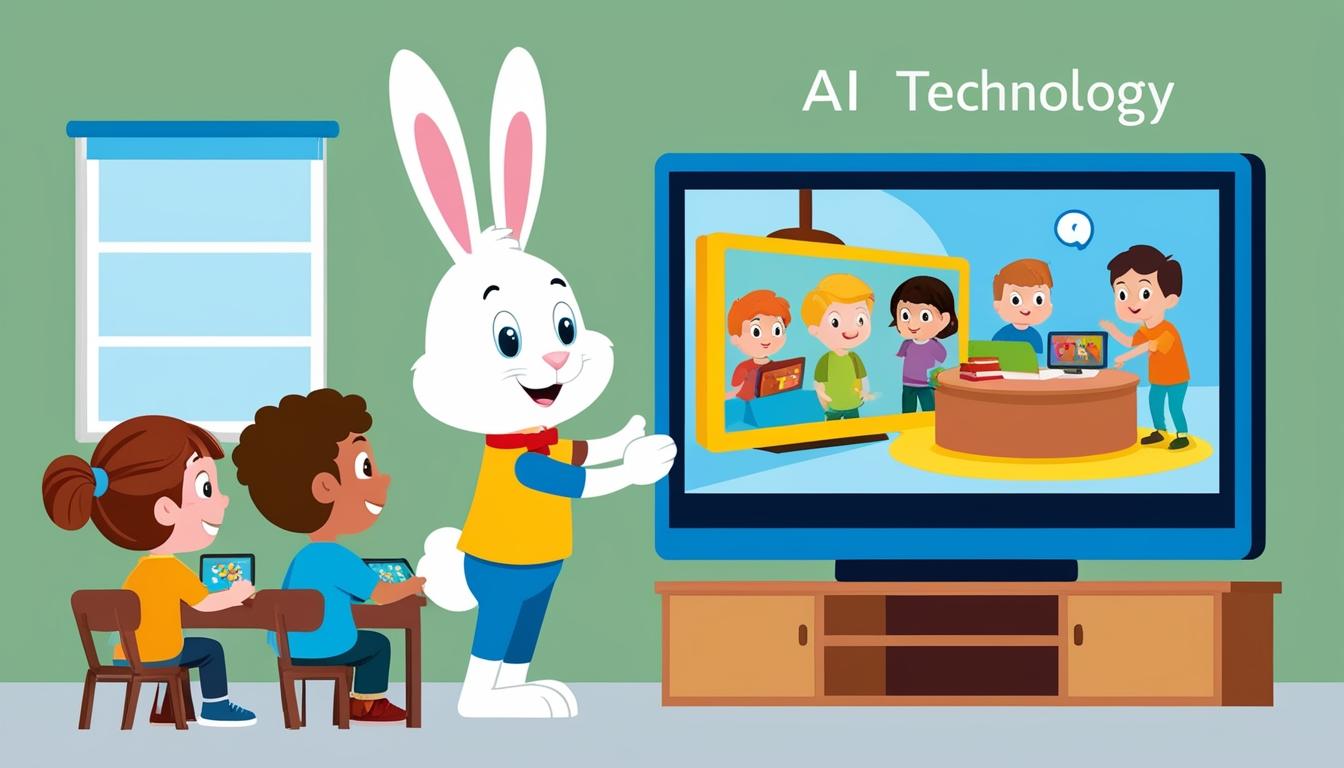
A recent study led by a team at Harvard University has shed light on the potential benefits of integrating AI-powered characters into children's educational TV programmes. The research, spearheaded by Professor Ying Xu from the Harvard Graduate School of Education, revealed that young students gain a deeper understanding of educational content when they interact with AI versions of character-driven shows.
The study focused on the PBS Kids show, "Elinor Wonders Why", a science programme designed for children aged 4 to 7. The researchers partnered with the network and observed the interaction of over 200 young participants. These children were divided into three distinct groups to assess their responses to the show's content under different interactive conditions.
One group watched the show in its standard form, without additional interaction. A second group viewed the programme but also participated in an interaction with an AI chatbot version of Elinor, a curious cartoon rabbit and the main character. This version prompted children to answer questions and provided immediate feedback if their responses were incorrect. The final group experienced a pseudo-interactive version of the show, where Elinor posed questions to the audience and gave a general response after a brief pause, mimicking a common format used in children’s TV to simulate interaction.
After viewing, the children were asked a series of questions to evaluate what they had learned from the show. The results showed that those who interacted with the AI version of Elinor performed the best in the quiz, followed by the pseudo-interactive group, with the group that watched only the broadcast version performing the least well.
Professor Xu commented on the findings, noting the significance of even minor improvements in learning outcomes. "Our study highlights how engaging with characters, even when they are not human, can significantly bolster children's educational experiences through television." Xu also acknowledged that while the differences in learning outcomes among the groups were somewhat smaller than initially anticipated, longer-term engagement with such interactive content could yield more pronounced results.
Looking forward, Xu and her team are planning further studies to explore whether similar educational benefits could be observed in more natural, home-based settings where children typically consume media. They are also keen to investigate whether this interactive approach can be extended beyond science to other STEM areas, such as computational thinking.
Moreover, Xu is interested in exploring the real-world applications of AI-assisted learning tools, aiming to understand whether interactions with AI can not only aid comprehension but also enable young learners to apply their knowledge to solve practical problems.
The research opens up new avenues for enhancing educational television through technology, suggesting a promising future where AI can play a supportive role in children's learning environments.
Source: Noah Wire Services