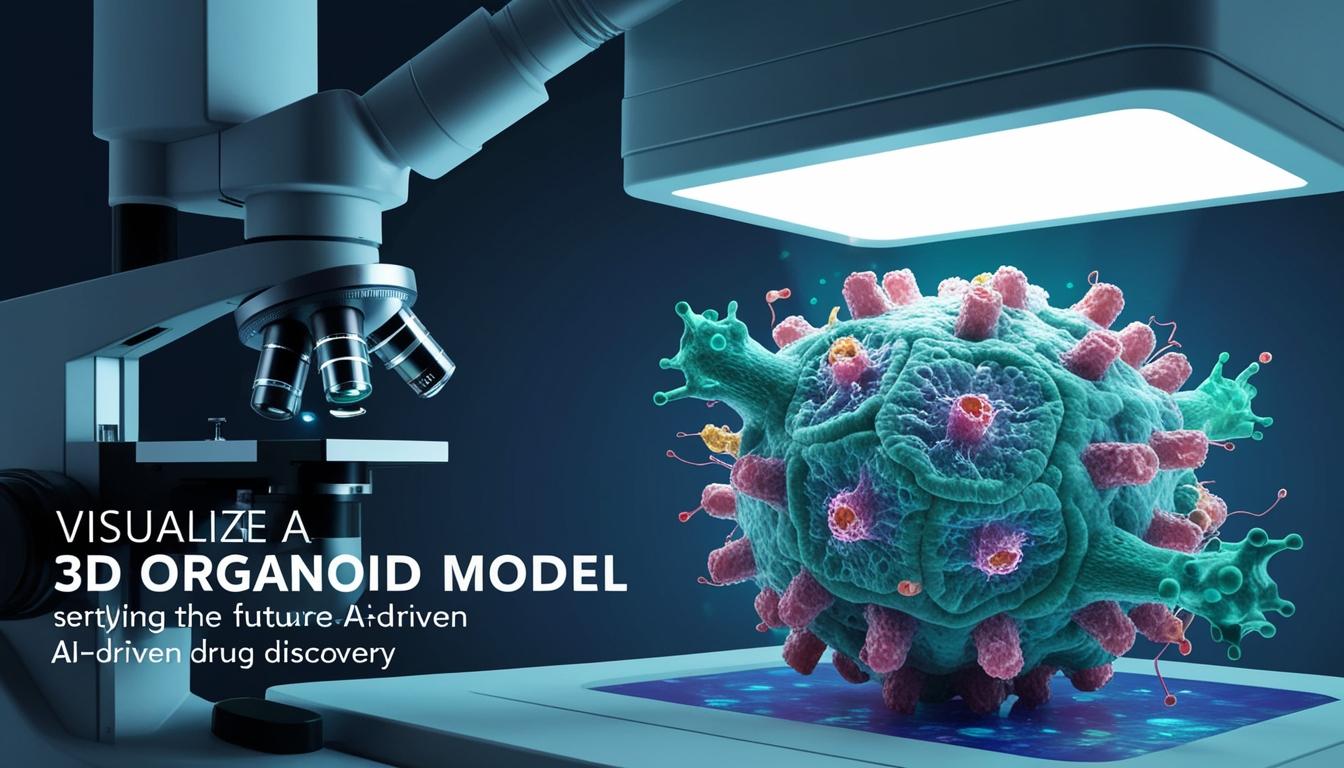
AI-Powered 3D/4D Imaging Revolutionises Drug Discovery
In an era marked by rapid advancements in medical research, the intersection of artificial intelligence with 3D and 4D imaging technologies is set to transform the landscape of drug discovery. This innovation comes in the wake of the U.S. Food and Drug Administration's (FDA) recent approval of organoids in preclinical research, which has significantly shifted the focus toward complex in vitro models (CIVM) for drug testing and disease investigation. This development promises to enhance the accuracy and relevance of in vitro studies, as these models can more closely mimic the complexity of human biology compared to traditional methods.
The transition from 2D to 3D cell culture systems marks a crucial evolution, necessitating advancements in imaging and analysis methodologies. Traditional high-content analysis (HCA), primarily used for 2D cultures, does not capture the intricate detail required for effective 3D biological analysis. As a result, researchers face substantial challenges, particularly concerning the high variability in 3D cell culture samples. Modern microscopy systems are addressing these challenges by providing detailed 3D and even 4D datasets of CIVM, delivering unparalleled insights into cellular structures and interactions.
In response to these advancements, a webinar titled "Advancing Drug Discovery by Combining Complex In Vitro Models with AI-Powered 3D/4D Image Analysis" is set to be hosted by Drug Discovery World (DDW) in collaboration with industry leader ZEISS. Scheduled for 14 November, the webinar will kick off at 7:00 a.m. PST, 10:00 a.m. EST, 3:00 p.m. GMT, and 4:00 p.m. CET. This event aims to equip researchers with the knowledge to effectively utilise cutting-edge tools and technologies, addressing the current challenges of drug discovery and development through sophisticated imaging techniques.
Key topics to be discussed include the automation of complex in vitro model generation and quantification at scale, the use of brightfield and fluorescent imaging techniques for capturing 3D cell cultures, and the employment of AI and parallel computing for analysing 3D hydrogel cultures. Another pivotal discussion point is the efficient detection of drug response patterns across extensive 3D imaging datasets, a critical aspect that could significantly streamline the drug discovery process.
Following the presentations, attendees will have the opportunity to engage in a Q&A session with the speakers, providing a platform for addressing specific queries and deepening understanding of the topics covered.
This webinar promises to be a vital resource for researchers seeking to exploit the full potential of AI-powered 3D/4D image analysis in drug discovery. Interested parties are encouraged to register promptly to secure their spot at no cost. As these technologies continue to evolve, such educational initiatives play a crucial role in bridging the gap between technological potential and practical application, paving the way for future breakthroughs in medical science.
Source: Noah Wire Services