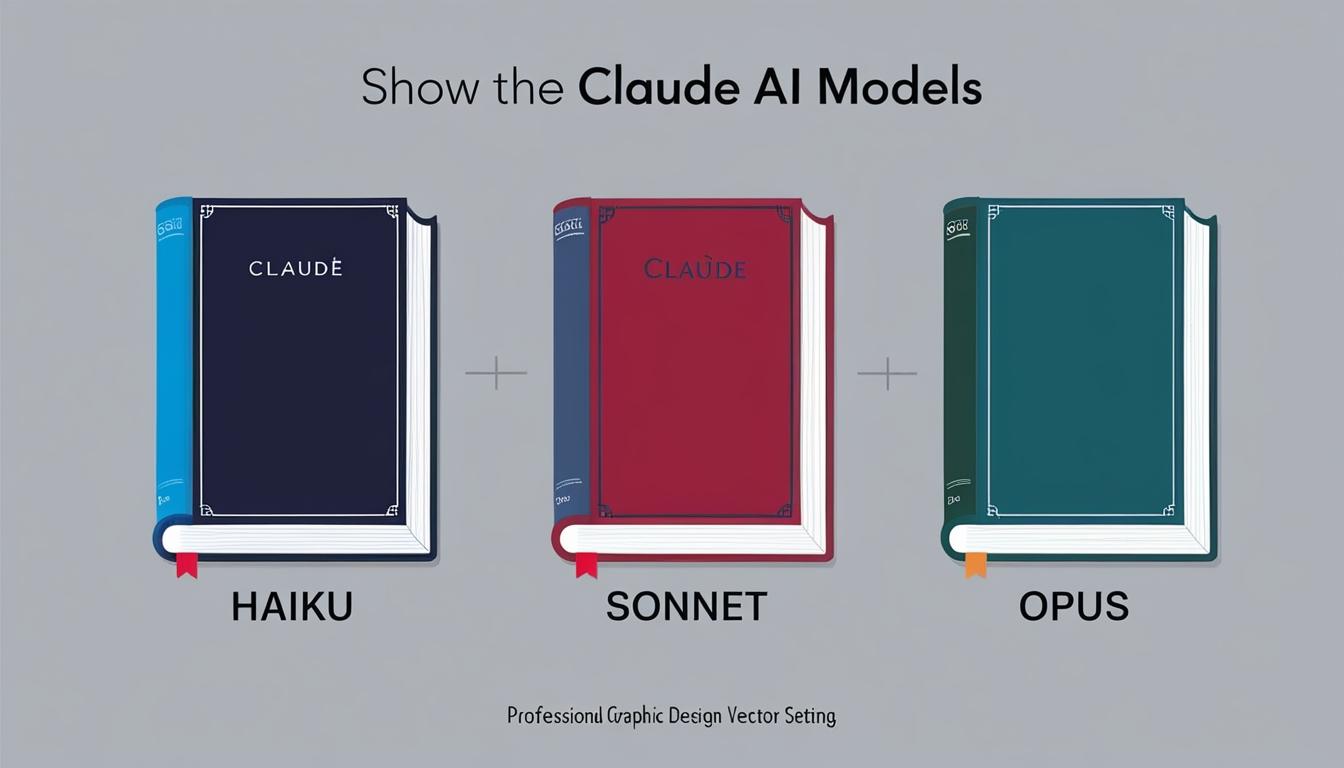
Anthropic, a prominent player in the Artificial Intelligence (AI) sector, has made significant strides with its Claude suite of generative AI models. Rising in popularity since its inception, Claude has emerged as a powerful tool capable of conducting a wide variety of tasks including image captioning, email drafting, mathematical problem-solving, and even some basic coding activities. As Anthropic continues to expand its model repertoire, understanding the specific functions and capabilities of each model within the Claude series is becoming increasingly essential.
The Claude models derive their names from literary forms—Haiku, Sonnet, and Opus—each representing different levels of complexity and capability. The newer iterations within this family include Claude 3.5 Haiku, a lightweight and agile model designed for swift operations, Claude 3.5 Sonnet, which offers a balance between efficiency and capability, and Claude 3 Opus, the flagship model renowned for its comprehensive set of features. Interestingly, the Claude 3.5 Sonnet, despite being identified as a midrange model, currently surpasses Claude 3 Opus in performance, particularly in understanding nuanced and complex instructions.
These models are adept at analysing both text and more complex data forms such as images, charts, graphs, and technical diagrams. They operate with a standard context window of 200,000 tokens, equating to approximately 150,000 words, allowing them to handle extensive data sets effectively. Although currently lacking internet connectivity, a limiting factor for real-time information processing, these models exhibit strong capabilities in generating structured outputs and following intricate sets of instructions.
The pricing structure for Claude across Anthropic's platforms, including its API and integrations with services like Amazon Bedrock and Google Cloud’s Vertex AI, reflects the varying levels of model sophistication. The cost begins at 25 cents per million input tokens for Claude 3.5 Haiku, scaling up to $15 per million input tokens for Claude 3 Opus. Additionally, Anthropic introduces efficiencies like prompt caching and batching to enhance cost-effectiveness.
For those looking for direct interaction with the Claude models, Anthropic provides several subscription plans. The free plan, suitable for casual users, comes with certain restrictions, while the Claude Pro plan, priced at $20 per month, introduces benefits like higher rate limits and early access to new features. The Team plan, costing $30 per user monthly, is tailored for business use, offering an advanced dashboard for billing management and enhanced integration capabilities.
For enterprise customers seeking advanced solutions, the Claude Enterprise subscription offers features like a larger context window of 500,000 tokens, integration with platforms such as GitHub, and the ability to upload and analyse proprietary data securely within Claude’s framework.
Despite its advancements, Anthropic’s generative models are not without their pitfalls. The potential for error persists, largely due to the AI's propensity to hallucinate—producing incorrect or misleading information. An additional concern surrounds the usage of public web data for training, which occasionally includes copyright-protected material, leading to potential legal repercussions despite Anthropic’s reliance on fair-use doctrines.
As generative AI continues to evolve, Anthropic remains at the forefront of developing models that push the boundaries of artificial intelligence while grappling with the ethical and legal complexities that accompany such innovation.
Source: Noah Wire Services