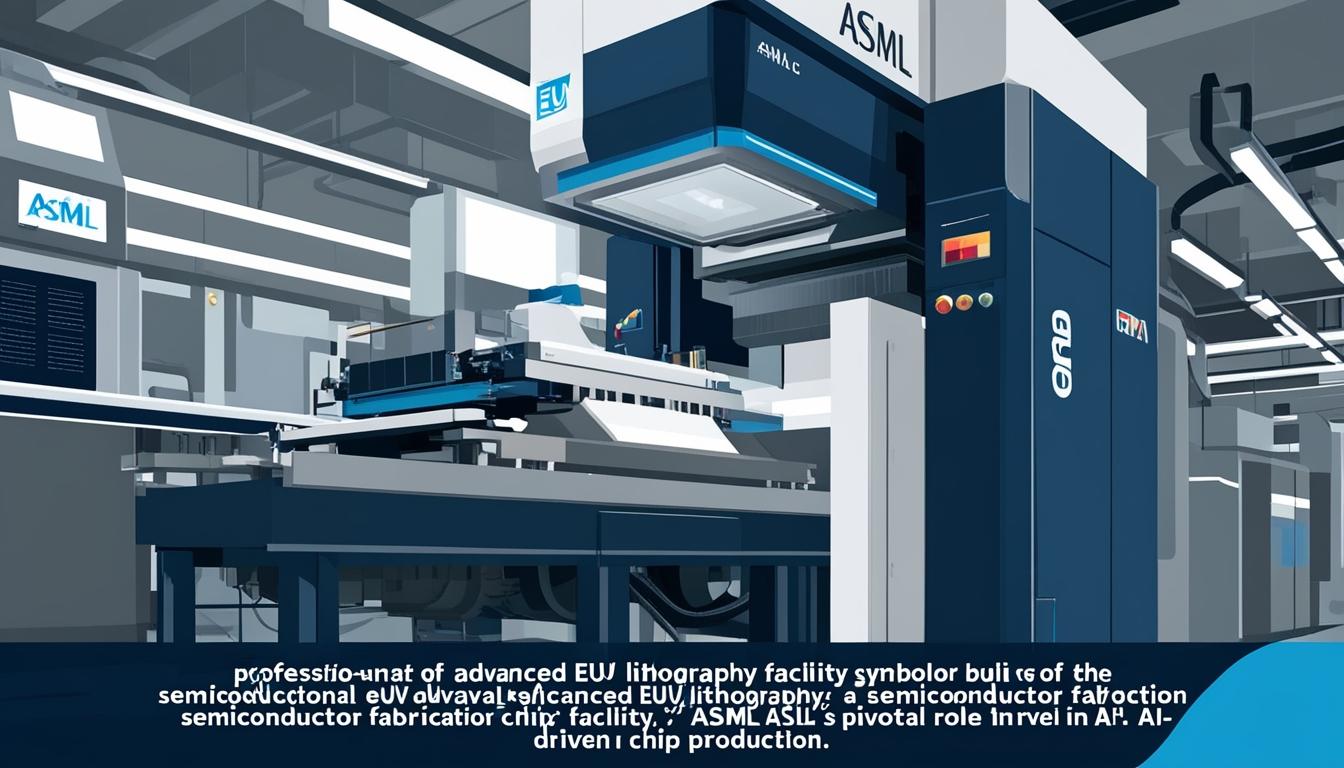
ASML Holding NV, a key player in the semiconductor industry, has seen its stock drop significantly, a development that has caught the attention of investors globally. The company, which specialises in manufacturing extreme ultraviolet (EUV) lithography machines essential for producing the smallest-node chips, recently delivered a forecast that fell short of market expectations, resulting in a 16.3% dip in its stock price.
This decline comes amidst a broader rally in tech stocks driven by advancements in artificial intelligence (AI), exemplified by companies like Nvidia reaching all-time highs. Despite initial expectations for a recovery in ASML's business, hindered previously by macroeconomic challenges such as inflation and high interest rates, the company announced delays in its anticipated rebound.
ASML's revised 2025 revenue projection, now set between 30 billion euros and 35 billion euros, marks a clear reduction from its earlier estimate of 30 billion euros to 40 billion euros. Christophe Fouquet, ASML’s CEO, attributed this to ongoing weaknesses in the logic and memory segments of the semiconductor market. The cautious stance from customers further compounds this issue, reflecting a more gradual recovery than previously anticipated.
The recent performance of ASML contrasts with the overall enthusiasm in the AI sector. The company’s strategic position as the sole producer of EUV lithography machines places it at a considerable advantage. This technology is pivotal for chip production as global industries ramp up efforts to integrate AI technologies. Governments, including the United States with its substantial investment through the CHIPS Act, are also promoting the expansion of chip manufacturing facilities, setting the stage for potential growth in demand for ASML's products.
Despite facing competitive pressures, notably with Samsung delaying production in Texas due to challenges with its 3-nanometer process, and Intel undergoing significant restructuring, ASML maintains a strong market position. Nearly half of its revenues in recent quarters have stemmed from China, where economic recovery post-pandemic has been slower than anticipated, indicating potential headwinds for demand.
Analysts suggest that ASML’s setback is likely a reflection of macroeconomic conditions rather than internal operational issues. This mirrors situations faced by other tech giants like Alphabet in 2022 when digital advertising slowed amid recession fears.
Looking ahead, ASML remains optimistic about its long-term prospects. Despite adjusting their financial forecast, the company still targets over 16% growth at the midpoint, along with continued improvement in gross and operating margins. These metrics highlight ASML's potential for recovery as the semiconductor industry's AI-related demand materialises.
Investors are closely watching ASML to gauge if its stock will rebound as the company capitalises on its unique technological offerings. The anticipated surge in AI-driven chip production could pave the way for ASML to regain its footing and drive future growth.
Source: Noah Wire Services