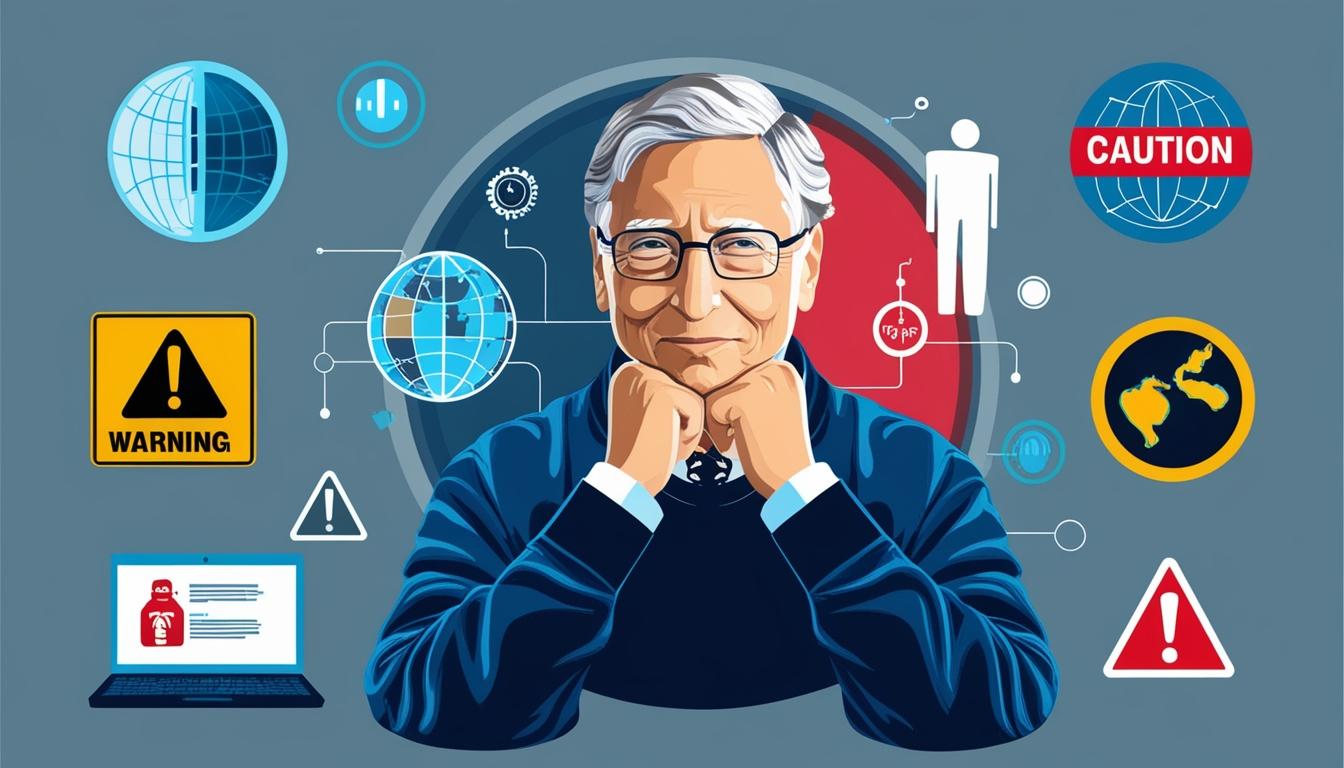
In a recent discussion, Bill Gates, the iconic philanthropist and co-founder of Microsoft, has starkly expressed concerns about the risks associated with artificial intelligence, drawing parallels with the existential threats posed by nuclear war and bio-terrorism. Gates, now 68, described the advancements in AI as both breathtaking and alarming, pointing out that, while beneficial, these advancements require careful navigation to mitigate potential risks.
The conversation around artificial intelligence has been gaining traction as technological capabilities continue to evolve at an unprecedented rate. Gates remarked on the dual nature of AI, acknowledging its potential to significantly improve human life by enhancing access to medical care and education. He emphasised that AI has already contributed to accelerated medical discoveries, reflecting its transformative power in the pursuit of advancing healthcare and learning opportunities globally.
However, Gates, with a pragmatic view shaped by years of experience in both technology and philanthropic sectors, warned of the other side of this technological coin. He categorically stated that AI represents a threat level comparable to that of nuclear weapons and bio-terrorism. His analogy to nuclear weapons underscores a profound concern that, while these tools have been under human control for decades without catastrophic misuse, the potential for misuse remains ever-present. The inference is clear: just as with nuclear and biological threats, AI demands a robust framework of ethical guidelines and regulatory oversight to prevent its potentially destructive use.
At a more personal level, Gates, a grandfather to 18-month-old Leila and anticipating another grandchild, expressed optimism for future generations. He highlighted that, despite current global challenges, significant progress in human conditions has been made in the last half-century. Gates remarked optimistically on societal advances, noting the improved conditions for a broader diversity of individuals worldwide. Yet, he stressed that these improvements are accompanied by substantial global challenges, which he listed as climate change, nuclear weapons, bio-terrorism, and AI.
The complexity and scale of AI's growth prompt a need for society to prepare for its impacts. Gates' perspective adds a significant voice to the ongoing dialogue about AI's regulation, ethical use, and the policies required to harness its capabilities while safeguarding against its potential risks. His insights underscore the pressing need for international cooperation and strategy to navigate the challenges posed by rapid technological advancements, emphasising AI's role not only as a catalyst for current innovation but as a pivotal factor in future global stability and security.
Source: Noah Wire Services