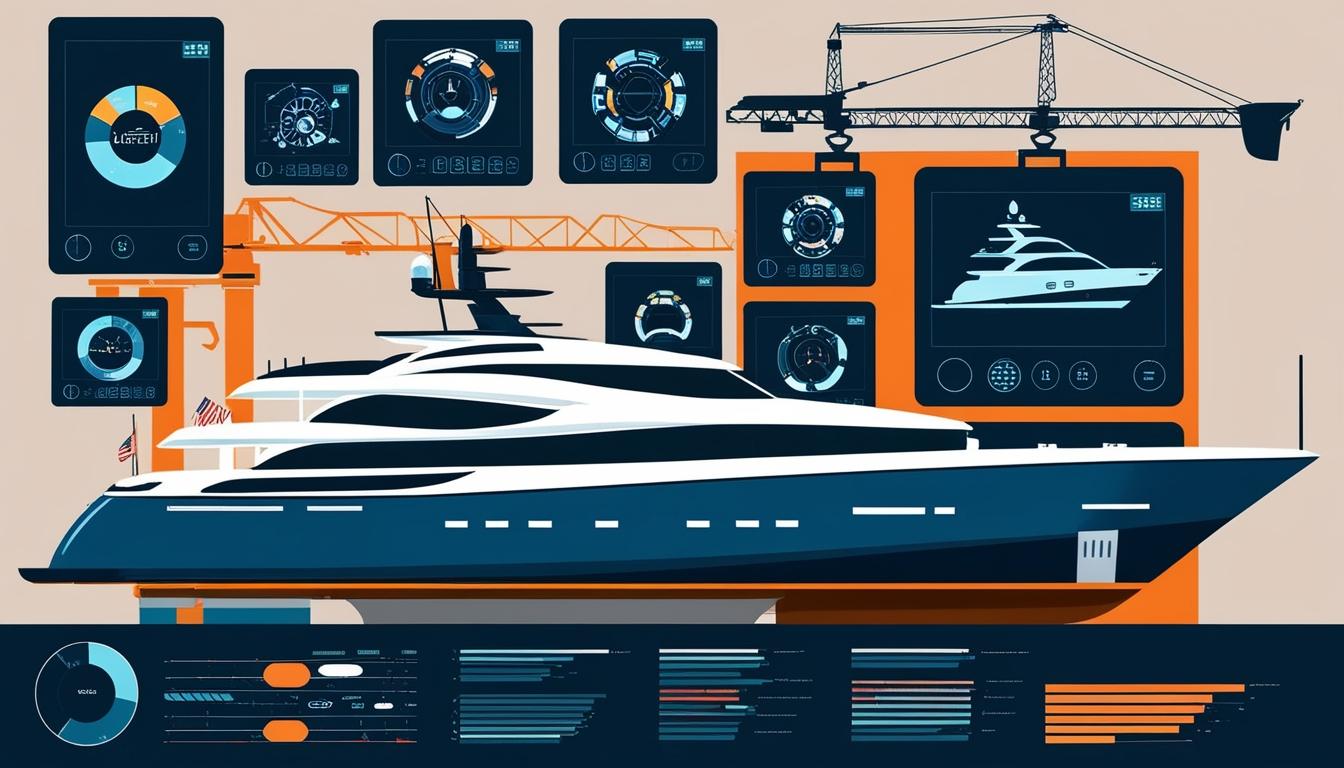
The yachting industry is embarking on a transformative journey with the introduction of Artificial Intelligence (AI), marking a new era in the creation and design of superyachts. This leap is spearheaded by Feadship, a distinguished Dutch shipyard known for its innovative designs and engineering prowess. By interweaving AI into their design processes, Feadship is redefining how yachts are conceptualised, highlighting a symbiotic future between technological advancement and human creativity.
Feadship’s design division, Studio De Voogt, stands at the forefront of this technological integration. AI is leveraged not just as a tool, but as a source of inspiration, analysing extensive databases of previous projects and industry trends to spark novel design possibilities. Despite these advancements, the role of human designers remains indispensable due to AI's current limitations. As Tanno Weeda, Head of Design at Studio De Voogt, elucidates, while AI can generate diverse concepts, it lacks the understanding of the practical challenges in yacht design like structural functionality and material specificity. AI-generated designs often overlook essential details such as deck proportions and structural stability, necessitating human insight to translate these intriguing concepts into viable realities.
Earlier in 2023, Feadship launched an innovative competition that challenged participants to employ AI tools—such as DALL-E and ChatGPT—to design a superyacht. This competition drew over 20 aspiring designers, leading to an array of creative submissions that fused AI's expansive possibilities with human ingenuity. While the competition yielded visually captivating proposals, it also highlighted AI’s limitations. Some designs, despite their aesthetic brilliancy, were deemed impractical due to issues like disproportional upper decks and insufficient stability.
The results of this competition underscored the symbiotic potential of AI and human designers. AI offers a fresh perspective and the capacity to rapidly iterate on concepts, yet the human touch remains crucial to ground these ideas in reality. As Weeda asserts, the future of yacht design is poised to be a collaborative dialogue, where humans utilise AI's capabilities to explore new frontiers while ensuring designs are functional and feasible.
Moreover, AI is also being explored to enhance the performance of these majestic vessels. By employing fluid dynamics simulation models, AI is assisting in optimising the hydrodynamic efficiency of yacht hulls, promoting lower fuel consumption and a more seamless sailing experience. In an era increasingly focused on sustainability, these technological advancements could significantly contribute to a greener future for the yachting industry.
While AI is evidently reshaping the landscape of superyacht design, it is merely the beginning of this revolution. The analogy by Milton Glaser, comparing a computer’s role in design to a microwave’s role in cooking, aptly captures this dynamic; technology can accelerate and augment the process, but it cannot supplant the essence of human creativity and empathy.
In conclusion, AI is quickly becoming an integral part of yacht design, creating a new paradigm where technology acts as an enabler rather than a replacement. However, the expertise, creativity, and vision of human designers remain at the heart of turning futuristic ideas into tangible masterpieces, ensuring the yachting world continues to push the boundaries of innovation and luxury. Feadship and Studio De Voogt showcase this progressive blend of AI and human ingenuity, laying down a blueprint for the future of yacht design.
Source: Noah Wire Services