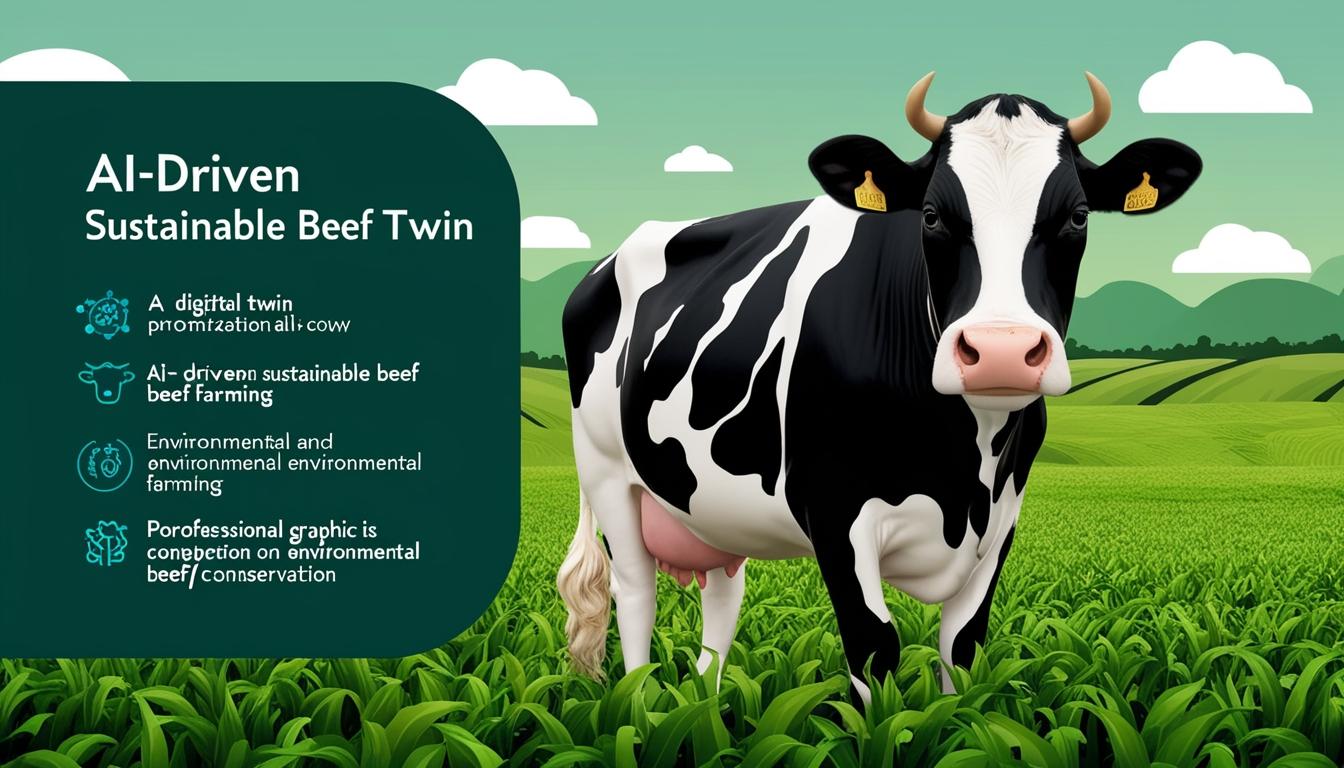
In an innovative effort to tackle key challenges faced by the UK's beef farming sector, the United Kingdom Research and Innovation (UKRI) funded a £1.2 million initiative named BeefTwin. This groundbreaking project is helmed by Professor Xiao Ma, director of the Centre for Business and Industry Transformation at Nottingham Trent University, and is set to utilise artificial intelligence in transforming traditional beef farming practices.
The BeefTwin project seeks to address significant environmental concerns, improve animal welfare, and increase economic viability for farmers, focusing on reducing greenhouse gas (GHG) emissions. Beef farming is known for its impact on global emissions, contributing approximately four billion metric tonnes annually. This project aims to create a sustainable model that will mitigate these emissions and enhance feed efficiency.
The project will leverage the cross-disciplinary expertise of academics and researchers from several renowned institutions, including Nottingham Trent University, the University of Nottingham, Royal Holloway University, the University of Sheffield, and the University of Lincoln. Together, they will develop AI-powered DigitalTwins for individual cows within the herd. These virtual representations will enable real-time data collection, simulation, and machine learning applications to track and optimise emissions and feed conversions.
A comprehensive analysis will be part of this venture, integrating various scientific disciplines. Biologists will conduct microbial analysis on cattle waste to better understand the conversion of feed to meat and methane emissions. Environmental scientists will employ drones, sensors, and methane analysers to track and pinpoint sources of methane emissions. Simultaneously, computer scientists will use AI to leverage sensor and computer vision data for precision measurement of cattle weight, behaviour, and growth patterns, resulting in enhanced farming practice variations.
Moreover, the BeefTwin initiative will not only focus on technical advancements but will also address the broader socio-economic aspects of beef farming. The project will involve close cooperation with farmers to understand grazing patterns and tackle rural industries' socio-economic issues. A team dedicated to management sciences at Nottingham Trent University will study the evolving dynamics of farming practices informed by data insights, thereby crafting a smart farming model that boosts efficiency across the entire value chain.
One of the fundamental goals of BeefTwin is to develop a sustainable and profitable model that conserves the traditional small farm setup in the UK. Professor Xiao Ma highlighted the competitive pressure from smart farming nations like South America and Southeast Asia, where rural communities have improved profitability through innovations. The project hopes to prevent the decline of UK farms and safeguard local agricultural livelihoods by enhancing the beef farming value chain and promoting self-sustainability.
Collaborating with farmers, policymakers, and industry experts, the BeefTwin project will work across the UK over the next two years. The ultimate aim is to propel the UK's beef farming industry towards a future that aligns with environmental, economic, and social ideals. The successful implementation of the project could see a turn in the tide for British beef farms, carving a path towards improved animal welfare, reduced environmental impact, and bolstered economic viability.
Source: Noah Wire Services