Investors continue to allocate substantial sums to the burgeoning field of generative AI, despite ongoing debates around its reliability, ethical concerns, and environmental impact. Recent data from PitchBook reveals that venture capitalists invested a substantial $3.9 billion into generative AI startups in the third quarter of 2024, spanning 206 deals. Notably, this figure excludes the sizeable $6.6 billion round secured by OpenAI. A significant portion of this investment, $2.9 billion, was directed towards U.S.-based companies across 127 deals.
Among the notable beneficiaries of this investment wave are several startups. Magic, a company offering coding assistance, secured $320 million in August. Following closely, enterprise search provider Glean raised $260 million in September, and business analytics firm Hebbia garnered $130 million in July. Outside the United States, China's Moonshot AI raised $300 million in August, while Japan's Sakana AI, which focuses on scientific discovery, closed on a $214 million tranche recently.
Generative AI encompasses a diverse range of technologies, including text and image generators, coding assistants, and cybersecurity automation tools, among others. Despite its popularity, the technology has drawn criticism concerning its dependability and legal implications, particularly when models are trained using copyrighted data without explicit permission.
Investors, however, are banking on generative AI's potential to secure a strong position within large and profitable industries, with long-term growth prospects that might overcome current obstacles. Supporting this optimistic outlook, a Forrester report forecasts that 60% of generative AI skeptics are likely to adopt the technology for various tasks, such as summarisation and creative problem-solving, whether they intend to or not. This is in stark contrast to Gartner's earlier prediction that 30% of generative AI projects could be abandoned after proof-of-concept stages by 2026.
Brendan Burke, a senior analyst specialising in emerging tech at PitchBook, commented that significant customers are beginning to implement production systems utilising startup tools and open-source models. He noted that emerging models could spur advancements in scientific fields, data retrieval, and coding, suggesting the continuous evolution of generative AI technologies.
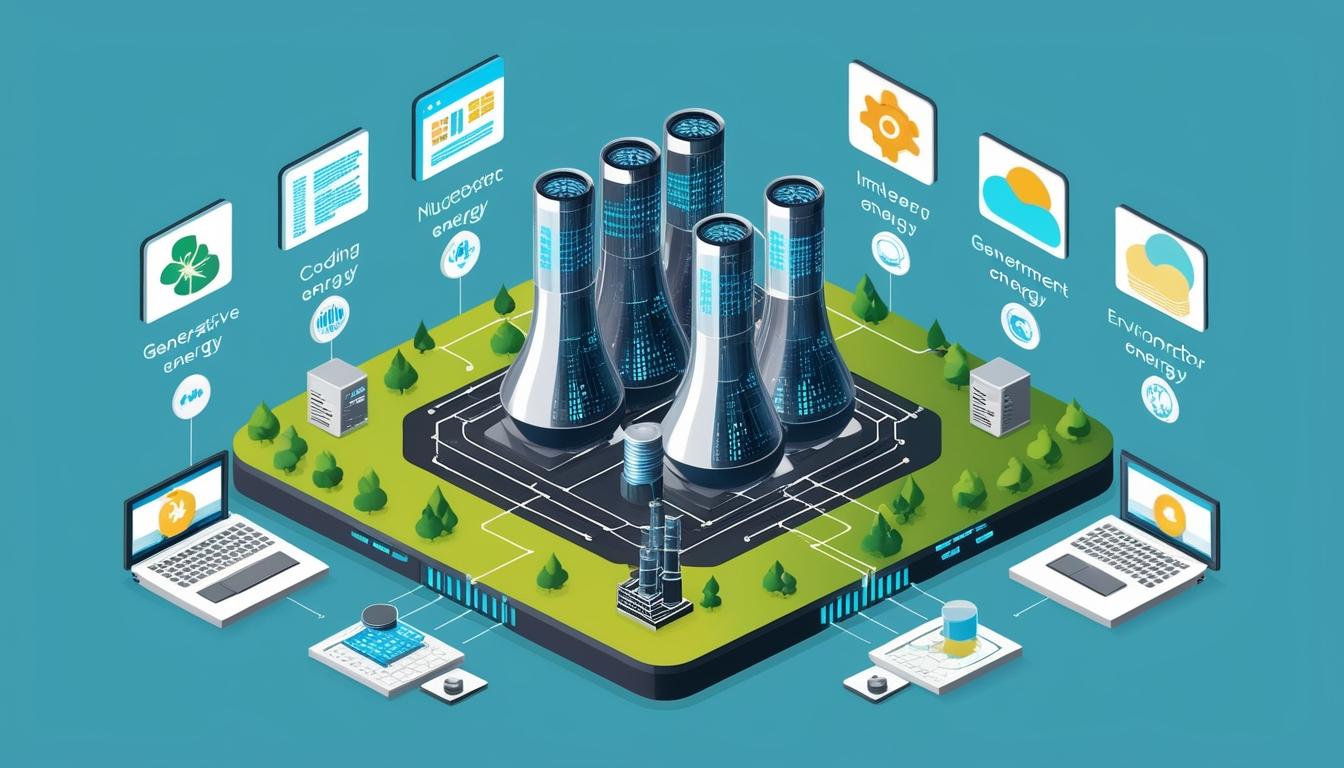
However, one substantial hurdle hindering widespread adoption of generative AI is its substantial computational demands. Analysis by Bain suggests that the surge in generative AI could lead companies to establish gigawatt-scale data centres, which require substantially more power than average data centres today. This demand is already extending the operational life of coal-fired plants, with Morgan Stanley warning that global greenhouse emissions could triple between now and 2030 if current trends persist.
In response to the increasing power needs, leading data centre operators, including Microsoft, Amazon, Google, and Oracle, have announced investments in nuclear energy. Notably, Microsoft plans to source power from the notorious Three Mile Island nuclear plant, among others. However, it may take years before these investments significantly alleviate the increased energy demands.
Despite these challenges, the generative AI investment trend shows no signs of slowing down. ElevenLabs, known for its viral voice cloning tool, is reportedly seeking funds at a $3 billion valuation, while Black Forest Labs, the company behind a well-known image generator, is in discussions for a $100 million funding round. The financial commitments underscore investor confidence in generative AI's potential to transform various sectors, even as the industry grapples with pressing ethical and environmental issues.
Source: Noah Wire Services