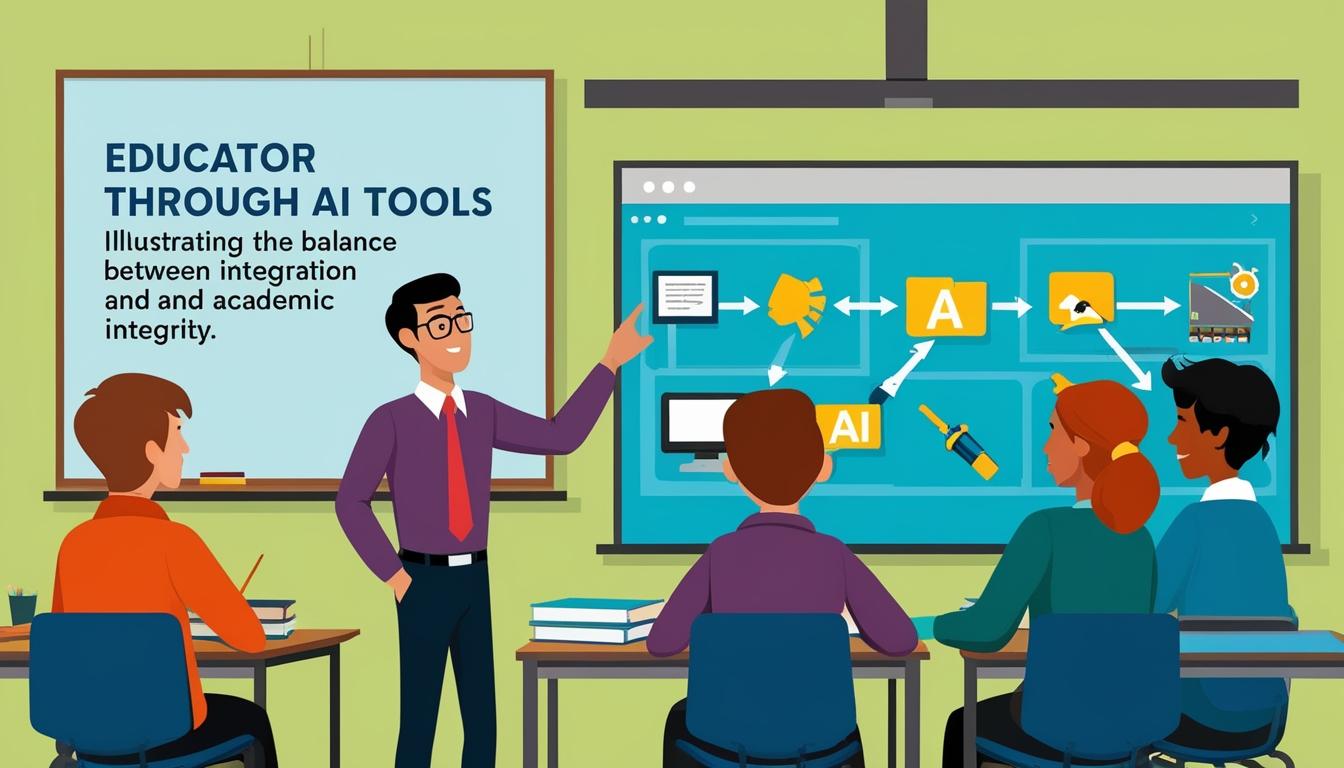
In recent years, the education sector across the United States has been navigating the integration of generative artificial intelligence (AI) tools into its instructional strategies. With the increasing sophistication of these technologies, schools are challenged with incorporating AI effectively and ensuring it is not used to undermine academic integrity.
David Chan, the Director of Instructional Technology at Evanston Township High School (ETHS), has been at the forefront of providing guidance to educators on this subject. Speaking to local media in August, Chan explained the school's commitment to educating both students and teachers about the responsible use of AI in academic settings. "We've had some cases [of AI misuse], but it has not been a huge influx," Chan remarked, suggesting that the school's educational policies are beginning to resonate with students.
Issues of Academic Integrity
Teachers traditionally have been vigilant about academic dishonesty, from the use of previously written essays to recent methods involving AI-generated content. The complexity of detecting AI-assistance presents a new challenge, prompting educators to develop novel strategies to safeguard academic honesty. Chan highlighted the importance of teachers familiarising themselves with their students' unique writing styles and abilities. This understanding can aid in identifying discrepancies indicative of AI-generated work.
For instance, ETHS sophomore Kai Gustafson experienced this firsthand after using an AI tool for a section of a major assignment. The pasted-in text prompted his teacher to investigate, resulting in his parents being notified and requiring Gustafson to complete the assignment anew.
Despite isolated incidents like Gustafson's, the extent of AI misuse among students remains a matter of perspective. Some students, like sophomore Ruby Matouschek, perceive AI-based academic dishonesty as limited. Conversely, junior Jevon Wallace suggested that although AI use isn't rampant, students occasionally resort to it, especially for more demanding assignments.
To tackle potential misuse, Chan advocates for updating assignments, which not only addresses new AI challenges but also discourages students from relying on answers posted online by past students. "It's a lot of work to totally redesign assessments," Chan admitted, acknowledging the effort required to adapt educational content to the current technological landscape.
Educational Opportunities with AI
Generative AI tools are not solely a threat; they also provide learning opportunities. Students like Matouschek and Gustafson have utilised AI to gain a better understanding of complex subjects or to engage in language practice. Matouschek finds them useful for immediate problem-solving in subjects such as maths and chemistry, while Gustafson has used them for interactive language exercises during class.
However, the integration of AI into the curriculum largely depends on the teacher's discretion at ETHS, prompting its informational technology team to explore ways to incorporate AI literacy more formally into their teaching strategies.
Regional Approaches to AI in Education
The response to generative AI technologies in education has varied widely across the country. Some school districts initially banned the technology, only to reverse such decisions, as witnessed in New York City public schools. ETHS, meanwhile, adopts a flexible approach, empowering teachers to decide how best to incorporate AI into their pedagogy. Teachers can choose which AI resources to use, though student access may require parental consent.
Nearby, New Trier High School in Winnetka offers guidelines instead of rigid policies. They have adopted Microsoft’s BingChat for AI tasks, ensuring compliance with their data protection standards.
In contrast, the Niles North and West high schools use a "stoplight" system to regulate AI use: assignments are categorised as red (AI prohibited), yellow (AI may assist), or green (AI encouraged or required). This approach is part of their broader academic integrity policy, reinforcing that AI-assisted cheating is treated equally to any other form of dishonesty.
The integration of generative AI in education remains a dynamic process, with schools continuously striving to balance technological advancement with pedagogical integrity.
Source: Noah Wire Services