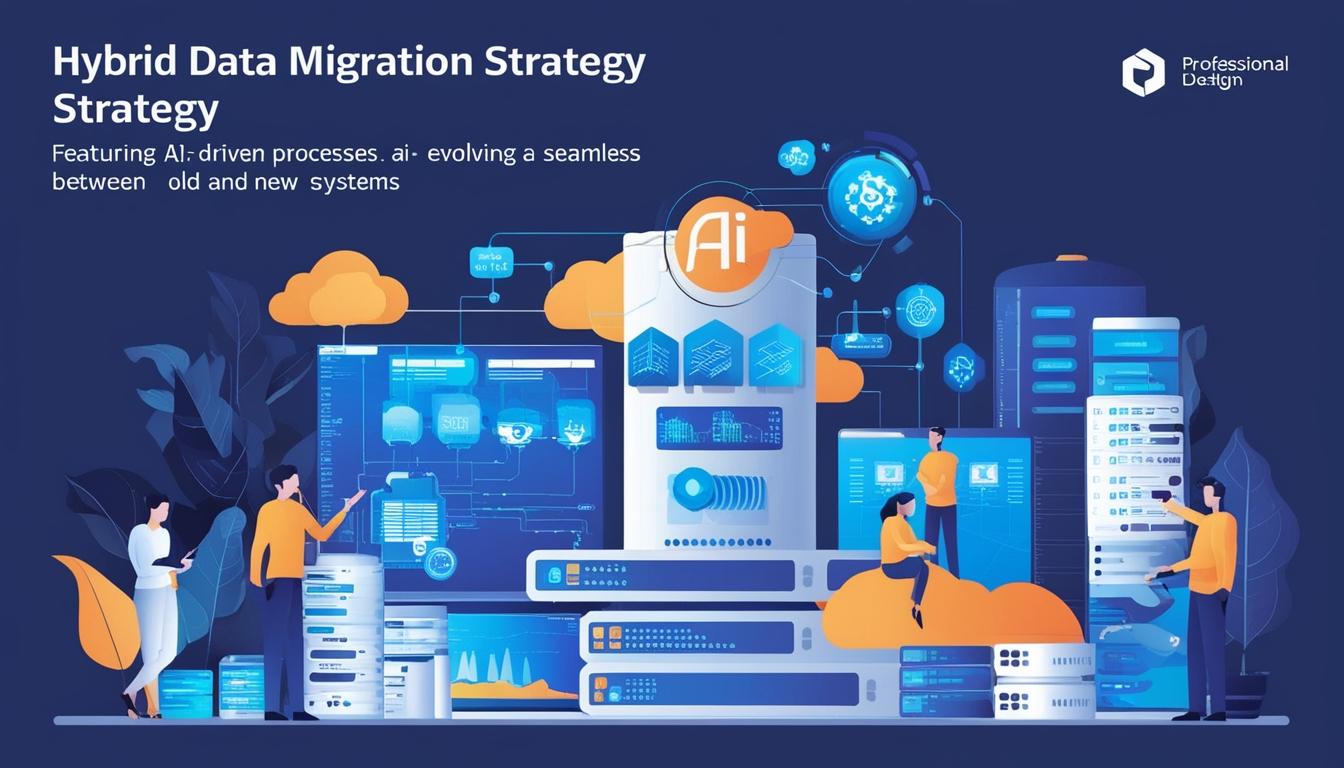
In a world increasingly driven by data, businesses face the daunting task of efficiently managing and transitioning vast amounts of information. A new paper by Vishnu Iyengar, an expert in large-scale systems management, provides crucial insights into addressing these challenges. Published in the International Journal of Computer Engineering and Technology, the paper offers a detailed roadmap for companies navigating large-scale data migrations, a process becoming ever more critical due to technological advancements, regulatory changes, and the quest for improved performance.
As companies grow and technology advances, data migration has emerged as a pivotal operation. The need to transfer, update, and reorganize data is not just about staying current but meeting compliance requirements and enhancing system performance. However, this process is intrinsically complex and fraught with risks, such as data integrity issues, security threats, potential downtime, and compliance breaches. If poorly managed, these factors can lead to significant financial repercussions or data loss, underscoring the need for meticulous planning and execution.
Traditionally, data migrations were approached in one of two ways: the "big bang" method, transferring all data at once, or a phased approach, breaking the migration into steps. However, these conventional strategies fall short when dealing with the complexity and volume of data modern enterprises handle. Iyengar’s paper suggests a hybrid model—a combination of both traditional methods tailored based on data complexity, criticality, and volume—which offers increased adaptability, lowers risks, and minimises operational disruptions.
A significant breakthrough highlighted in Iyengar's study is the role of artificial intelligence in transforming the data migration landscape. AI enhances every stage of the migration process. Before migration begins, AI systems can swiftly and accurately analyse large datasets, identifying data quality issues and optimal transformation techniques. During the migration, AI enhances performance by dynamically managing resource allocation. Post-migration, AI aids in comprehensive documentation and knowledge management, essential for maintaining accurate system data.
A notable innovation in the migration process is the recommendation to establish parallel infrastructures. This method involves operating old and new systems simultaneously, allowing real-time data synchronisation. Such a setup supports business continuity and provides a safeguard, enabling quick rollback to the legacy system if necessary.
Central to effective data migration is the ETL (Extract, Transform, Load) process. Iyengar advocates for a streaming or pipeline-based approach, where data flows incrementally, instead of in bulk, minimising storage needs and enabling early error detection. This proactive error identification is vital for reducing risks and streamlining the migration process.
The validation phase of data migration often receives insufficient attention despite its critical role in ensuring data integrity. Iyengar emphasises the importance of comprehensive validation checks to maintain data completeness, accuracy, and consistency, recommending automated comparison tools and statistical sampling for large datasets.
One of the most forward-thinking elements of the study is its approach to the final cutover phase. Instead of executing an abrupt transition, Iyengar proposes a gradual shift, initially redirecting read operations to the new system. This gradual increase builds confidence in the new system's reliability before fully committing operations.
As enterprises increasingly rely on expansive and complex data environments, the need for refined migration strategies becomes paramount. Iyengar's research stresses the importance of investing in AI-driven solutions and automation to prepare for future data migration challenges, offering a comprehensive blueprint for businesses to follow.
In essence, Vishnu Iyengar’s extensive research provides a detailed guide for organisations facing the demanding task of large-scale data migration. By adopting innovative strategies and leveraging cutting-edge technology, businesses can ensure data accuracy and continuity amidst the ever-evolving technological landscape.
Source: Noah Wire Services