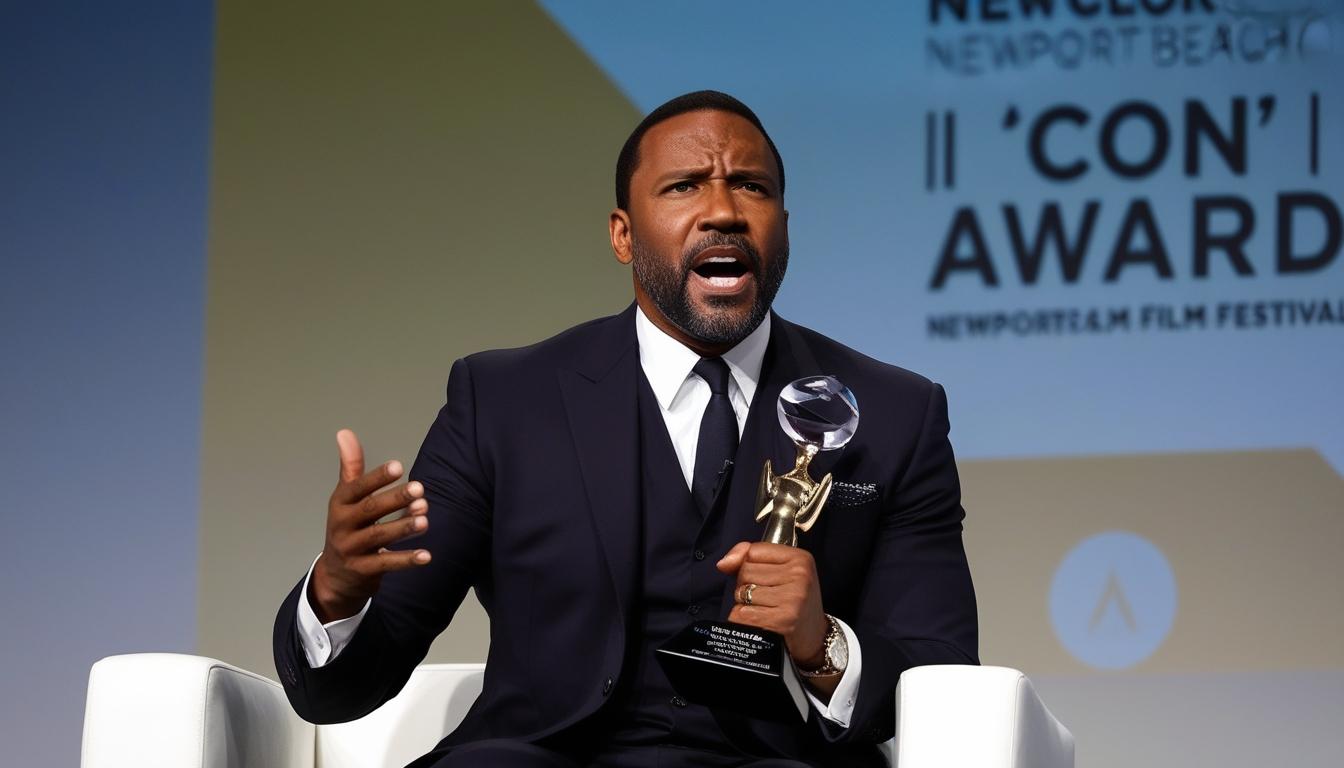
At the 25th Newport Beach Film Festival, celebrated actor Nicolas Cage took a definitive stance against the burgeoning use of artificial intelligence in the film industry. Addressing his audience at the Balboa Bay Resort during the festival’s Honors Brunch, where he was recognised with the Icon Award, Cage spotlighted the implications of AI technology on the craft of acting. The event also honoured well-known figures like June Squibb, Marianne Jean-Baptiste, Sheryl Lee Ralph, and Colman Domingo, amongst others.
In his speech, Cage expressed concern over AI's potential to alter the authenticity of an actor’s performance. He referenced the concept of Employment-based Digital Replica (EBDR), a technology recently integrated into Hollywood's lexicon following new agreements between the Screen Actors Guild‐American Federation of Television and Radio Artists (SAG-AFTRA) and the Alliance of Motion Picture and Television Producers. According to the newly structured rules, EBDR involves a performer’s physical contribution for specific projects and promises to maintain their remuneration, regardless of reduced filming days. However, notably different terms apply to elite performers whose earnings exceed $80,000 per film, reflecting their presumed negotiating clout.
Cage outlined the risks these technologies pose, highlighting how studios might leverage EBDR to alter an actor’s on-screen presence, modifying their facial expressions, voice, and even their body language post-production. Describing film performance as a "handmade, organic, from-scratch process," he warned young actors about the potential dehumanisation of their art, stating, "The studios want this so they can change your face after you’ve already shot it."
By sharing his personal encounter with EBDR during his cameo in 2023's "The Flash," Cage further cemented his scepticism over the technology's impact. He urged upcoming actors to be vigilant when signing contracts that permit studios to utilise EBDR, coining the term MVMFMBMI as a defensive acronym for "my voice, my face, my body, my imagination."
This notion ties back to previous remarks Cage made in a dialogue with The New Yorker earlier in the year, where he had vocally expressed his apprehension regarding AI. Here, he articulated his fear over the possibility of AI overshadowing genuine artistic expression, underscoring a concern that persists among many within the creative industry.
Cage’s comments join a broader industry discourse on AI’s role in film, following months of labour strikes and negotiations that have highlighted both financial and ethical dimensions of technology in entertainment. As dynamic changes unfold in Hollywood, the conversation stirs dialogue among artists about preserving the integrity of their craft amidst technological evolution.
Source: Noah Wire Services