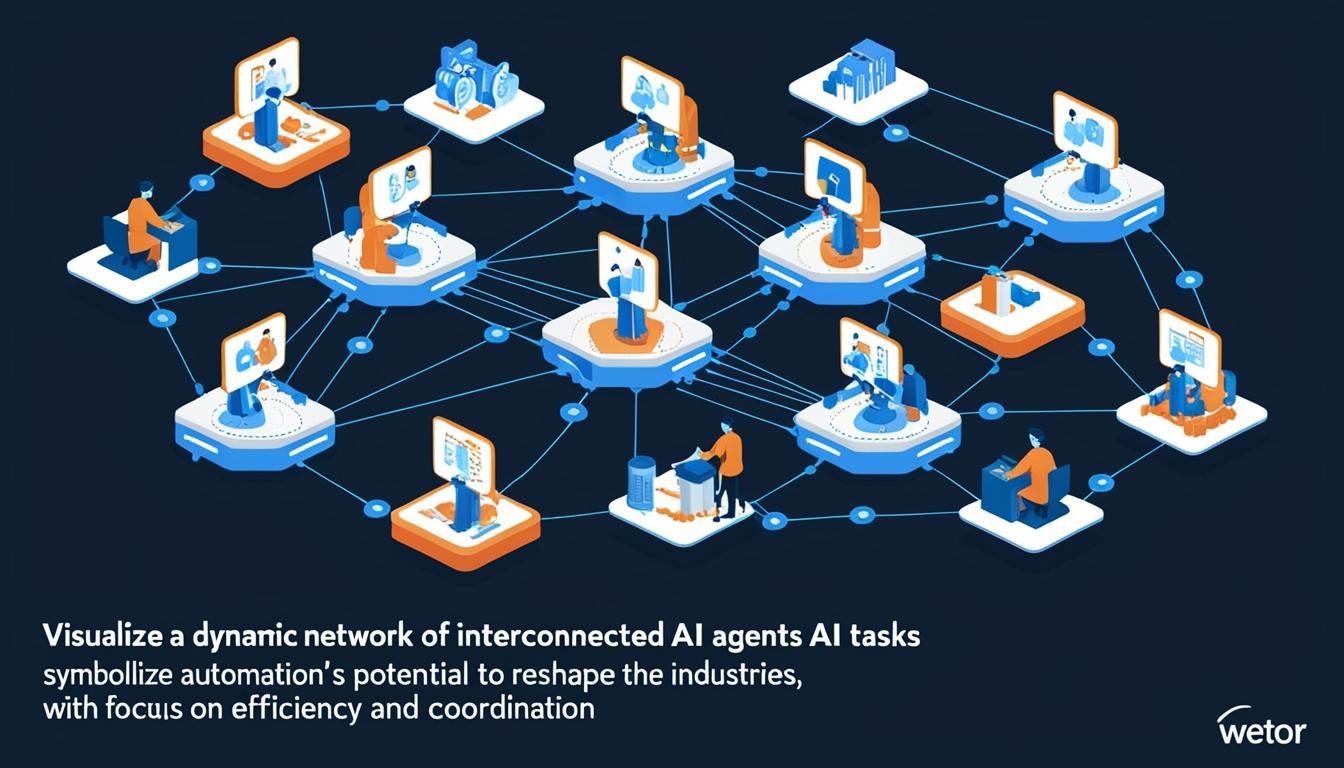
OpenAI's recently unveiled "Swarm" framework is stirring debates and discussions in the tech industry, as it introduces new capabilities for developing networks of interconnected AI agents. Released quietly and presented as a "cookbook" for developers, Swarm offers a blueprint to create multi-agent AI systems that perform complex tasks autonomously, potentially reshaping operational processes across various industries.
Swarm is engineered for flexibility and control, distinguishing it from earlier frameworks. It enables the breakdown of complex workflows into manageable, specialised tasks, which can be delegated among AI agents. Individual agents can autonomously communicate and collaborate on task execution, enabling "handoffs" of control among themselves as required. This coordination-centric approach allows AI units to work in tandem, each focused on a specific element of a larger task.
Examples of potential applications include streamlining supply chain management and technical troubleshooting in large-scale operations. Imagine a network of AI agents managing various stages of a manufacturing process: one unit could oversee inventory, another handle quality control, while another forecasts demand. Importantly, these agents can adjust their tasks in real-time without human oversight, enhancing efficiency and reducing potential for human error.
Despite its promising potential, Swarm comes with disclaimers. OpenAI has released Swarm through GitHub, encouraging developers to experiment and adapt it to their specific needs. However, they're quick to stress that it's not a formal product, foregoing ongoing support or maintenance, thus emphasising its experimental status.
Swarm’s applicability spans diverse industries prioritising automation and task coordination. In customer service, it could streamline initial interactions, escalating more complex issues to specialised agents. Similarly, in marketing, AI agents could manage lead generation, customer engagement, and follow-up, transitioning businesses toward AI-centric operations.
However, the introduction of frameworks like Swarm isn't without challenges. Primary concerns include the risk of over-automation, where excessive reliance on AI may overlook the nuanced decision-making humans provide, particularly in customer service or ethical decision-making. Moreover, Swarm’s reliance on data-driven patterns could exacerbate existing biases within AI systems, an ongoing issue.
Pragmatically, businesses are advised to initially integrate hybrid models where human teams work alongside AI agents. This cautious approach allows systems to be fine-tuned and trust in technology to be cultivated. Moreover, ensuring smooth task handoffs between AI agents is crucial to prevent operational disruptions.
In addition to technical considerations, Swarm invokes discussions about its impact on human employment. With its capacity to automate processes traditionally reliant on human labour, concerns about workforce displacement are intensifying, especially in white-collar sectors. Analytical reports predict that as AI-driven automation advances, frameworks like Swarm could hasten job displacement, particularly in fields such as customer service and sales.
Ethical and security considerations are prompting significant scrutiny. Key concerns include biases in decision-making, potential for unfair outcomes, and questions of accountability when AI agents operate independently. As the complexity of AI systems increases, robust governance frameworks will become essential to mitigate security risks and uphold privacy standards.
Industry experts warn that job displacement is already progressing, with considerable job cuts in the tech sector in recent years. Swarm's contribution might amplify this trend, automating roles historically filled by humans. Some industry voices advocate that instead of eliminating jobs, AI systems like Swarm will transform the nature of work, refocusing human effort on strategic oversight while AI handles routine tasks. However, this vision necessitates significant upskilling for workers to adapt to AI-centric work environments.
Swarm places AI coordination, ethical challenges, and job transformation at the forefront of industry dialogue. As its deployment widens, the framework's impact on the automation landscape will become clearer. While Swarm embarks on its journey as an experimental project, the responsibility rests with developers and companies to implement it responsibly.
Meanwhile, ongoing discussions among developers, business leaders, and policymakers around AI coordination frameworks like Swarm will continue to shape the dialogue on workforce evolution and work paradigms in the era of AI automation.
Source: Noah Wire Services