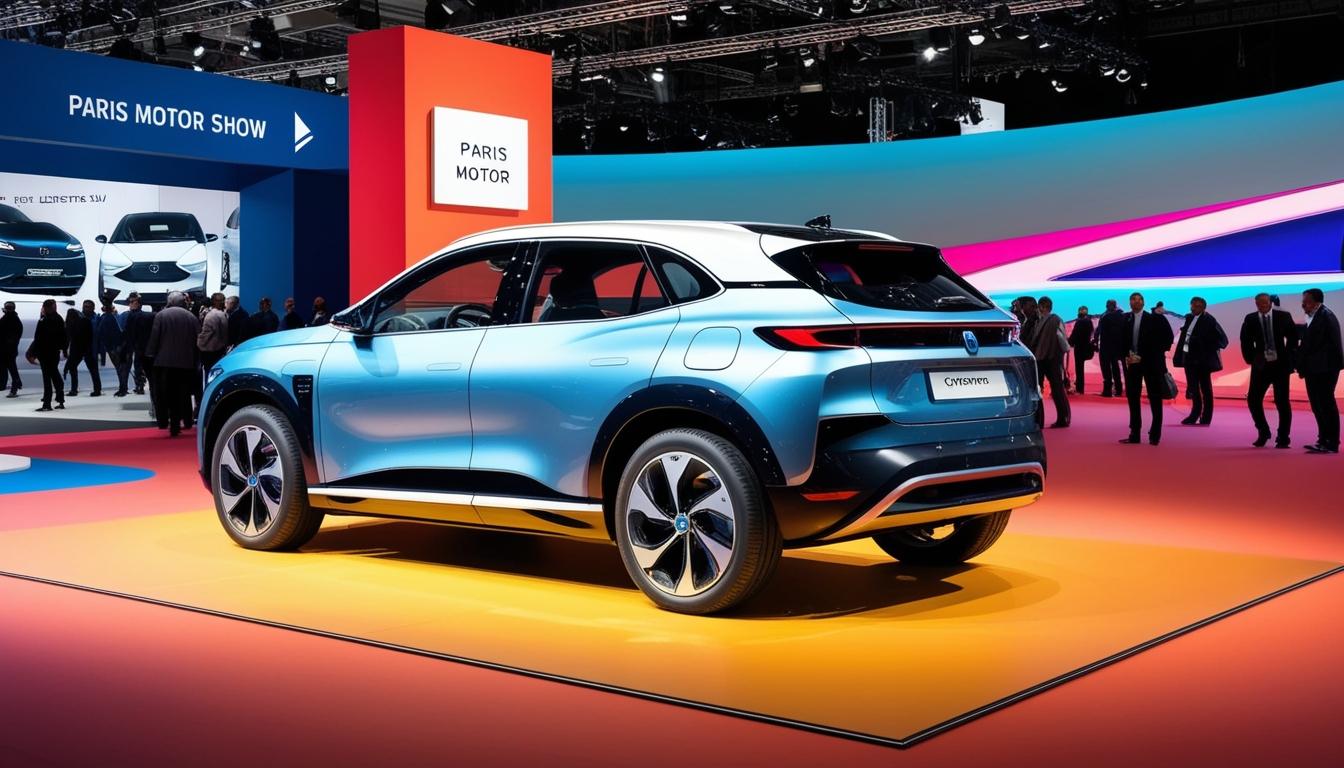
The Paris Motor Show, one of the automotive industry's most iconic events, is underway, drawing car enthusiasts and industry specialists to the French capital to marvel at the latest automotive innovations and designs. Set against a backdrop of challenges facing European car manufacturers, particularly as they transition towards electrification, this year's show highlights both hurdles and breakthroughs in the sector.
Running through Sunday, the show features some of the most anticipated releases and cutting-edge concepts from global manufacturers. European carmakers such as Volkswagen, BMW, and Stellantis have been grappling with reduced consumer demand for electric vehicles (EVs) and rising competition, especially from Chinese manufacturers. These challenges have led some of these companies to issue profit warnings, adding a layer of urgency to their presentations at the show.
One of the most eye-catching exhibits is from BYD, a Chinese EV manufacturer that is rapidly expanding its footprint in Europe. BYD introduced the Yangwang U8, a plug-in hybrid SUV equipped with unique capabilities. This vehicle can "swim" through water for up to 30 minutes and features advanced manoeuvrability, including sideways parking and tank-style turning. Its innovative design includes four independent electric motors and a roof-mounted drone, enhancing the driver’s view of the road.
European brands are also pushing the envelope, as demonstrated by Stellantis-owned Peugeot, which showcased its futuristic Hypersquare steering wheel. Resembling a video game controller, the Hypersquare is featured in the Peugeot Inception concept car. This novel design is slated for a 2026 launch and is targeted at younger consumers seeking digital integration in their driving experience.
Peugeot's French rival, Renault, unveiled the retro-inspired R4, a compact electric SUV intended to compete with budget-friendly Chinese models. Additionally, Renault presented the Duo, an evolution of their iconic Twizy. The Duo is a two-seater electric vehicle boasting improved range and speed compared to the Citroen Ami and is expected to be on sale in May starting at £10,000.
Elsewhere, Stellantis revealed enhancements to the Citroen C4 and C4X models, which offer buyers a choice of hybrid, electric, and traditional combustion engines. These vehicles come equipped with innovative technology designed to tackle Europe's notorious road conditions by minimising the impact of potholes.
From China, Xpeng showcased the P7+, an all-electric vehicle powered by a chip inspired by British mathematician Alan Turing, signifying a step towards greater AI integration in automobiles.
In other developments, a standout feature in automotive technology was Tesla's unveiling of their Robovan, a driverless electric bus capable of transporting up to 20 passengers and cargo, highlighting the move towards autonomous public transport solutions.
Alongside these technological advancements, creative automotive projects were also noted. An inventive enthusiast in the UK has reportedly constructed a 15-foot trench network under his drive to house a DeLorean, evoking imagery reminiscent of the cinematic classic "Back to the Future."
The Paris Motor Show continues to be a platform not only for showcasing innovative automotive design but also for addressing the shifting dynamics faced by the industry, from consumer preferences to technological advancements.
Source: Noah Wire Services