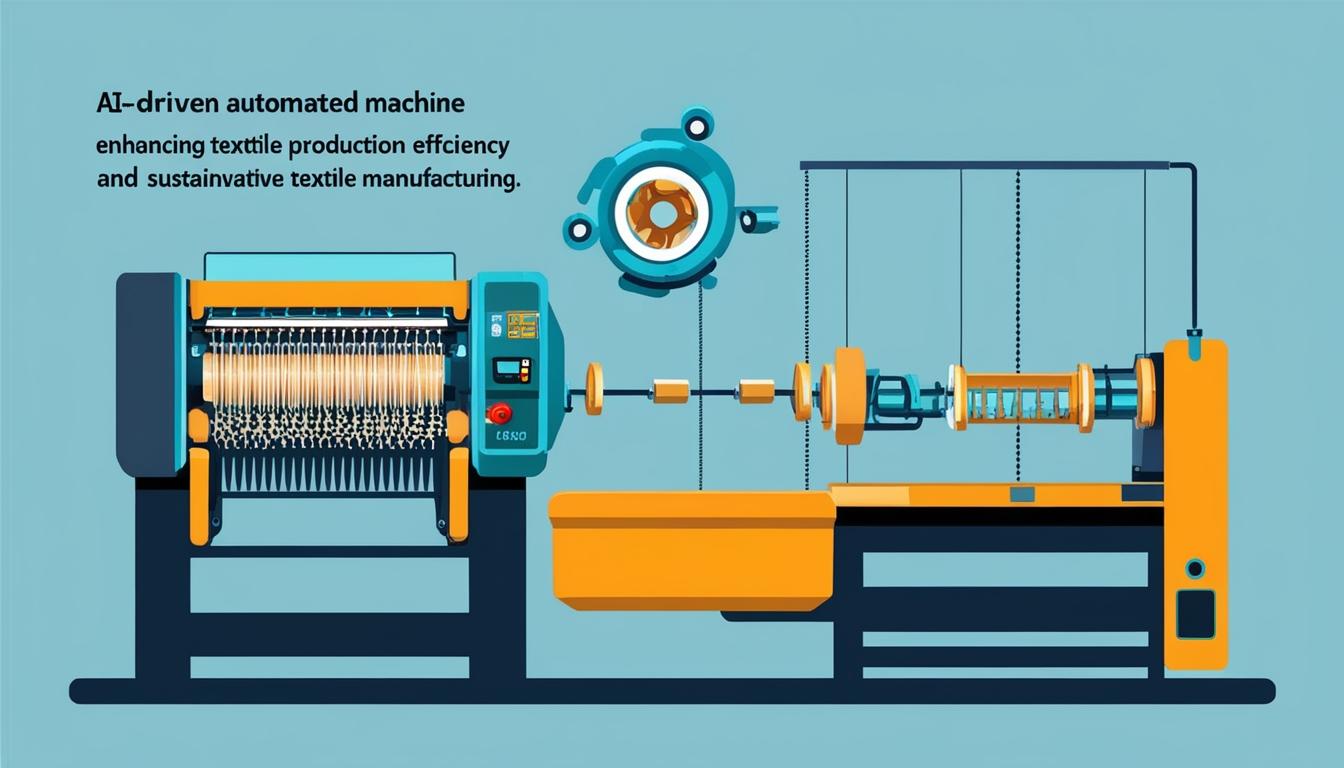
Revolutionising Textile Manufacturing: The Rise of AI and Automation
In an era striving for greater efficiency and sustainability, artificial intelligence (AI) and automation are emerging as pivotal technologies in the textile industry. Across the globe, these advancements are reshaping practices from the selection of raw materials to the meticulous delivery of finished products, ushering in significant gains in productivity, quality, and sustainability.
Increased Efficiency and Productivity
The integration of AI and automation in textile production processes has markedly enhanced operational efficiency. In sectors such as spinning, weaving, and knitting, these technologies are reducing reliance on manual labour, thus accelerating production rates while minimising errors. For instance, state-of-the-art automated spinning machines now possess the capability to adjust thread tension in real-time, leading to uniformity and superior yarn quality.
Moreover, predictive maintenance systems harnessing AI are pivotal in foreseeing equipment issues before they occur. By analysing sensor data, these systems predict potential malfunctions, enabling preemptive measures that keep production lines in seamless operation, ultimately reducing downtime and maintenance expenditures.
Advancements in Quality Control
Quality control remains a cornerstone of textile manufacturing, and AI considerably enhances this aspect. Leveraging advanced imaging and machine learning algorithms, AI systems can now detect subtle fabric flaws that may escape human detection. By examining thousands of textile images, these systems adeptly identify defects such as misweaves, colour discrepancies, and pattern irregularities.
For example, WiseEye, an inspection system developed by a team from Hong Kong Polytechnique University, exemplifies how AI is automating quality control processes. Such innovations decrease waste and ensure a higher consistency of textile goods, effectively reducing costs and improving the quality of products available in the market.
Customization and Personalization Potential
The ability of AI and automation to facilitate customisation and personalisation is transforming the fashion industry. By analysing consumer data, AI systems predict trends and preferences, allowing manufacturers to align production with market demands efficiently. On-demand manufacturing technologies further enable the cost-effective tailoring of individual items, catering to consumer desires for unique, bespoke products.
AI-guided automated cutting machines, for example, enhance fabric use efficiency, reducing waste and aligning patterns with specific customer specifications. This is particularly advantageous as consumers increasingly seek products that reflect personal style and fit preferences.
Sustainability in Focus
Environmental sustainability is another critical advantage offered by AI and automation in textile manufacturing. AI can optimise energy consumption across facilities, significantly lowering the carbon footprint associated with these operations. AI-driven smart HVAC systems, for example, adjust temperature and airflow based on live factory conditions, promoting energy efficiency.
Furthermore, AI-enhanced supply chain management tools optimize logistical processes, such as inventory levels and delivery routes, cutting down transportation needs and reducing the wastage often linked with overproduction. These measures are instrumental in curtailing energy consumption and promoting sustainable manufacturing practices.
Looking Ahead
As technological advancements continue, the influence of AI and automation in textiles is predicted to deepen. Future prospects may witness more integrated AI systems autonomously managing entire production lines, from the handling of raw materials to the packaging of finished goods. AI in design processes could also herald the arrival of novel fabric types and garment designs, pushing creative boundaries.
The present integration of AI and automation is proving transformative for textile manufacturing, enhancing operational efficiency, quality, and sustainability. As these technologies evolve, they are set to redefine industry dynamics, aligning more closely with market dynamics and environmental considerations. The future of textiles appears increasingly technological and promising, underpinned by AI and automation's remarkable capabilities.
Source: Noah Wire Services