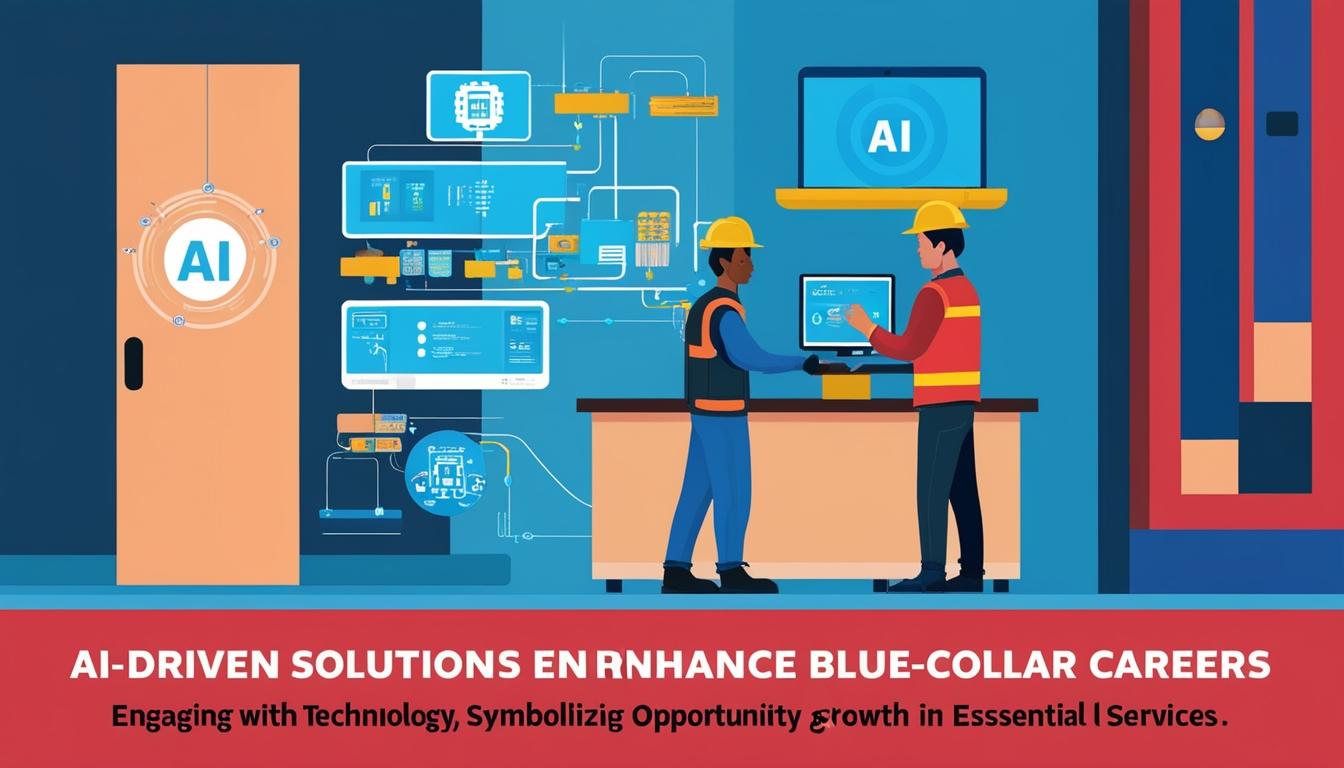
In the evolving landscape of employment, the surge in demand for on-site workers in sectors such as retail, food service, and logistics has catalysed a notable rise in wages for these traditionally underappreciated roles. This shift was significantly influenced by the necessity for essential services even during global lockdowns precipitated by the COVID-19 pandemic. As a result, employers began competing fiercely for blue-collar workers by not only increasing wages but also offering enhanced educational benefits aimed at promoting career growth from within the organisation.
Chipotle, for instance, positioned itself as a conduit to middle-class success, highlighting its commitment to employee advancement. This industry trend is reflected broadly, with companies across transportation, healthcare, and hospitality investing in career development initiatives to enhance internal promotion capabilities and improve staff retention rates. Disney, for example, allocates upwards of $20 million annually to contribute to workforce development across its various sectors like parks and cruise lines.
Despite these positive trends, the workforce still faces enduring challenges, including high turnover rates and absenteeism, which are compounded by an overall skills gap. Employers report significant difficulties in forecasting capacity and maintaining adequate staffing levels, issues that resonate across multiple industries. This shortage of skilled workers has sparked innovative solutions, primarily through the integration of technology.
Joshua Kleyman, chairman of the National Logistics Training Center and CEO of Citizen Trucking, shared insights on tackling these issues during his presentation at the EdTech Week conference in New York City. Kleyman's approach involved leveraging technology to identify the root causes of workforce problems, including high turnover and absenteeism. His team employed AI tools, such as Chat GPT, to analyse internal communications and identify primary reasons for staff absences and turnovers, such as medical issues and personal emergencies.
By implementing technology-driven solutions, such as automated chatbots, companies experienced a reduction in absences and improved workforce stability. For instance, Bonvoy Distribution, in partnership with the NLTC, developed a simple internal chatbot system that led to a 50% reduction in unnotified absences and decreased overtime spending. At Citizen Trucking, similar technological applications resulted in a substantial drop in safety incidents and improved delivery efficiency.
In response to the dwindling supply of qualified truck drivers and the escalating salaries required to attract talent, Kleyman launched Zeta Driving School in Kansas and Missouri. This initiative was born from the need to cultivate new talent internally rather than compete in an increasingly expensive labour market. The school offers a cost-effective training programme that prepares individuals for roles as commercial drivers, providing stipends during training and contributing to a diverse workforce. This strategy not only enhances retention with longer average tenures but also ensures better safety records thanks to comprehensive training.
As the labour market for blue-collar positions remains tight, employers continue to explore innovative solutions to develop and retain talent. Programs aimed at eliminating language barriers for non-English-speaking workers and leveraging AI to address skill development are gaining traction. Such initiatives are critical as they expand the potential workforce pool and enhance the capabilities of frontline workers.
These transformations are setting a precedent in how companies approach the recruitment, training, and retention of essential workers, suggesting a future in which career progression for blue-collar roles is not only possible but systematically supported. Individuals entering these roles have more opportunities for advancement and development, marking a significant shift from traditional blue-collar employment practices.
Source: Noah Wire Services