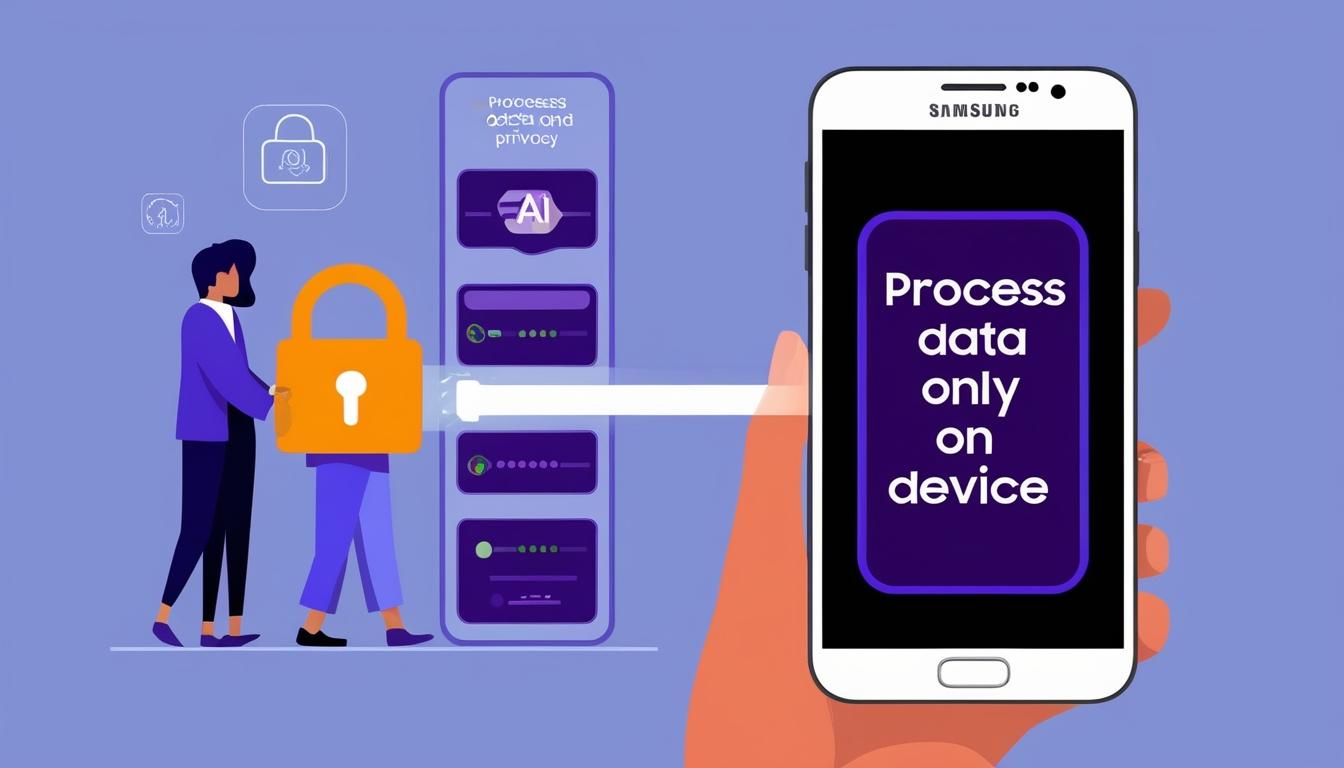
Samsung is enhancing user control over data privacy with a feature that allows Galaxy phone users to keep artificial intelligence (AI) processing on their devices and out of the cloud. Amid the growing presence of AI in daily technology use, Samsung has introduced a method to manage where and how AI processing occurs, addressing privacy concerns for those who prefer not to share data externally.
This feature can be activated simply by navigating through the phone's settings. Users must go to Settings, select Advanced Features, then Advanced Intelligence, and finally enable the 'Process data only on device' option. By activating this setting, all AI processes will be confined to the device, ensuring that no data is sent to Samsung's cloud servers for processing.
Once this setting is enabled, some AI features on Samsung devices adapt differently. For instance:
Samsung Gallery: Generative photo editing features, such as erasing objects or resizing people, will be disabled as they rely on cloud processing. However, basic image adjustments like removing reflections or shadows continue to function locally.
Phone Calls: Live translations during calls, which already perform offline, remain unaffected and will continue to operate as usual.
Samsung Keyboard: Writing style and grammar suggestions are processed locally, hence unaffected by this setting. Users can utilise offline language packs for live translation.
Samsung Interpreter: This application continues to function normally, offering transcription and live translations as long as the necessary language packs are downloaded beforehand.
Samsung Notes: While text translation remains operational locally, features like auto-formatting and summarising meeting notes, which require cloud processing, will not function under the local-only setting.
Voice Recorder: The app can still transcribe speech using downloaded language packs, but summarising transcripts necessitates cloud computing, which will become unavailable with on-device processing.
Samsung Internet: Translations of web pages will still be possible offline, though any summarisation tasks will be disabled without cloud access.
The introduction of this feature reflects a growing trend towards opting for privacy within the tech sphere, allowing users to weigh the benefits of cloud-based AI against the desire for personal data privacy. While some functionalities remain operational with on-device processing, certain advanced features that require extensive computation still depend on cloud resources. This shift indicates Samsung's effort to provide users with more autonomy over their personal data while balancing the trade-off between privacy and functionality.
Source: Noah Wire Services