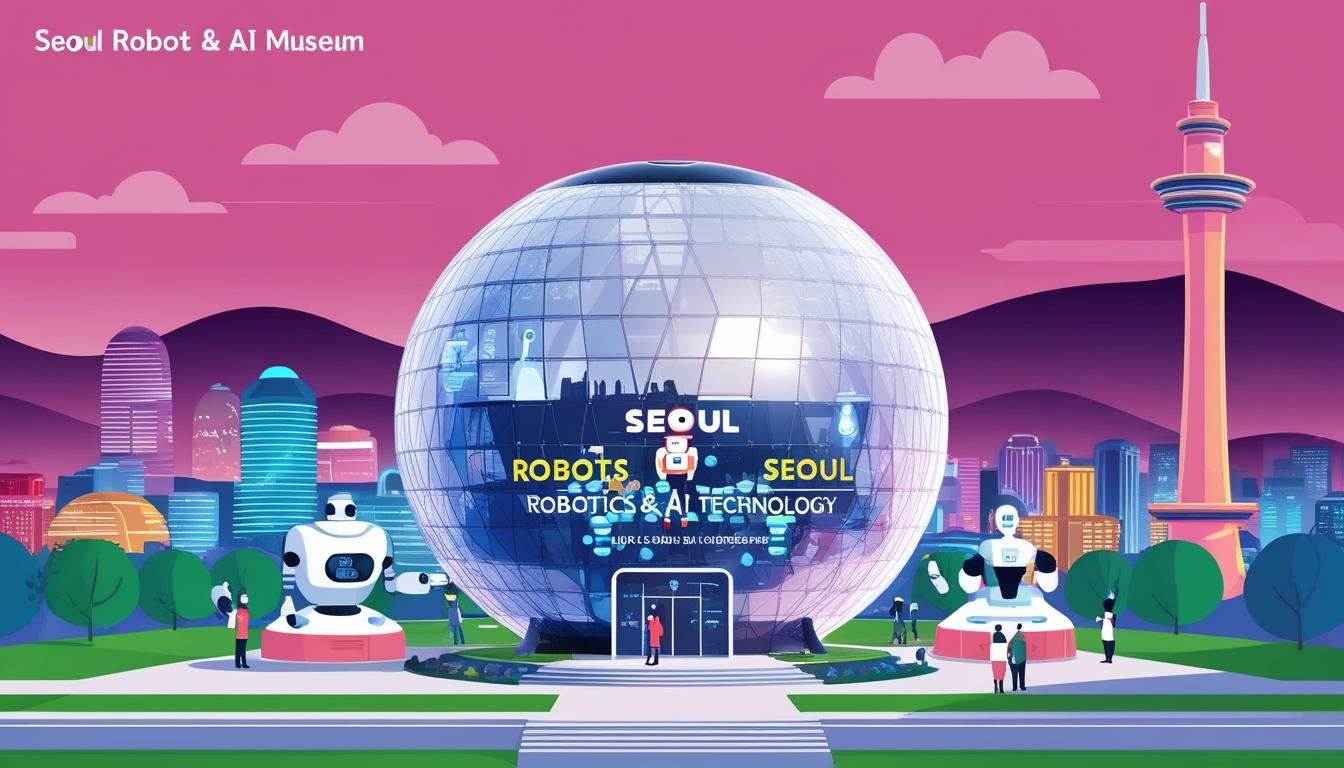
In a significant step towards establishing itself as a global pioneer in technological and architectural innovation, the city of Seoul, South Korea, has unveiled the Seoul Robot & AI Museum (RAIM). The cutting-edge establishment, conceived by MAA-Melike Altınışık Architects, serves as a unique cultural landmark dedicated to the fourth industrial revolution. Officially opened to the public, RAIM stands in northeastern Seoul, marking a new era of integration between architectural brilliance and scientific advancement.
RAIM represents a successful collaboration that began in 2019 between MAA and Withworks, lasting until its completion in 2024. This international competition-winning project demonstrates progressive design and engineering principals from a host of professional collaborators. Notable contributors towards RAIM's development included structural engineers Dongyang and MetalYapı ENG, Mep Engineers Hanil MEC, and civil engineers NOW GIO, among others. LC Construction managed the general contracting duties, with significant input from façade contractors Dongyang GTS and Façade Tech.
The architectural concept of RAIM is defined by its non-directional, spherical form, characterized by fluid, organic shapes intended to echo the advanced robotic and AI technologies housed within. This unique structural approach serves not just as an aesthetic choice but as an integral component of the museum’s narrative, embodying the dynamic nature of the technology it showcases. MAA’s design is a living exhibition itself, utilizing smart technology not only in its displays but also within its architectural framework, from design and construction through to daily operations.
Strategically located, RAIM is envisioned as a significant hub for science and innovation, aiming to drive the growth of Seoul's AI industry. The museum provides a platform where researchers, academic institutes, corporate entities, and the public can interact. It offers a series of exhibitions, educational programmes, and hands-on experiences related to robotics and artificial intelligence. This knowledge exchange is further bolstered by RAIM's proximity to other cultural and entrepreneurial spaces such as ‘Chang-dong Aurene,’ ‘Seoul Museum of Photography,’ and the ‘Startup and Cultural Industrial Complex,’ creating a vibrant cluster of innovation and cultural activity in the Chang-dong Sanggye area.
Visitors to RAIM are greeted by robots at the entrance, initiating a journey that marries physical and technological realms. The layout features a welcoming ground floor with facilities such as a reception, ticketing halls, cafés, and a shop, while a prominent vertical exhibition tunnel guides patrons through a futuristic experience. This design integrates two basement levels containing car parks and technical service facilities to maintain seamless visitor engagement and operational efficiency.
RAIM's construction showcases the implementation of advanced architectural technologies pertinent to the 4th Industrial Revolution. Through the use of Building Information Modeling (BIM) and Off-Site Construction (OSC) methods, the complex design was realized with high precision. The construction process involved state-of-the-art techniques like laser CNC machining and robot welding, ensuring minimal errors and exact execution of intricate façade elements. The museum's structural elements, particularly its central vertical exhibition tunnel, were developed using advanced technologies more commonly found in aerospace and marine industries, underscoring its architectural innovation.
As much more than a conventional museum, the Seoul Robot & AI Museum stands as a herald for future architectural and technological paradigms, exemplifying how robotics and AI may redefine human environments. It symbolises Korea's ambitions within the realms of architecture, science, and technology, positioning RAIM not just as a showcase for what the future holds but as an active participant in shaping that future. By fusing architectural ingenuity with state-of-the-art technology, RAIM acts as a vital institution for public discourse on the implications of integrating smart technologies within our daily lives.
Source: Noah Wire Services