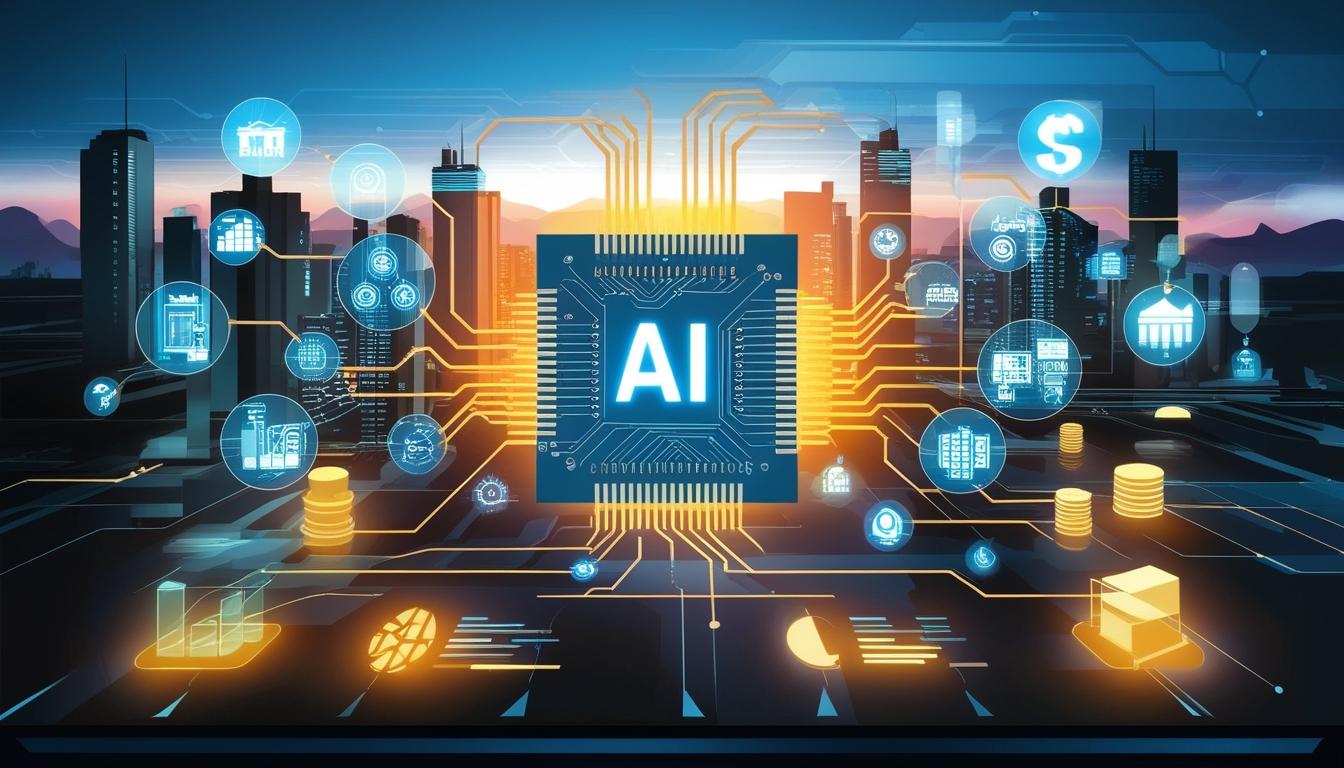
In the ever-evolving landscape of modern commerce, Artificial Intelligence (AI) is emerging as a crucial tool for enterprises looking to future-proof their operations. As consumer expectations heighten and technological advancements speed up, businesses are increasingly leaning on AI to enhance efficiency and tailor customer experiences across various industries such as manufacturing, finance, healthcare, and retail.
AI has carved out a space in business by streamlining operations through automation, data analysis, and predictive capabilities. In manufacturing, for instance, AI is leveraged for predictive maintenance, anticipating machinery issues before they materialise, consequently reducing costly downtimes. Similarly, in finance, AI algorithms are instrumental in detecting fraudulent activities by analysing data patterns that might elude human analysts. As per industry trends, integrating AI into business processes minimises human error, thereby enhancing accuracy and efficiency.
Furthermore, AI development services offer a bespoke approach tailored to individual business needs, facilitating a more personalised integration of AI solutions. This customisation extends to various domains; for example, enhancing customer support systems or developing sophisticated financial forecasting models. Collaboration with AI development agencies assists companies in embedding these technologies into existing workflows, thereby fostering agility and the ability to make more informed decisions in a dynamic market environment.
In terms of customer engagement, AI is revolutionising how businesses interact with their clientele. Companies like Amazon have set a precedent by employing AI-driven recommendation systems that analyse user behaviour to suggest relevant products, thus enhancing the shopping experience. Beyond e-commerce, the advent of AI-powered chatbots has allowed businesses to offer 24/7 customer service, handling queries without human intervention and enabling staff to focus on complex problem-solving and relationship building.
The appeal of AI also lies in its ability to provide detailed insights into customer preferences through advanced data analytics. By interpreting large datasets, businesses can identify emerging trends, forecast consumer behaviour, and craft more targeted marketing strategies. Such insights help enhance customer loyalty and satisfaction, providing a competitive edge in challenging markets.
Looking to the future, businesses are recognising the necessity of adopting AI not merely to automate existing tasks but to unlock new opportunities for growth and innovation. AI has the potential to drive new revenue streams and increase operational efficiency by enabling companies to anticipate market shifts, changing customer needs, and operational hazards before they occur. This shift from reactive to proactive business strategies represents a significant organisational transformation.
To align with long-term objectives, many businesses are forming partnerships with AI development agencies. These agencies offer the expertise needed to define and execute effective AI strategies, aiding companies through the complexities of integrating advanced AI technologies. This collaboration ensures that businesses are not only prepared to tackle current challenges but are also well-equipped to seize future opportunities in an increasingly competitive landscape.
As AI positions itself as an indispensable asset in the business arsenals, its role in shaping the future of industries is becoming ever more pronounced. Through strategic investments in AI and partnerships with experienced development agencies, businesses are not just enhancing their operations for today but are laying down the foundations for sustained relevance and success. As they navigate this technological frontier, AI will remain a pivotal element in maintaining adaptability, fostering innovation, and ensuring competitiveness in years to come.
Source: Noah Wire Services