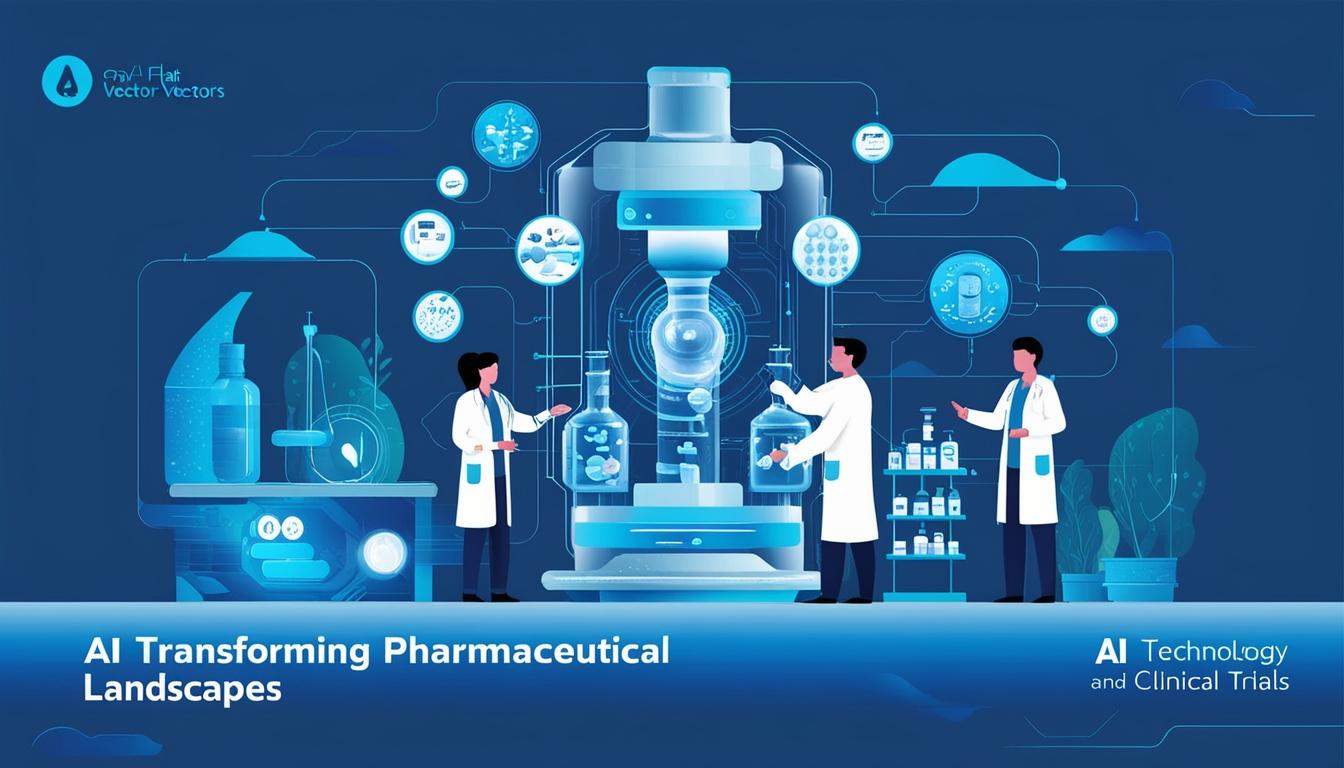
In recent years, generative artificial intelligence (AI) has been steadily advancing into the pharmaceutical industry, revolutionising processes by converting extensive unstructured data into actionable insights and automating previously laborious tasks. This technology is not universally applicable, but it has proven to be a transformative tool in several key areas within the sector.
At a recent panel during the MedCity News INVEST Digital Health Conference, key industry figures discussed the burgeoning role of AI in pharmaceuticals. David Latshaw, CEO and co-founder of BioPhy, shared insights into the evolving landscape. Joining him was Brigham Hyde, CEO and co-founder of Atropos Health, with the session moderated by Naomi Fried, CEO of PharmStars.
Latshaw described how AI is being integrated into drug discovery processes, where its utility ranges from identifying potential drug targets to evaluating the efficacy and safety of molecules. This adoption enables pharmaceutical companies to handle larger datasets more efficiently than with traditional methods. He cited companies such as Recursion and Insilico Medicine, which have recently announced mid-stage clinical trial results for drug candidates developed through AI technologies.
In the realm of clinical trials, AI applications prove advantageous in selecting appropriate patients for enrolment and refining trial designs. Additionally, AI technologies are employed to simulate trials and make projections, aiding companies in optimal resource allocation. Hyde emphasised the importance of these simulations in mitigating investment risks, particularly before significant financial outlays for Phase 2 trials.
Despite AI's promising contributions, its widespread adoption faces challenges, primarily due to substantial initial costs, potentially amounting to tens of millions of dollars. The return on investment remains a critical consideration, alongside a company’s risk tolerance and strategic objectives. Latshaw suggested that companies prioritising immediate returns might channel investments towards later-stage development and commercialisation processes.
At the commercial stage, AI's predictive capabilities can be utilised to determine which patients will derive the most benefit from specific treatments, ultimately informing healthcare decisions and payer strategies. Hyde mentioned potential shifts within sales structures, positing that AI-backed evidence could significantly reduce the need for extensive sales teams.
Workforce dynamics within pharma companies could undergo transformations even before commercialisation. Hyde highlighted that tasks like FDA submission preparations might be streamlined with AI, though the overarching value of AI lies in enhancing trial efficiency and success rates. This shift could positively impact the economic and financial models of the biotech industry.
Latshaw, drawing from his past experience at Johnson & Johnson, argued against pharma companies developing their own AI capabilities. Instead, he endorsed partnerships that leverage AI expertise while allowing companies to focus on their core scientific and commercial strengths. Ten years from now, AI advancements are expected to make pharmaceutical companies leaner, achieving similar outputs with fewer staff well-versed in both technology and their domain.
Hyde concurred, suggesting that AI could redefine the roles of big pharma in drug development—from identifying new targets to perfecting the efficiency of clinical trials. As companies explore new business strategies, Hyde pointed out existing shifts, noting Pfizer and Eli Lilly's initiatives to sell products directly to consumers. This change reflects the companies' desire to enhance and invest in value-driven opportunities.
Looking to the future, AI's ability to make tailored predictions could catalyse the development of personalised medicines, influencing a company's operations from discovery to direct-to-patient distribution models. Despite significant technological advancements required in manufacturing and distribution, Hyde remarked that such transformations herald a dramatically different future for pharmaceutical companies.
Source: Noah Wire Services