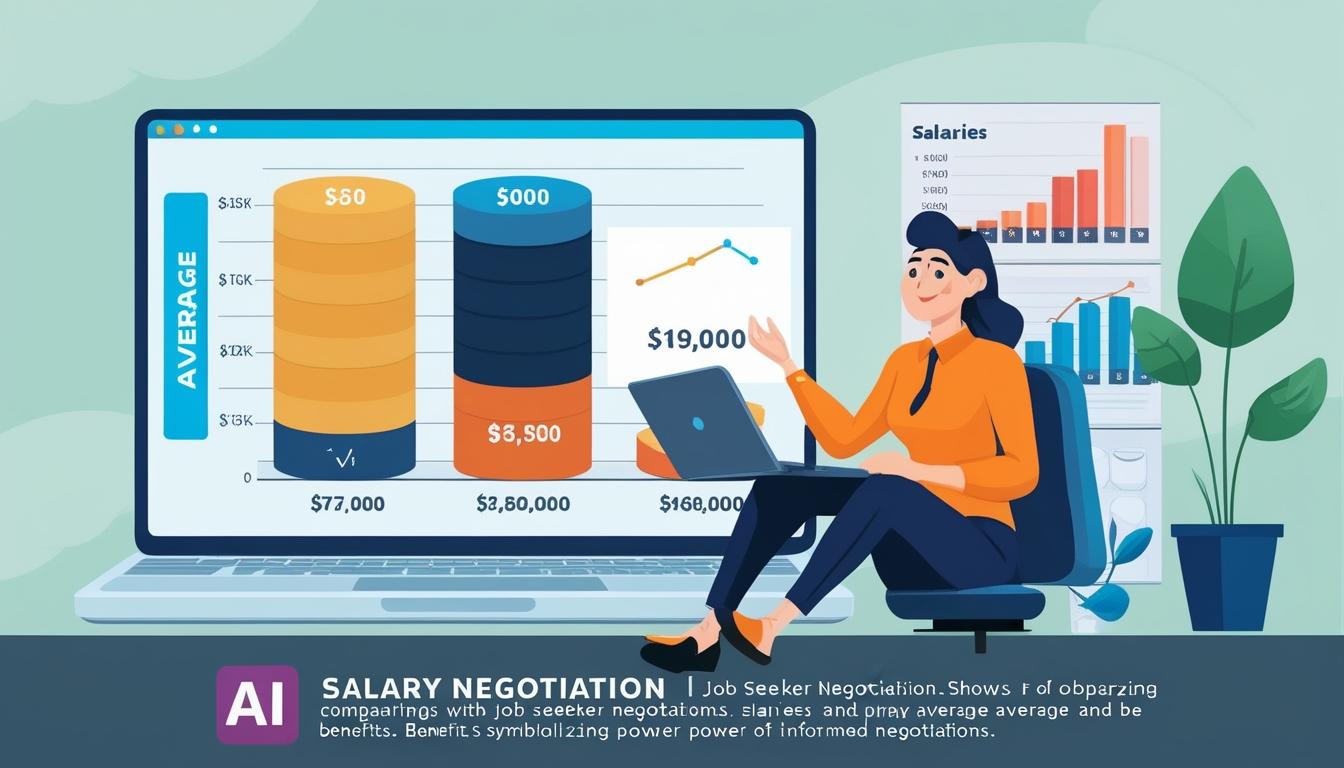
In today’s rapidly evolving employment landscape, artificial intelligence (AI) tools are playing a transformative role in salary negotiations, providing unprecedented access to information that empowers job candidates. Platforms like ChatGPT, through accessible and user-friendly interfaces, are enabling users to quickly uncover information about average salaries and benefits, providing them with powerful negotiating tools.
The process is simple. By inputting prompts such as, “Please tell me the average salary for a [job title] in [city/state or metro area],” users can uncover data that might suggest they are undercompensated by significant amounts—sometimes as much as $45,000 or more. The AI retrieves this data from a variety of reputable sources, including Salary.com, Glassdoor, and Payscale, offering a detailed breakdown of expected salary ranges and influencing factors such as experience and company size.
This capability has the potential to significantly shift the dynamics of salary negotiations. Where once employees might have operated in the dark or relied on time-consuming research to understand their market value, they can now obtain relevant data within seconds. This ease of access represents a substantial advantage for job candidates entering negotiations, as they can arm themselves with concrete evidence of industry-standard compensation and benefits.
The implications for employers are considerable. Human Resources (HR) professionals and hiring managers need to be prepared to justify their compensation and benefits offerings in the face of data-backed queries from candidates. This can be particularly challenging when AI data reveals that a company's initial offer is below the average for the industry or role.
Moreover, AI tools don’t just provide insights into salaries. They can also inform candidates about industry-standard benefits packages, such as vacation time and maternity leave. Candidates now have the means to challenge offerings that fall short of the market norm. For instance, a company offering only two weeks of vacation might face resistance if AI-derived data suggests that competitors typically offer three to four weeks.
Faced with these developments, organisations must ensure that their HR teams and hiring managers are well-equipped to engage in informed discussions with candidates. This preparation might include using AI tools themselves to gather comparative data from external sources to understand how their compensation packages stack up against market standards.
Furthermore, companies may need to articulate compelling reasons why candidates should still consider joining them, even if they cannot match the average market salary and benefits. This could involve emphasising unique organisational strengths, such as workplace culture, opportunities for growth, or long-term career benefits.
As AI tools continue to democratise access to information, the power dynamics in salary negotiations are witnessing a marked shift towards transparency and empowerment for job seekers. As such, it’s becoming increasingly vital for both candidates and employers to adapt to this new landscape, where knowledge is readily available and negotiation discussions are data-driven.
Source: Noah Wire Services