Titan Computers Unveils High-Performance A900 Workstation, as AMD Launches New EPYC Embedded 8004 Series
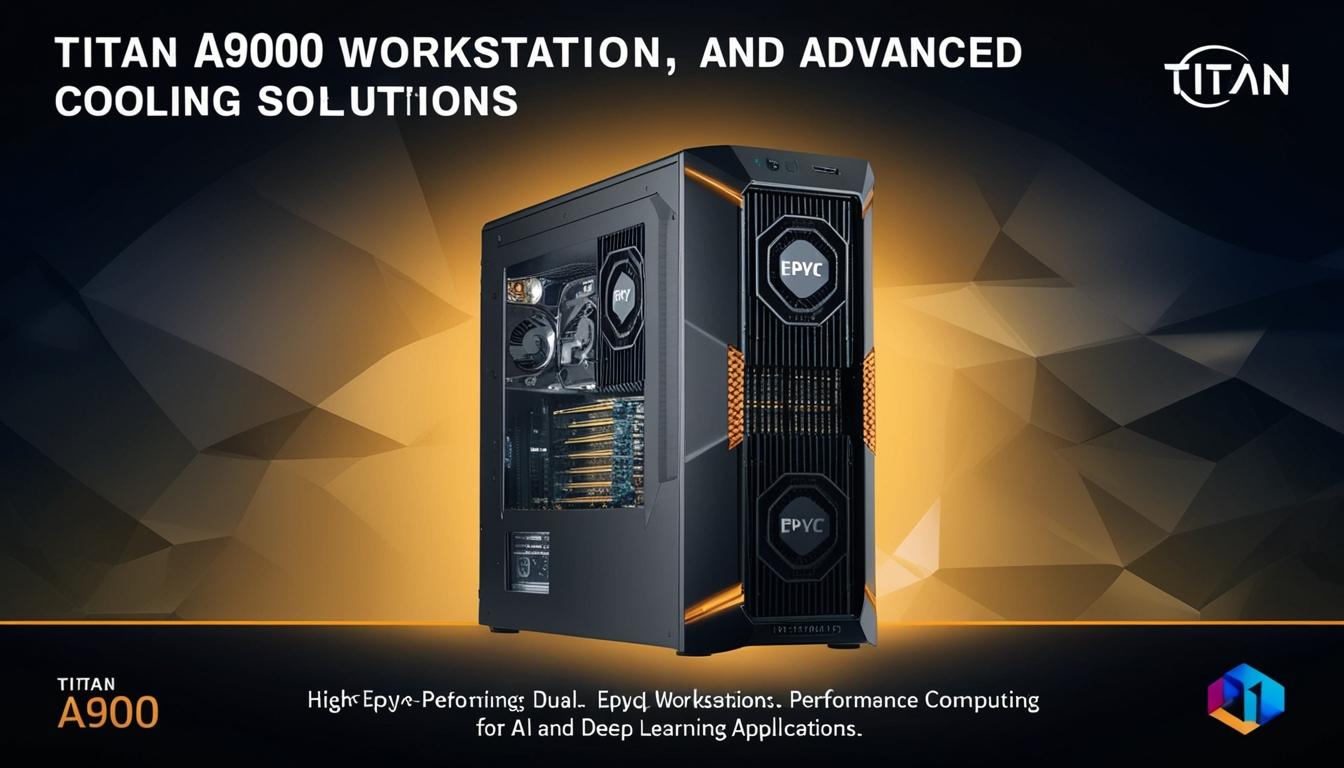
In a remarkable stride in the area of deep learning and artificial intelligence applications, Titan Computers has introduced the Titan A900. While it may outwardly resemble a regular desktop PC, the A900 is nothing short of a powerhouse designed to cater to intense computational requirements.
The core of this machine is powered by AMD's EPYC Genoa 9004 series processors. In its default configuration, the A900 is equipped with dual EPYC Genoa 9124 CPUs, delivering an impressive total of 64 cores to meet demanding tasks. For users requiring an extra boost in processing capabilities, there's the option to upgrade the system to configurations supporting up to 256 cores, ensuring flexibility for users with diverse computational needs.
Housed within the robust and visually appealing Titan Chariot mid-tower case, crafted from anodized aluminium and steel, the A900 is built to last. It boasts 64GB of DDR5 ECC RAM as a standard feature, with the potential to expand to a staggering 6TB, catering to memory-intensive applications flawlessly. Storage options start with a 1TB M.2 NVMe SSD, coupled with a 4TB Seagate Enterprise HDD, and can be further expanded to accommodate 8TB SSDs and 20TB HDDs for additional storage demands.
An Nvidia Quadro T400 4GB GDDR6 workstation video card is included in the default configuration for common applications, with the option to customise with more potent GPUs, including liquid-cooled variants for those who need peak graphical performance.
Cooling solutions in the A900 are substantial, featuring dual SilverStone Technology CPU coolers, Antec Nano Diamond Thermal Compound, and a system of five high-performance silent fans. The configuration can be further tailored to ensure optimal thermal management under load.
For connectivity, the workstation encompasses dual RJ45 10GbE LAN ports, alongside four USB ports and a front-facing USB 3.2 Gen2x2 Type-C port, granting plenty of options for peripheral and networking needs. Beyond wired connections, it also supports Intel 802.11ax Wi-Fi 6E and Bluetooth 5.3 for wireless connectivity.
The default configuration of the A900 is priced just short of $8,000, but configurations with top-tier CPUs and maximum RAM can escalate to $120,000, with additional features such as Windows 11 Pro for Workstation pushing the price further.
Parallel to the developments at Titan Computers, AMD has quietly rolled out its EPYC Embedded 8004 Series of processors. These processors are crafted for high-demand applications prevalent in networking, storage, and industrial edge environments. Building on the “Zen 4c” architecture, the series offers a range from 8 to 64 cores and supports up to 1.152TB of DDR5 memory, striking a balance between efficiency and performance.
The EPYC 8004 Series aligns between AMD's EPYC 4004 and EPYC 9004 series in terms of core capabilities, offering cost-efficient yet expansive options for various embedded applications. It's equipped with features like Direct Memory Access, Non-Transparent Bridging, and DRAM Flush to NVMe, which strengthen data integrity and security during operations.
Of particular note within the new EPYC lineup is the EPYC 8224P processor, which provides a commendable balance between power and cost with its 24 cores and 180W TDP. On the more economical side, the 16-core 8124P presents an affordable option for handling multi-threaded applications with moderate power consumption.
These developments underscore significant advancements in computing power aimed at both mainstream and embedded markets, offering scalable solutions tailored to diverse application needs, from scientific research to artificial intelligence and industrial applications. As such innovations unfold, they are likely to redefine computational boundaries and performance expectations across sectors.
Source: Noah Wire Services