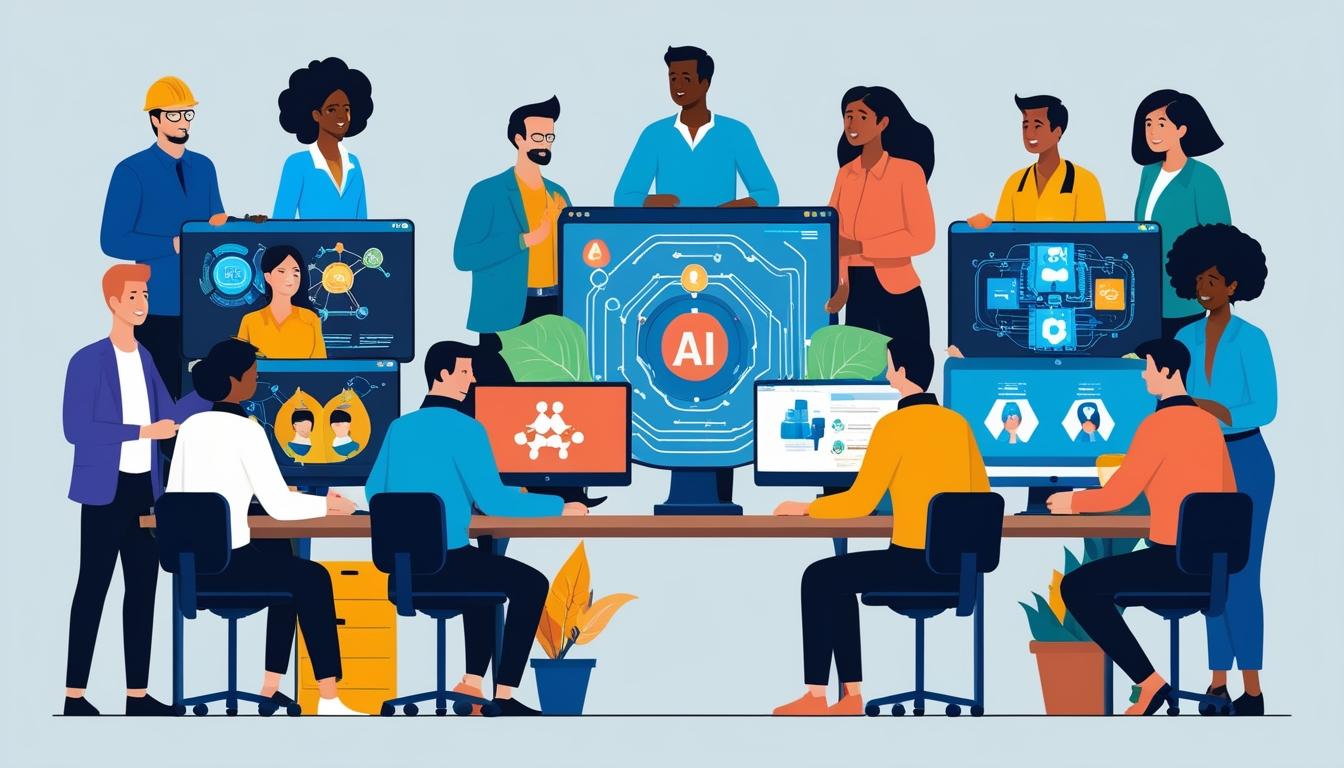
The United States Department of Labor has recently unveiled a set of best practice guidelines designed for developers and employers working with artificial intelligence. These voluntary guidelines aim to harness the benefits of AI, such as potential time and cost savings, while also protecting workers from risks such as discrimination and job displacement. This initiative trails a broader governmental focus on AI, stemming from President Joe Biden's executive order issued around a year ago, aimed towards evaluating the benefits and risks associated with AI across various sectors.
President Biden's executive order notably spurred the establishment of the White House AI Council and outlined the need for a comprehensive framework across federal agencies to address privacy protection, secure AI talent, and ensure equitable AI usage, among other directives. The overarching ambition is to cultivate AI that benefits society comprehensively, with input from multiple sectors such as government, private enterprises, academia, and civil society.
In alignment with this vision, the Department of Labor's report, entitled “Artificial Intelligence and Worker Well-being: Principles and Best Practices for Developers and Employers,” was devised with contribution from diverse groups, including workers, unions, researchers, academics, employers, and AI developers. The primary focus is on mitigating risks like discrimination, data breaches, and job displacement, while fostering potential advancement and enhancement in production.
Acting Secretary of Labor, Julie Su, emphasized the stakes involved, stating, “Whether AI in the workplace creates harm for workers and deepens inequality or supports workers and unleashes expansive opportunity depends (in large part) on the decisions we make.”
The document delineates eight core principles and best practices centered on the welfare of workers. A key recommendation is the inclusion of workers, particularly from underserved communities, in the design, development, and oversight of AI technologies used within their workplaces. This involvement is poised to elevate job quality and enable businesses to achieve their goals more effectively. Additionally, the guidelines encourage unions to engage in good faith negotiations regarding the use of AI and electronic monitoring technologies within workplace environments.
Further best practices call for the ethical development of AI systems, ensuring training mechanisms are in place that incorporate and respect worker feedback. It also stresses the need for organizations to set up transparent governance protocols for evaluating and clearly communicating the AI systems deployed in workplaces.
Moreover, it is underscored that AI should not compromise workers’ rights, such as their right to organize or their health, safety, wage, anti-discrimination, and anti-retaliation protections. Employers are urged to conduct thorough audits of their AI systems to preclude discrimination based on attributes such as race, colour, national origin, sex, or disability and to publicly disclose the results of these audits.
In addressing the potential displacement of workers due to AI advancements, the report advocates for employers to provide adequate training for employees on these systems and attempt to relocate workers affected by AI advancements within the organization where viable. Employers are encouraged to liaise with state and local workforce programs for educational and upskilling initiatives to ensure that their workforce remains proficient amidst technological evolution.
Moreover, data privacy is a crucial component of the guidelines, with recommendations that employers utilising AI systems with access to workers' data should ensure robust data protection measures. Employers are advised to refrain from collecting excessive worker data and must secure freely given consent from employees if any data is to be shared outside their business.
While the guidelines from the Department of Labor are advisory and do not replace any existing or pending federal or state regulations, they serve as a customizable framework for businesses, intended to be adapted with input from the workforce. This aims to view AI as a technological advancement that enhances worker well-being. Julie Su encapsulated this vision stating, "We should think of AI as a potentially powerful technology for worker well-being, and we should harness our collective human talents to design and use AI with workers as its beneficiaries, not as obstacles to innovation.”
Source: Noah Wire Services