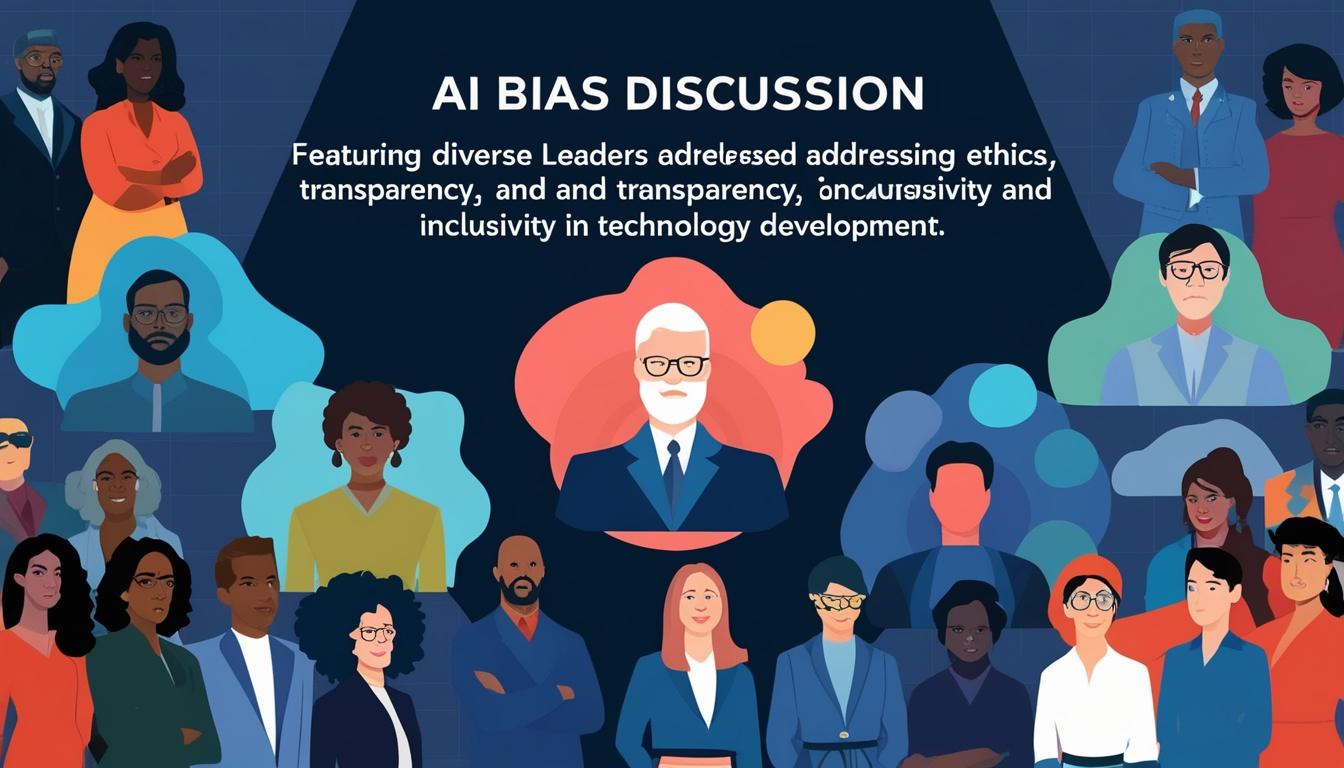
At the IFS Unleashed event held in Orlando, Florida, key figures from IFS, a global enterprise applications company, addressed the pressing issue of artificial intelligence (AI) bias and discussed strategies to mitigate such biases in the future. The dialogue brought together industry leaders, including Mark Vigoroso, Chief Content Officer of ERP Today/Wellesley Information Services, and Stephanie Ball, Deputy Editor of ERP Today, who engaged with IFS leaders to uncover insights on tackling AI bias.
Stephanie Poore, Managing Director for the UK and Ireland at IFS, highlighted the ongoing challenges in areas like talent management, where AI systems can perpetuate existing biases. These biases often arise from training datasets that do not adequately represent individuals who have been historically excluded. This issue underscores the need for improved AI training processes that consider a diverse range of backgrounds and experiences.
Jacqueline de Rojas CBE, a board director at IFS, provided a poignant illustration of AI-induced bias through a real-world scenario involving a female doctor. This doctor encountered issues at a gym, where her job title was coded as male, thereby preventing her access to certain facilities. De Rojas emphasised the importance of proactively addressing these biases in both technology-enabled and broader societal contexts.
In discussing solutions, Bob de Caux, Chief AI Officer at IFS, stressed the importance of transparency in AI processes. He pointed out the crucial need to demystify AI systems, making their operations interpretable and accessible to people, especially in less tech-focused industries. By demystifying AI, stakeholders can better understand and trust the technology, reducing apprehensions associated with it being perceived as a "black box".
De Caux introduced an innovative "adversarial approach" technique as a promising method to unearth and address biases more effectively. This technique involves using two AI systems; one that trains the model and another that tests and exploits it for potential biases. This dynamic interplay can accelerate the identification of biases and enhance the fairness of AI systems.
While the pursuit of AI advancement is crucial, ethical considerations must guide these innovations to prevent adverse outcomes. Jacqueline de Rojas cautioned against unchecked AI development, advocating for clarity in defining AI’s roles and understanding the outcomes it is programmed to achieve. Both de Rojas and Poore expressed optimism about AI's potential to benefit society, provided that appropriate frameworks are in place to steer AI technology towards intended goals.
Diversity emerged as a crucial factor in mitigating AI bias. De Rojas projected a future where AI systems might evolve independently, which emphasises the need for diverse teams to be inherently involved in creating, developing, and refining AI technologies. Ensuring a wide array of perspectives in AI development processes is pivotal to prevent AI from inadvertently reinforcing existing societal biases.
The IFS Unleashed event also showcased 60 use cases of IFS-enabled AI, illustrating the broad interest and applicability of AI solutions in various sectors. The participants shared a collective vision for AI's future, underpinned by mindful innovation that champions diversity, transparency, and ethical responsibility to unlock AI's full potential while safeguarding against biases.
Source: Noah Wire Services