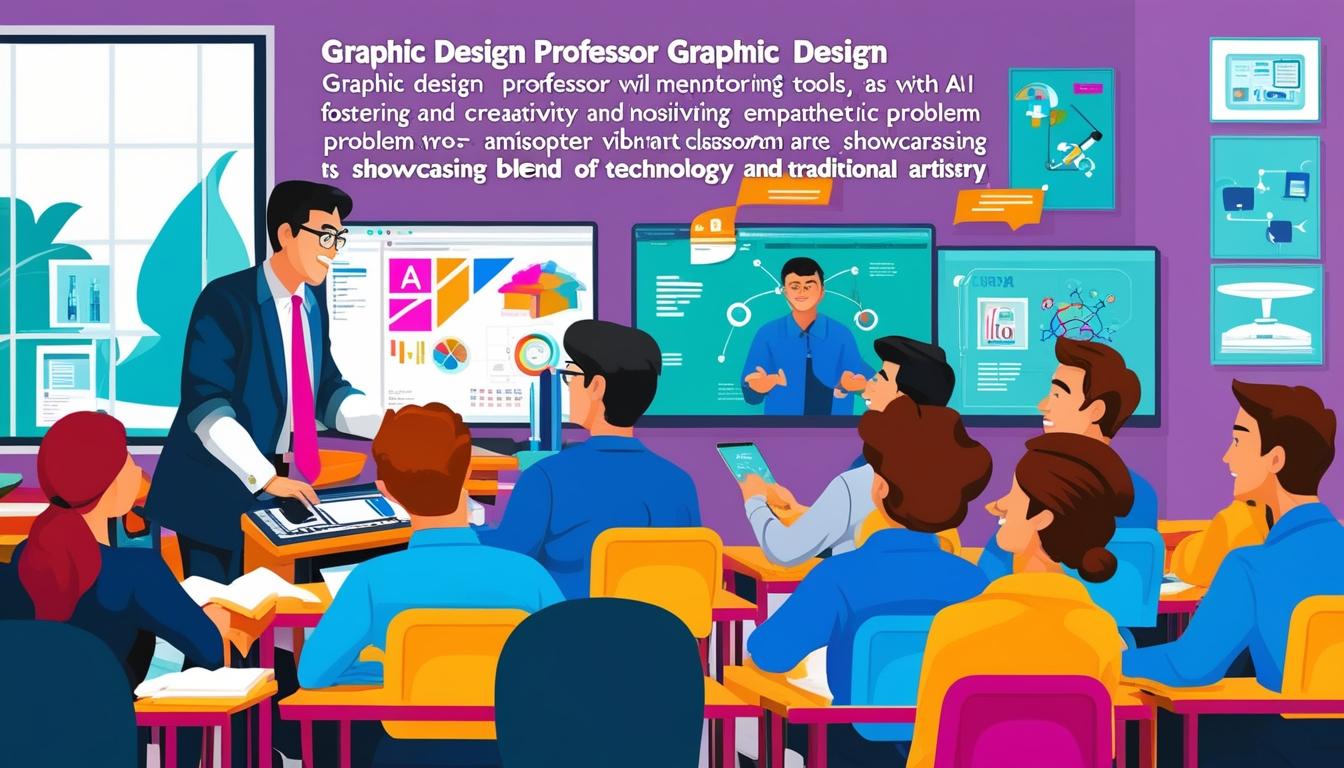
In a reflective exploration of her career journey and current role, a clinical assistant professor of graphic design at the University of Illinois Urbana-Champaign shares insights into her passion for design, education, and the evolving intersection of technology and creativity.
This design educator recalls how her early inclination towards creativity manifested in childhood, as she pretended to be a QVC host, using Microsoft Paint to design product screens. Despite an initial setback in not being accepted into her university's graphic design programme, she pursued studies in communication, which broadened her horizons. Her path led her through various design roles, including at Arizona State University, where she had the opportunity to design for high-profile events and create materials ranging from informational brochures to celebratory graphics for complex scientific theories.
Her transition from industry to academia felt seamless, particularly at Illinois, reflecting her roots in the area. The university offered her a platform not only to teach but also to indulge her curiosity—a trait she finds indispensable in academia. She takes great satisfaction in witnessing her students' "aha" moments when they overcome initial discomfort and begin to succeed in their creative endeavours.
Balancing her academic commitments, she continues working as a freelance graphic designer and art director, focusing on brand identity for small, women-owned businesses. Despite the challenges of time management, she finds ways to integrate her freelance work with her teaching, such as through affiliation with the Siebel Center of Design.
A notable part of her educational approach involves addressing the rising prominence of Artificial Intelligence (AI) in design. She compares AI's allure to the La Brea Tar Pits, cautioning that while it offers exciting possibilities, there is a danger of over-reliance. With her students, she promotes a balanced integration of AI, encouraging its use as a supplementary tool rather than a replacement for foundational design methods and processes. In her classes, AI tools like ChatGPT and Adobe Firefly aid in creative tasks, but she ensures that traditional research and physical exploration remain integral to the curriculum.
She works alongside colleagues to develop flexible systems in the university's curriculum, recognising the need for adaptability in education. Key to her teaching philosophy is fostering community among students and faculty, ensuring that knowledge and experiences are shared to enhance learning outcomes.
Reflecting on her journey and experiences, the professor is forward-thinking about the field of design, expressing confidence in its resilience amidst technological advancements. She emphasises the importance of design as a process characterised by human empathy and creativity, rather than a mere end result.
Through her work, both past and present, she finds admiration and inspiration not only in her creations but also significantly in her students' innovative perspectives. Graphic design, in her view, transcends stylistic presentation; it's a problem-solving tool that communicates powerful ideas—an ethos she wishes to impart upon every designer entering the profession today.
Source: Noah Wire Services