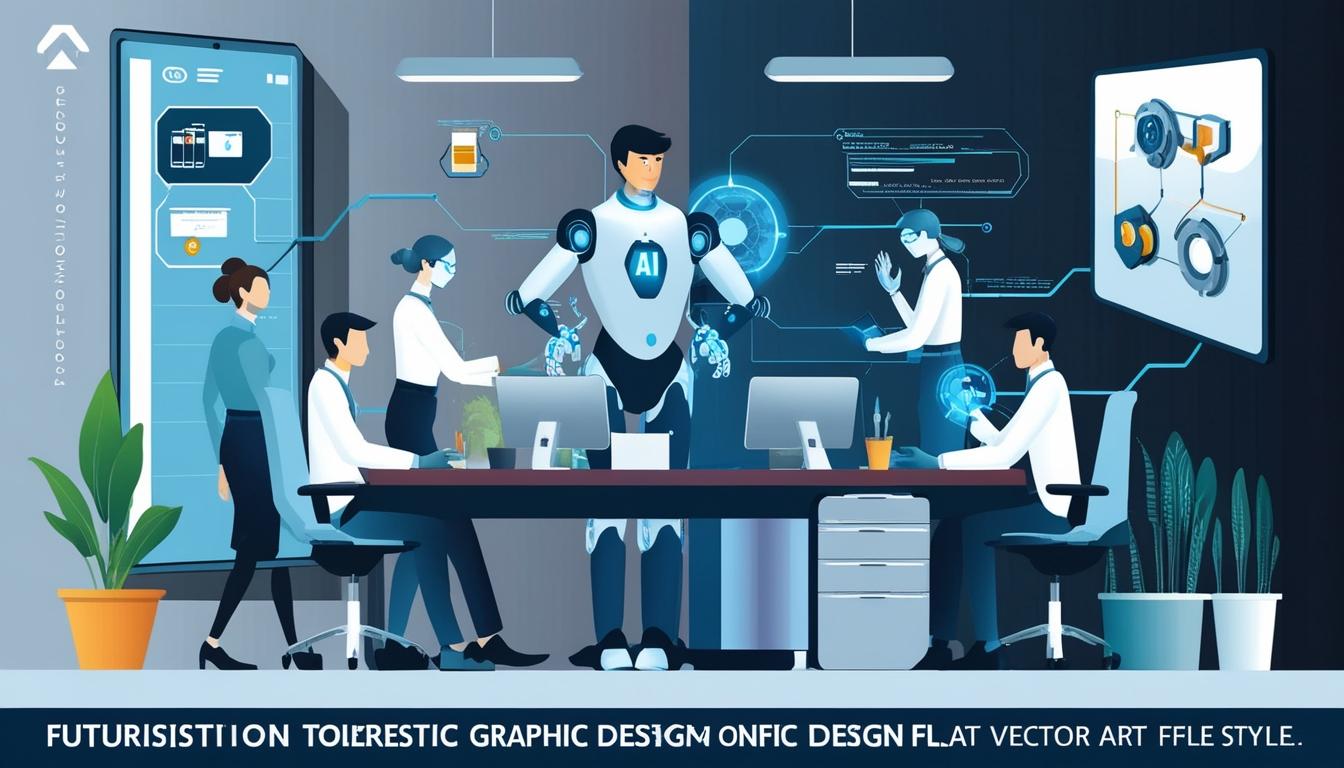
Artificial Intelligence (AI) is transforming the landscape of work and technology at an unprecedented pace. According to research and forecasts by the consultancy firm Gartner, AI development will lead to profound changes in how organisations operate and how individuals perform their roles. A pivotal change expected in the coming years involves agentic AI, which refers to AI systems capable of autonomously executing tasks traditionally conducted by humans.
Gartner projects that by 2028, at least 15% of daily work decisions will be made by these AI agents, a significant leap from the current figure of 0%. The firm highlights this as a major strategic trend expected to become prevalent by 2025. Gene Alvarez, a distinguished Vice President and analyst at Gartner, highlighted at the Gartner IT Symposium/Xpo 2024 that these advancements in AI are occurring rapidly, with the potential to significantly enhance both productivity and timing efficiencies in the workplace.
AI agents are currently being deployed to handle routine tasks, but the next evolution involves systems that can monitor, analyse, and autonomously manage complex processes. Future applications might see AI agents inducing rapid workforce upskilling by acting as virtual mentors for new employees.
Amidst these advancements, there is a continuous underlying concern regarding job displacement. However, Alvarez posits that AI could also facilitate the learning of new skills, mitigating the risks linked with job obsolescence and redirecting the workforce towards emerging roles.
Another crucial trend underlined by Gartner relates to AI governance, which is becoming increasingly essential as AI systems are integrated into business operations. This trend underscores the development of governance platforms that ensure transparency, ethical standards, and responsibility in AI deployment. Such platforms are expected to form a fundamental part of AI development, with the aim of maintaining trust in AI technologies.
Gartner also predicts a diversification in computing paradigms. Alvarez points to emerging models that combine various computing technologies such as GPUs, neuromorphic systems, and optical computing, forming hybrid systems. These will address the growing demand for more efficient computations in an environmentally sustainable manner, a crucial aspect given the rising need for computing power and the push for reduced carbon footprints.
Furthermore, the proliferation of disinformation through AI tools like deepfakes and phishing has highlighted the need for enhanced disinformation security measures. Gartner anticipates that by 2028, half of all enterprises will adopt measures specifically targeting disinformation control, up from a current adoption rate of less than 5%.
Quantum computing presents yet another challenge on the horizon. As this technology advances, it threatens to undermine current cryptographic security measures. Gartner foresees the need for organisations to start adapting to post-quantum cryptography, urging businesses to draw on established standards, such as those from the National Institute of Standards and Technology (NIST), to bolster their security frameworks.
In a more futuristic vein, Gartner envisages the rise of bidirectional brain-machine interfaces (BBMIs) by 2030. These technologies, which can be integrated into the brain or worn as devices like glasses or headbands, have the potential to significantly enhance human cognitive abilities. Gartner foresees that by the end of the decade, a substantial portion of knowledge workers will utilise these technologies to maintain relevance in an AI-driven workplace.
As AI continues to innovate and redefine both technology and society, these insights from Gartner outline a roadmap towards a future that could see AI embedded deeply in both organisational function and individual capabilities.
Source: Noah Wire Services