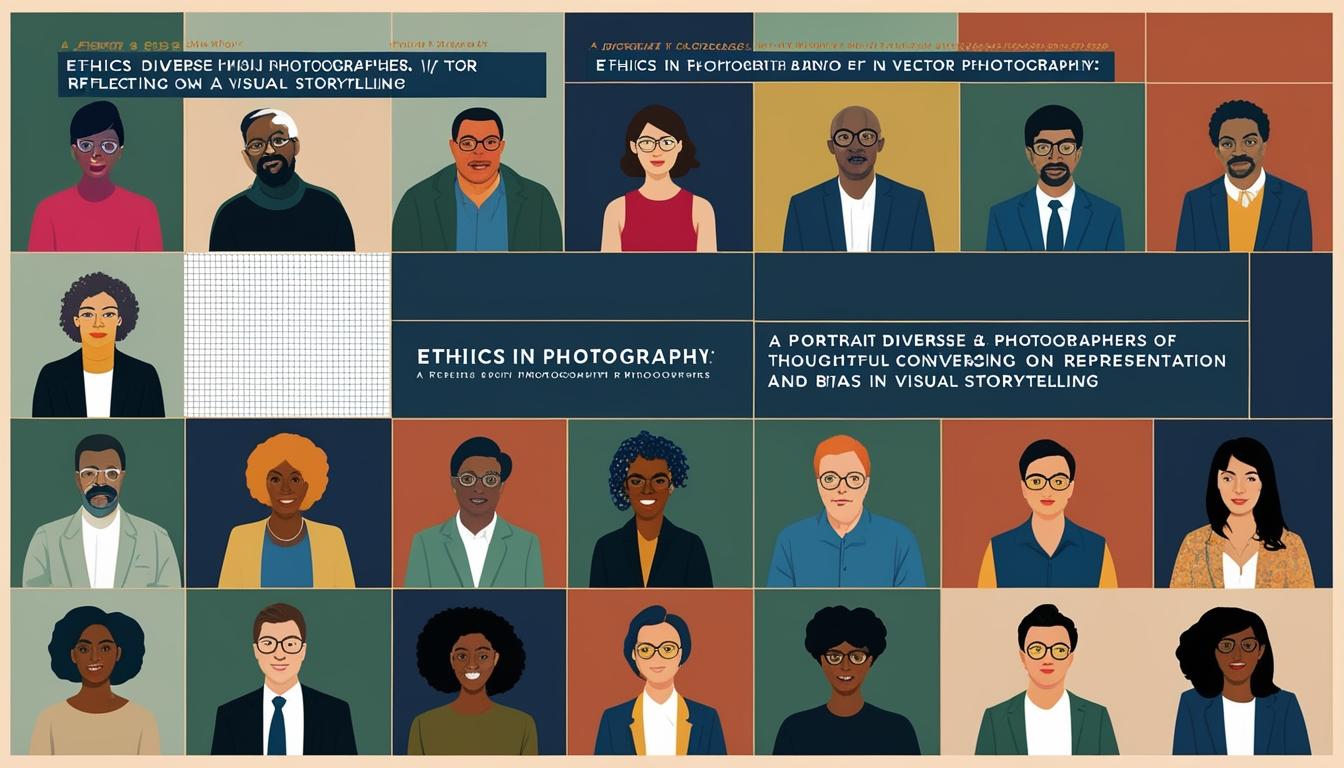
The realm of photography, long viewed as a powerful medium for truth-telling, is currently navigating a significant ethical reckoning. This shift comes as growing concerns have been articulated over the last few years, particularly over the ethical dimensions of photographic practices within various sectors such as fashion advertising, charity fundraising, and notably, news media. This discourse has been underscored by the criticism that certain communities, such as black men and Afghan women, are often depicted in a one-dimensional manner, alongside inconsistent ethical standards applied to images showcasing suffering.
Amidst these longstanding ethical queries, the burgeoning prevalence of AI-generated images is further complicating the scenario. As AI technology advances, it has become increasingly challenging to distinguish between authentic photographs and AI-generated images. The convergence of these two mediums is evident with AI-generated photos being marketed on picture library platforms and utilised by advocacy groups. A particularly notable usage was an AI image showing singer Taylor Swift endorsing Donald Trump in the upcoming US election campaign, which stirred a mix of debate and curiosity.
The persistence of ethical discussions within photography contrasts with a relatively slower evolution of practices in the field. This delay has led to a widening gap between traditionalists, who adhere to established photography norms, and reformists proposing contemporary critiques of those norms. This divergence is fueling polarisation within the industry, generating uncertainty about the ethical use of photography in modern contexts.
Interest in these ethical contemplations is shared by academic professionals such as anthropologists who delve into visual media ethics. An academic researcher, who has been actively engaged with the subject, conducted 48 interviews from 2020 to 2023 with individuals entrenched in the photography profession. These interviews examined the personal interpretations of ethical photography by professionals including black photographers, photographers of colour, those from the global south, as well as disabled and female photographers—voices traditionally marginalised in the industry's dialogue. These interviews are accessible for public scrutiny online.
From these conversations, the research distilled eight essential learnings about photography ethics that highlight the importance of self-reflection within the discipline. Talking with photo professionals such as Kirsty Mackay and Dr Tara Pixley revealed varied insights. Mackay emphasised the importance of recognising one’s personal reasons for documenting a subject, noting that often middle-class photographers inadvertently document working-class subjects for personal fulfilment rather than genuine engagement with social issues. Pixley urged photographers to first understand their own narratives before embarking on documenting others' stories.
The notion of self-reflection is not viewed as a path to objectivity in photography but rather as a mechanism for photographers to become cognisant of their biases and assumptions. This reflective process underscores the necessity for diversity in photography to ensure a broad spectrum of perspectives and understandings are represented. Furthermore, self-reflection should be complemented by robust research, as highlighted by photographer Taha Ahmad, who insists that understanding the context of subjects and themes is integral to responsible photographic storytelling.
As the world evolves, so too do the ethical standards that govern photography, rendering some past practices outdated. This evolution necessitates a continual learning process informed by historical experiences to shape future practices. The insights from this research do not serve as rigid prescriptions but rather as a framework to guide ongoing considerations about visual storytelling processes and ethical lenses in modern photography.
Source: Noah Wire Services