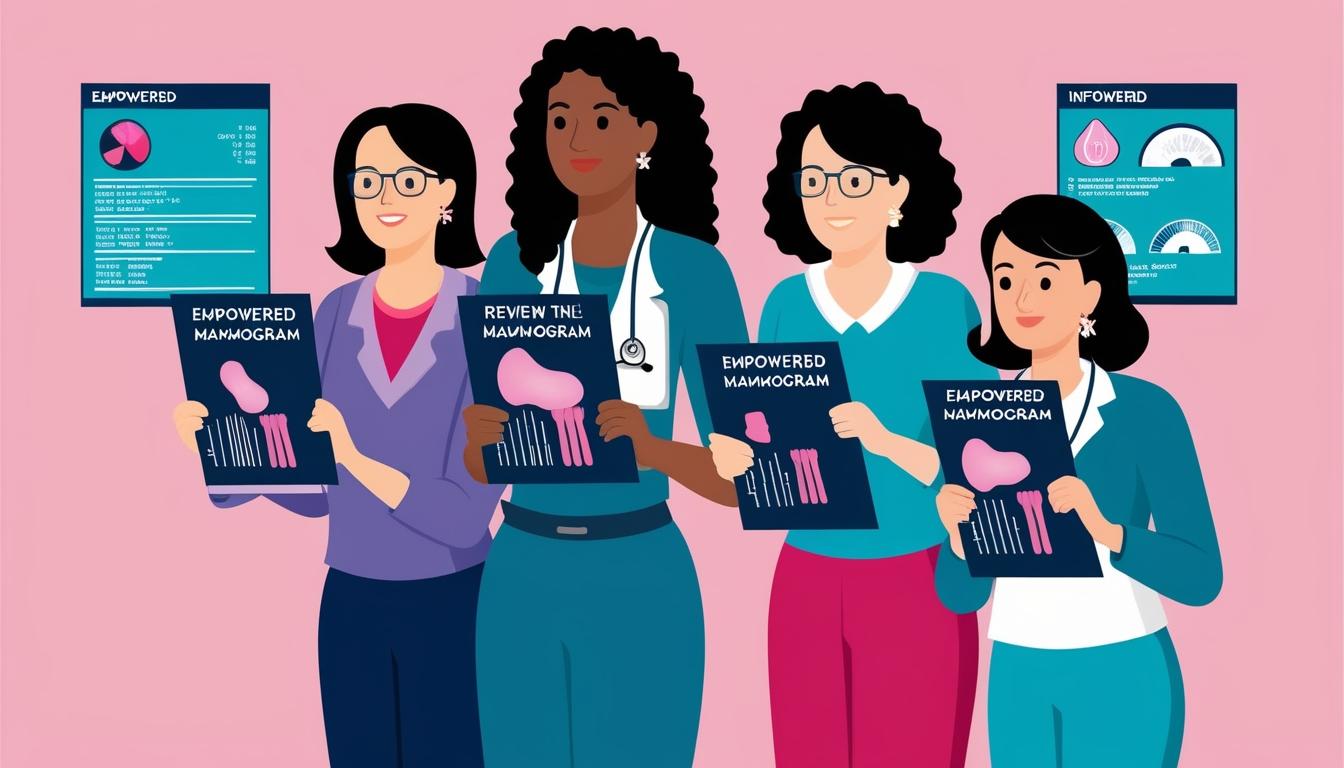
In recent years, significant developments in healthcare and technology have converged to provide enhanced support and information for patients at risk of severe health issues, including breast cancer and intimate partner violence (IPV). Two noteworthy advancements are the introduction of the Food and Drug Administration's (FDA) new rule regarding mammogram results and Dr. Bharti Khurana's innovative use of artificial intelligence to assist in identifying IPV.
Beginning September 2024, the FDA has mandated that mammogram results must include information about breast density, a significant factor in breast cancer risk. This initiative ensures that women nationwide are informed if they possess dense breast tissue. This change is critical because dense breast tissue can obscure tumours, similar to how fog can obscure obstacles on a road, thus making early detection challenging. Dr Arif Kamal, the Chief Patient Officer for the American Cancer Society, emphasised the importance of this development, noting that dense breasts significantly increase the risk of developing breast cancer. Hence, the inclusion of breast density information in mammogram reports is a step toward empowering women with the information they need to make educated healthcare decisions.
Approximately half of all women have dense breasts, which contain more fibrous or glandular tissue compared to fat. As a result, these women might consider additional screenings to ensure early detection of potential tumours. Despite the notification system, Dr. Kamal points out the need for improved communication between healthcare providers and patients regarding the implications of breast density and the potential need for further screenings.
Simultaneously, Dr. Bharti Khurana, an Emergency Radiologist at Brigham and Women's Hospital, has spearheaded a pioneering project using artificial intelligence to address IPV. After being motivated by a discussion on the lack of attention to IPV in emergency medicine, Dr. Khurana led a team to develop the AIRS (Intimate Partner Violence Risk and Severity Prevention) tool. This tool, which integrates radiological data with a patient's clinical history, can potentially identify IPV risks up to four years before victims self-report, thereby potentially mitigating the severity of injuries sustained through prolonged abuse.
The AIRS tool assesses data such as previous emergency visits, historical fractures, and other medical records to generate a risk assessment, offering clinicians objective insights to address IPV efficiently. Despite the challenges of discussing IPV with patients—a topic often avoided or inadequately addressed due to perceived social rather than medical categorisation—the tool aids in reopening dialogues about patient safety in a sensitive manner.
Dr. Khurana's innovative approach aims to break the cycle of abuse by proactively identifying individuals at risk, thereby enabling timely interventions. The AIRS tool is currently in use at Brigham and Women's Hospital's Emergency Department and some primary care sites. To expand its reach, the project has garnered support from a National Institutes of Health grant, which will incorporate new patient data and refine its functionality.
In conclusion, both the nationwide mammogram regulation and the AIRS tool exemplify significant strides in empowering patients by providing critical information related to their health risks. These developments highlight the intersection of healthcare regulation, patient education, and technological innovation, underscoring ongoing efforts to enhance patient autonomy and preventative medical care.
Source: Noah Wire Services