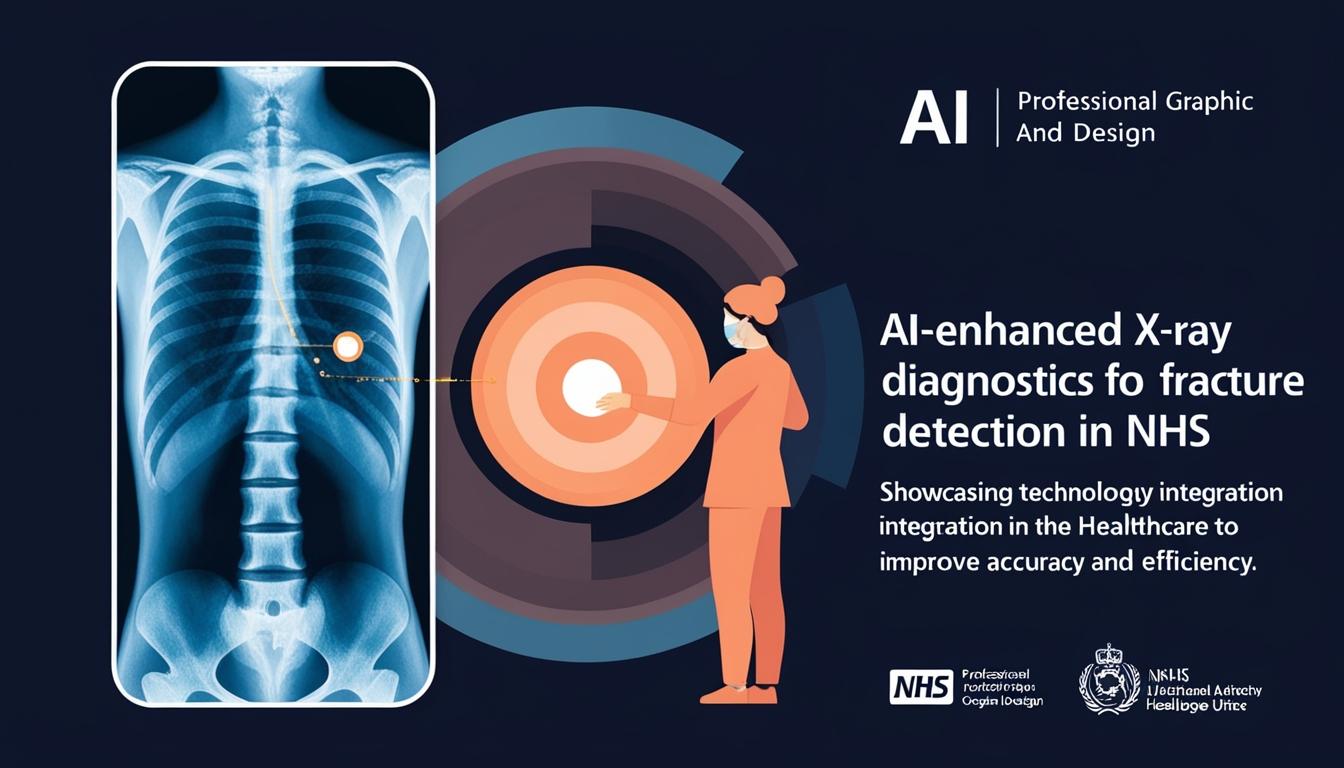
The National Health Service (NHS) in England has been recommended to adopt artificial intelligence (AI) platforms to aid in the detection of bone fractures on X-rays, as proposed by the National Institute for Health and Care Excellence (NICE). These technologies are being considered as a measure to enhance diagnostic accuracy, accelerate the diagnosis process, and potentially reduce the need for subsequent consultations.
The directive from NICE follows the publication of draft guidance permitting the utilisation of four AI platforms within urgent care centres: TechCare Alert, which can service patients of any age; Rayvolve, designed for adults; and BoneView and RBfracture, suitable for adults and children from age two. The recommendation comes as a response to clinical evidence suggesting that AI can improve the detection of fractures on X-rays without elevating the risk of incorrect diagnoses.
Mark Chapman, Director of HealthTech at NICE, highlighted the critical shortage of radiologists and radiographers across NHS departments, necessitating additional support to manage their workload effectively. Chapman stated, "Every day across the NHS, thousands of images are interpreted by expert radiologists and radiographers, but there is a high vacancy rate within these departments across the country and more support is needed to manage their workload."
The introduction of AI into this process aims to minimise the instances of missed fractures, which can lead to patient harm if not identified during an initial assessment. NICE points out that missing a fracture can result in further injury or amplify a patient's condition, complicating speedy hospital treatment.
Currently, patients suspected of having a fracture are assessed by a nurse or doctor who then orders an X-ray to be performed by a radiographer. The ideal process, as per NICE guidelines, requires these X-rays to be reviewed by a radiologist or a trained professional to provide a comprehensive report before patient discharge. However, delays in reporting, sometimes spanning days or weeks, are common.
By integrating AI, it is anticipated that diagnostic conclusions would not only be swift but also consistently accurate, addressing the variability in care observed across different regions. Furthermore, with AI intervention, the number of otherwise necessary follow-up appointments due to mistaken or delayed diagnoses could decline, potentially easing the pressure on the NHS amidst its workforce challenges.
A cost assessment during modelling suggested that the expense per AI scan might be around £1. NICE has advised the NHS to ensure that the cost per scan aligns closely with this estimate, though they acknowledge that the "true cost of implementing and using AI technologies for fracture detection is uncertain" as it is derived from retrospective studies. This cost aspect is a pivotal point in gauging the feasibility and ongoing sustainability of embedding AI in routine healthcare procedures.
The consultation phase for these draft recommendations is set to continue until 5 November 2024. During this period, further discussions and assessments will be undertaken, potentially leading to the widespread implementation of these AI platforms.
Charlotte Beardmore, Executive Director of Professional Policy at the Society and College of Radiographers, expressed support for NICE’s guidance. She emphasized that AI, whilst improving accuracy, is designed to complement—not replace—the expertise of radiographers and radiologists. Beardmore also reiterated the current pressures faced by diagnostic services, noting the high vacancy rates and the role AI could play in enhancing patient care without supplanting professional expertise.
Source: Noah Wire Services